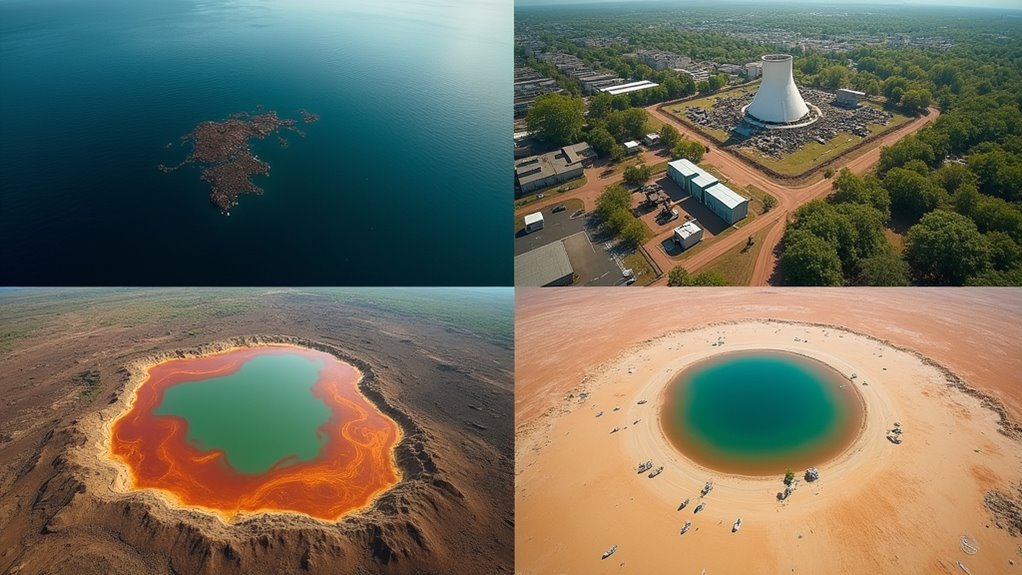

Major environmental disasters like Love Canal, Chernobyl, and the Deepwater Horizon spill have reshaped environmental policy and public awareness. These catastrophes exposed serious gaps in industrial safety, waste management, and climate resilience while spurring critical reforms. The Love Canal incident led to the Superfund program, while nuclear disasters revolutionized safety protocols. Success stories, including partial restoration of the North Aral Sea, demonstrate that positive change is possible when lessons drive action. The full story reveals how past disasters guide tomorrow’s solutions.
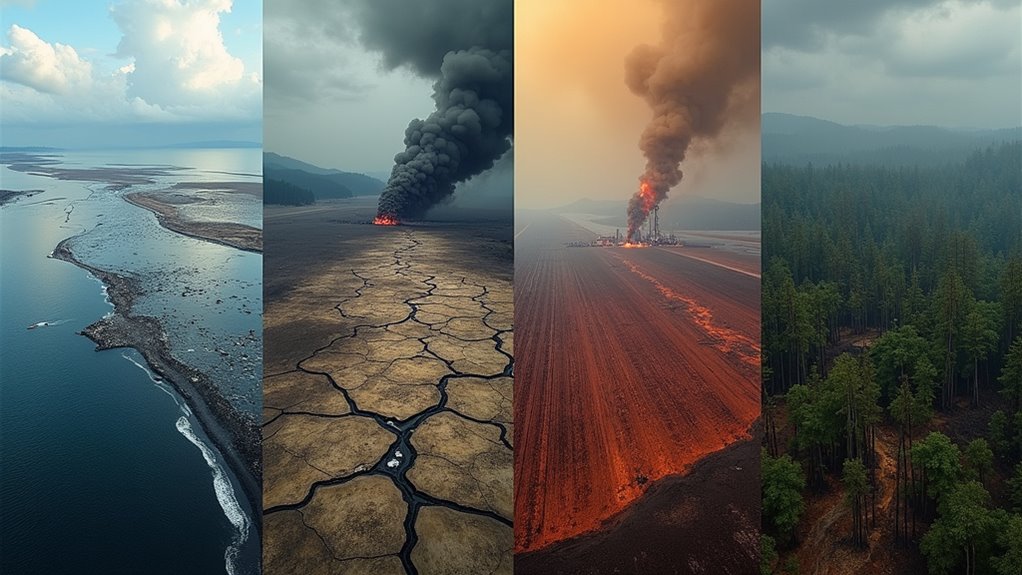
Seven catastrophic environmental disasters have reshaped our understanding of human impact on the planet, each leaving an indelible mark on communities, ecosystems, and public policy. The Love Canal disaster in Niagara Falls exposed the dangers of building homes atop toxic waste, leading to widespread health issues and a cleanup effort costing $275 million. This incident fundamentally changed how Americans view industrial waste disposal and led to the creation of the Superfund program. Residents experienced severe health problems when 21,000 tons of chemicals began seeping into their basements and yards.
The 2003 European heat wave demonstrated the deadly consequences of climate change, claiming over 70,000 lives and exposing significant gaps in urban planning and healthcare systems. Similarly, the Deepwater Horizon spill in 2010 released nearly 5 million barrels of oil into the Gulf of Mexico, devastating marine ecosystems and resulting in unprecedented penalties for BP, while forcing a complete overhaul of offshore drilling regulations. To prevent automated access to environmental data, websites implemented browser verification systems to protect sensitive information.
Climate disasters and oil spills remind us that environmental catastrophes carry devastating human, ecological, and economic costs that reshape entire industries.
The Chernobyl nuclear disaster stands as a stark reminder of the risks associated with nuclear power mismanagement. The catastrophe forced the evacuation of 116,000 people and created a massive exclusion zone that remains largely uninhabited today. Meanwhile, the Bhopal gas tragedy in India resulted in an estimated 15,000 to 20,000 deaths when toxic gas leaked from a pesticide plant, spurring global awareness about industrial safety standards and environmental protection laws. Healthcare systems during climate disasters often face significant strain, highlighting the need for robust adaptation measures. The Arctic is warming at a rate 2-3 times faster than the global average, serving as a profound example of climate change’s impact on our planet’s ecosystems.
Ongoing environmental challenges like Amazon deforestation continue to threaten global climate stability and biodiversity. The loss of 17% of this vital rainforest over five decades highlights the urgent need for international cooperation and policy reform. Climate change adaptation measures can help mitigate these impacts by enhancing ecosystem resilience and reducing vulnerability to environmental threats. The devastating shrinkage of the Aral Sea serves as another warning about the consequences of massive-scale environmental modification, where Soviet-era irrigation projects reduced one of the world’s largest lakes to a fraction of its original size. Green investments reaching unprecedented levels offer hope for addressing these environmental challenges by providing resources for sustainable development.
These disasters have taught valuable lessons about environmental stewardship, regulatory oversight, and the importance of preventive measures. They’ve led to strengthened environmental protection laws, improved emergency response protocols, and enhanced public awareness of ecological issues.
The Love Canal prompted better waste management practices, while Chernobyl revolutionized nuclear safety standards. The European heat wave catalyzed the development of early warning systems and climate adaptation strategies.
Perhaps most importantly, these catastrophes have demonstrated that environmental disasters often result from a combination of human error, regulatory failure, and shortsighted planning. Yet, they’ve also shown that positive change is possible through collective action and policy reform.
Success stories like the partial restoration of the North Aral Sea and strengthened industrial safety regulations following Bhopal prove that even severe environmental damage can be addressed with proper commitment and resources. These lessons continue to inform current environmental policies and shape our approach to preventing future disasters.
Frequently Asked Questions
How Do Environmental Disasters Affect Local Wildlife Populations in the Long Term?
Environmental disasters create devastating ripple effects that can last decades. Beyond immediate wildlife deaths, these events destroy critical habitats, disrupt food chains, and alter entire ecosystems.
Population crashes often occur as surviving animals struggle to find food and shelter. Species may face increased disease risk due to stress and habitat changes. Some populations never fully recover – for example, the Mozambican Civil War’s impact on large herbivores led to lasting changes in vegetation patterns and ecosystem balance.
What Role Does Climate Change Play in Intensifying Environmental Disasters?
Climate change acts as a powerful amplifier of environmental disasters.
Rising global temperatures intensify extreme weather events, making hurricanes stronger, rainfall heavier, and droughts longer. The warming atmosphere holds more moisture, leading to devastating floods that are now 9 times more likely.
Meanwhile, rising sea levels multiply storm surge impacts.
Recent data shows climate-related disasters have tripled over three decades, with human-caused warming directly intensifying the 10 deadliest events since 2004.
How Do Different Countries Handle Compensation for Victims of Environmental Disasters?
Different countries adopt varied approaches to compensate environmental disaster victims.
Developed nations like France mandate disaster insurance with property policies, while Japan provides government-backed reinsurance for earthquakes.
Developing countries often rely on national funds – India’s Disaster Response Fund offers immediate relief.
International mechanisms like the UN’s Emergency Response Fund provide humanitarian aid.
There’s a growing trend toward pre-disaster financing and linking payouts to resilience-building measures.
What Psychological Impacts Do Environmental Disasters Have on Affected Communities?
Environmental disasters inflict significant psychological trauma on communities, with 25-50% of survivors experiencing mental health effects.
Common immediate impacts include acute stress, anxiety, and grief, while long-term consequences can manifest as PTSD, depression, and substance abuse issues.
Children are particularly vulnerable. However, strong social connections and proper mental health support help communities recover.
Most people demonstrate remarkable resilience, especially when given access to evidence-based treatments and counseling services.
How Effective Are Current International Laws in Preventing Environmental Disasters?
International environmental laws show mixed effectiveness in disaster prevention. While successes like the Montreal Protocol demonstrate potential, overall enforcement remains weak.
Despite a 38-fold increase in environmental legislation since 1972, poor coordination between agencies, corruption, and limited institutional capacity hamper implementation.
Some wins include ozone layer recovery and wildlife protection, but climate change and deforestation continue largely unchecked.
Stronger accountability mechanisms and better cross-border cooperation are urgently needed.