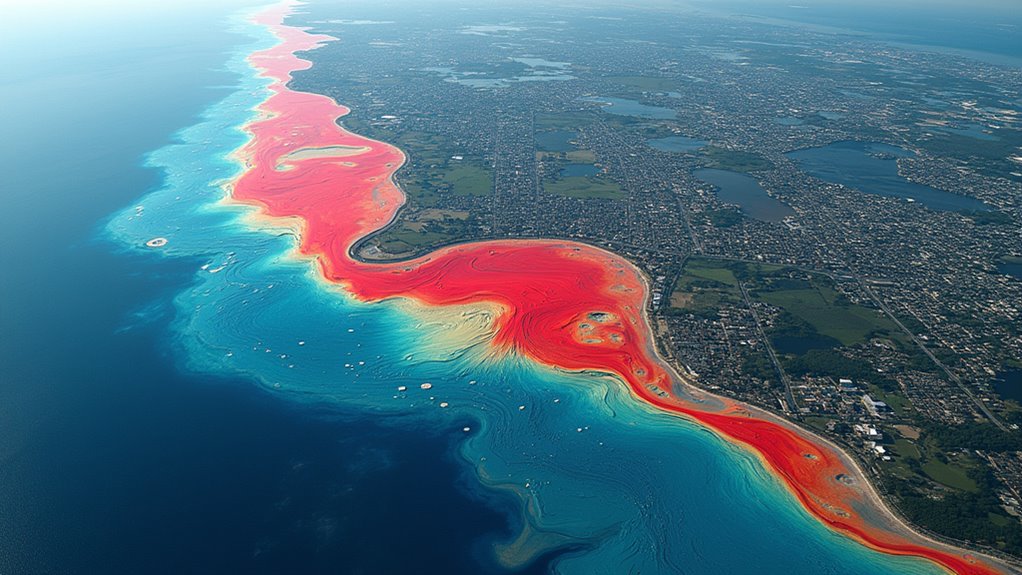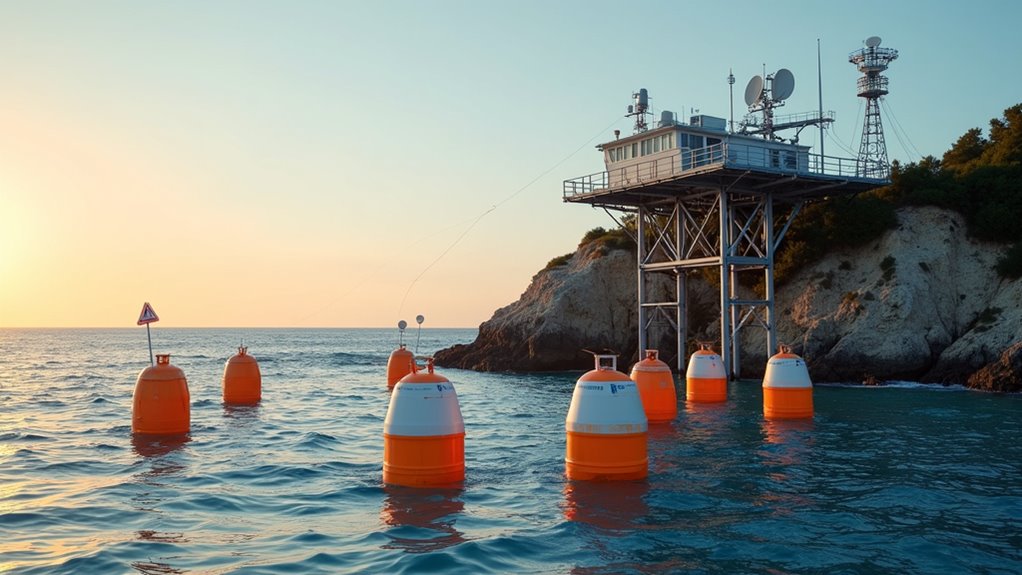

Tsunami warning systems combine advanced technology with international cooperation to detect and alert coastal communities about incoming waves within minutes. These systems utilize seismic sensors, DART buoys, and GPS monitoring to track tsunami formation and movement across oceans at speeds up to 1,000 km/h. Through multiple alert channels – including sirens, emergency broadcasts, and mobile notifications – warning centers provide essential advance notice that helps communities evacuate safely. Understanding how these systems work reveals fascinating innovations that continue saving lives worldwide.

Since the devastating 2004 Indian Ocean tsunami claimed over 230,000 lives, tsunami warning systems have evolved into sophisticated networks that serve as humanity’s first line of defense against these destructive ocean waves. These systems rely on an interconnected web of monitoring equipment, from seismic sensors that detect underwater earthquakes to deep-ocean pressure sensors known as DART buoys that measure unusual wave patterns. The current trends in global warming emphasize the importance of these warning systems, as rising sea levels can increase the impact of tsunamis on coastal communities.
The backbone of modern tsunami detection consists of 24/7 warning centers, with the Pacific Tsunami Warning Center and National Tsunami Warning Center leading the charge. These facilities process data from multiple sources simultaneously, enabling them to issue initial warnings within minutes of a major seismic event. With every minute critical for saving lives during a tsunami event, warning centers work to eliminate any delays in their response. As additional data streams in from tide gauges and satellite systems, experts continually refine their predictions about tsunami arrival times and potential wave heights. Tsunamis can travel at speeds of 500 to 1,000 km/h, making rapid detection crucial for coastal communities.
Modern tsunami warning centers operate around the clock, analyzing multiple data sources to provide rapid alerts and detailed wave predictions.
When a threat is detected, warning centers activate a thorough alert system that reaches coastal communities through multiple channels. Emergency broadcasts interrupt regular TV and radio programming, while coastal sirens wail their distinctive warning tone. Modern technology has enhanced these traditional methods, with mobile phone alerts and social media notifications guaranteeing that warnings reach people wherever they are. Community engagement is vital, as local initiatives and awareness programs help ensure residents understand and respond effectively to these alerts. Disaster preparedness education empowers communities by raising awareness and equipping them with the knowledge to protect themselves and their loved ones during emergencies. Resilient infrastructure is designed to withstand the impact of tsunamis, with innovative engineering techniques ensuring that buildings and escape routes remain functional even in the aftermath of extreme events.
International cooperation plays a significant role in the effectiveness of these warning systems. UNESCO coordinates global tsunami monitoring efforts, while Intergovernmental Coordination Groups facilitate seamless communication across ocean basins. This collaboration has established standardized warning protocols and enables the rapid exchange of essential data between nations, creating a truly global safety net.
Communities strengthen their resilience through the TsunamiReady program, which helps them prepare for potential disasters. Regular drills keep evacuation procedures fresh in residents’ minds, while clearly marked evacuation routes guide people to safety when minutes count. Schools incorporate tsunami awareness into their curricula, making sure that younger generations understand both the dangers and appropriate safety measures.
Technological innovation continues to enhance tsunami warning capabilities. GPS systems now detect ionospheric disturbances caused by tsunamis, while machine learning algorithms improve the speed and accuracy of earthquake characterization. Scientists are even exploring ways to use undersea telecommunications cables as tsunami detectors, potentially creating a vast new network of monitoring points across the ocean floor.
The evolution of tsunami warning systems represents a remarkable achievement in disaster preparedness, demonstrating how technology, international cooperation, and public education can work together to protect vulnerable coastal populations. While no warning system is perfect, these networks have already proved their worth by providing important advance notice that has enabled countless people to reach safety before disaster strikes.
As technology continues to advance and communities become better prepared, these systems will become even more effective at their essential mission of saving lives.
Frequently Asked Questions
Can Tsunamis Occur in Lakes and Other Inland Water Bodies?
Yes, tsunamis can and do occur in lakes and other inland water bodies. These events, often called meteotsunamis when triggered by weather conditions, are documented regularly in large lakes worldwide.
The Great Lakes experience an average of 106 meteotsunamis annually, with Lake Michigan recording the highest frequency at 51 events per year.
These lake tsunamis can be caused by storms, earthquakes, landslides, volcanic activity, and sudden air pressure changes.
How Long Can Tsunami Waves Continue to Impact Coastal Areas?
Tsunami wave trains can impact coastal areas for hours or even days after the initial wave. Individual waves typically arrive 5-90 minutes apart, with the largest waves sometimes occurring later in the sequence.
The total duration depends on factors like earthquake magnitude, ocean topography, and coastal geography. Even after waves subside, dangerous currents and flooding may persist for several days, while permanent changes to coastlines can last indefinitely.
What Is the Average Cost of Installing Tsunami Warning Systems?
The average cost of tsunami warning systems varies considerably based on scale and coverage.
Individual buoy units cost $250,000-$500,000 to install, with annual maintenance running $50,000-$300,000 per unit.
Complete national systems range from $20 million for Australia’s Indian Ocean network to $142 million for Indonesia’s extensive setup.
Recent innovations like fiber optic cables and low-cost receivers have helped reduce expenses, making these life-saving systems more accessible to coastal nations.
Do Underwater Animals Sense Tsunamis Before Detection Systems?
Research suggests marine animals may detect tsunami precursors before detection systems, though evidence remains largely anecdotal.
Deep-sea creatures can sense pressure changes, water displacement, and possibly electromagnetic shifts that precede tsunamis. Dolphins and whales have been observed swimming to deeper waters minutes before tsunami arrival.
However, their behavior isn’t reliable enough for early warning purposes, as animals may react to various environmental triggers unrelated to tsunamis.
How Do Tsunami Warning Systems Operate During Power Outages?
Tsunami warning systems maintain operation during power outages through robust backup power solutions.
Solar panels paired with deep-cycle batteries provide continuous 24 VDC power to electronic sirens, while four 6 VDC batteries guarantee uninterrupted functionality.
The systems operate independently from commercial power grids and feature automatic auxiliary power at control stations.
Multiple communication methods, including VHF radio and satellite systems, remain active through dedicated backup power supplies.