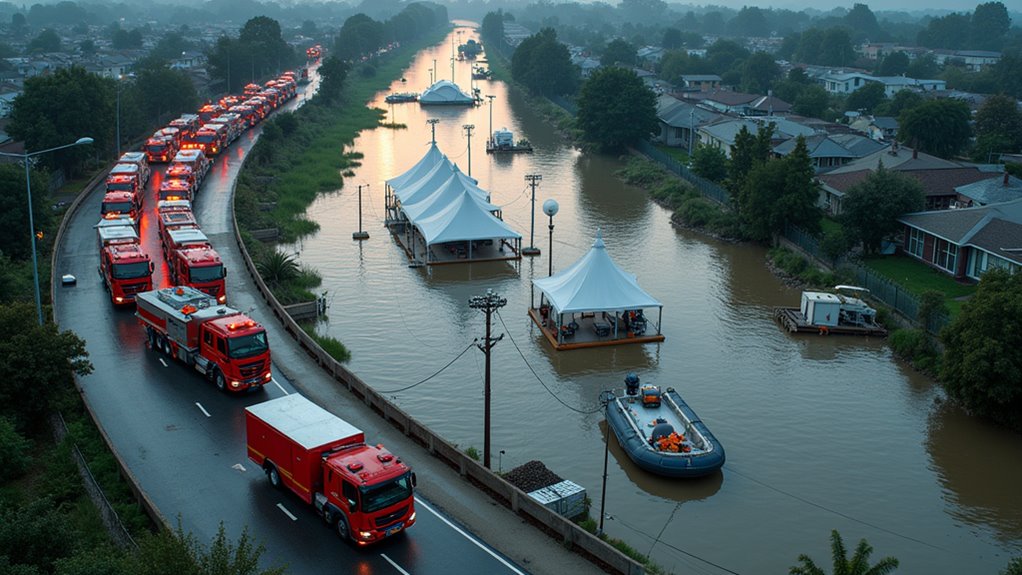
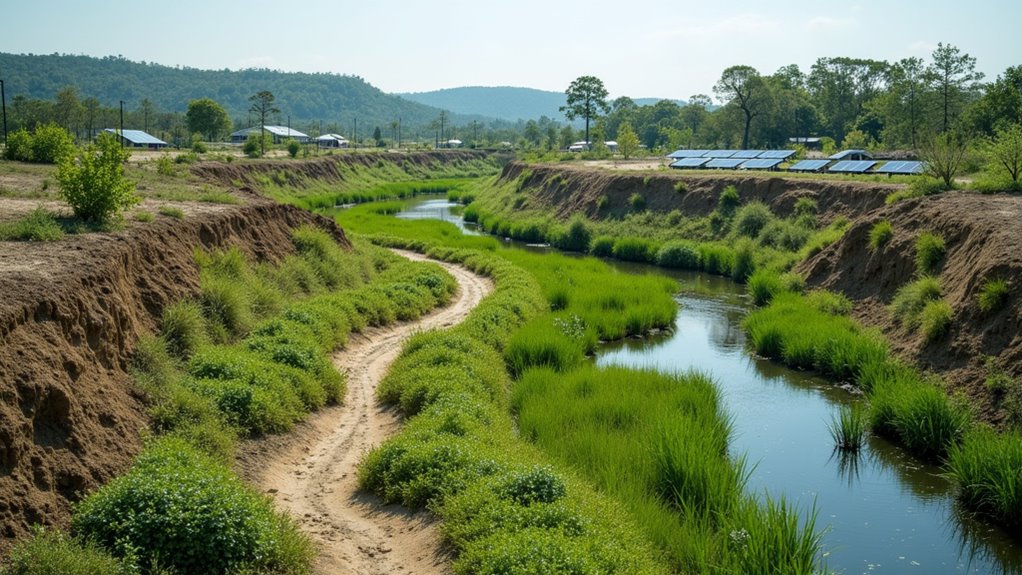
Effective flood risk management integrates advanced GIS technology, proactive water resource strategies, and coordinated emergency response systems. Modern approaches combine accurate hazard mapping with sustainable infrastructure development to protect vulnerable communities. Climate change impacts require adaptive solutions that blend technological tools with practical emergency planning. Local geography and precipitation patterns inform targeted interventions, while public education enhances preparedness. Understanding these integrated approaches reveals the potential for more resilient communities.
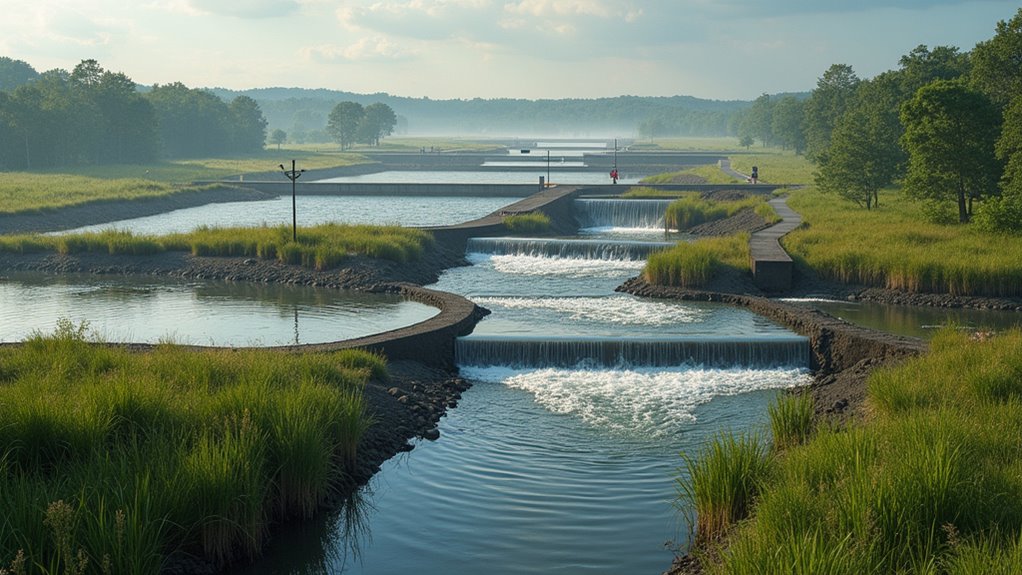
As climate change continues to alter precipitation patterns, the demand for innovative flood risk management solutions will only increase, highlighting the importance of proactive planning and adaptation. Coastal erosion is increasingly aggressive due to higher water levels, which exacerbates the risk of flooding in vulnerable regions. Utilizing GIS for effective risk mapping allows emergency planners to predict hazards more accurately and devise efficient response strategies. The importance of water conservation plays a critical role in managing water resources effectively to mitigate the impacts of climate change and reduce the risk of flooding.
Frequently Asked Questions
How Long Does It Typically Take to Recover From Major Flood Damage?
Recovery from major flood damage typically spans multiple phases, taking anywhere from 14-20 months for full restoration.
The immediate phase (0-3 months) focuses on cleanup and emergency response, while short-term recovery (3-12 months) involves repairs and rebuilding.
Long-term recovery can extend 1-3 years, depending on damage severity, resource availability, and local infrastructure.
Some communities may experience lingering effects, particularly regarding mental health and preparedness planning.
What Percentage of Flood Insurance Claims Come From Low-Risk Areas?
Based on consistent data from multiple sources, approximately 20-25% of all flood insurance claims come from low to moderate-risk areas.
This significant percentage highlights that flooding isn’t limited to high-risk zones. The National Flood Insurance Program (NFIP) reports that nearly one-fourth of their claims originate from these lower-risk regions, demonstrating that flood risk exists everywhere.
This statistic reinforces why flood insurance merits consideration regardless of a property’s designated risk level.
Can Landscaping Changes Around My Home Help Reduce Flood Risk?
Strategic landscaping can considerably reduce flood risk around homes.
Proper grading that slopes away from the foundation (6 inches per 10 feet), combined with deep-rooted native plants and permeable surfaces, creates natural water management.
Installing rain gardens and swales helps redirect runoff, while maintaining gutters and testing sump pumps guarantees effective drainage.
These changes can dramatically decrease water accumulation near the house’s foundation and lower flood risk.
Are There Government Grants Available for Residential Flood Prevention Measures?
Several federal grant programs offer funding for residential flood prevention measures, though homeowners typically need to work through local government channels.
FEMA’s Flood Mitigation Assistance (FMA) and Hazard Mitigation Grant Program (HMGP) can help fund home elevations and floodproofing projects.
State-level programs like New Jersey’s Blue Acres also provide assistance.
Eligibility varies by program, but most require properties to be in high-risk flood zones and projects must meet cost-benefit requirements.
How Often Should Flood Risk Assessments Be Updated for Changing Climate Conditions?
Flood risk assessments should be updated based on local risk levels and changing conditions.
High-risk areas need annual or biennial reviews, while moderate-risk zones require updates every 3-5 years.
Low-risk regions can be assessed every 5-10 years.
However, immediate reassessments are essential after major floods or when new climate projections emerge.
Unfortunately, many current FEMA maps are outdated, with 75% being over 5 years old.