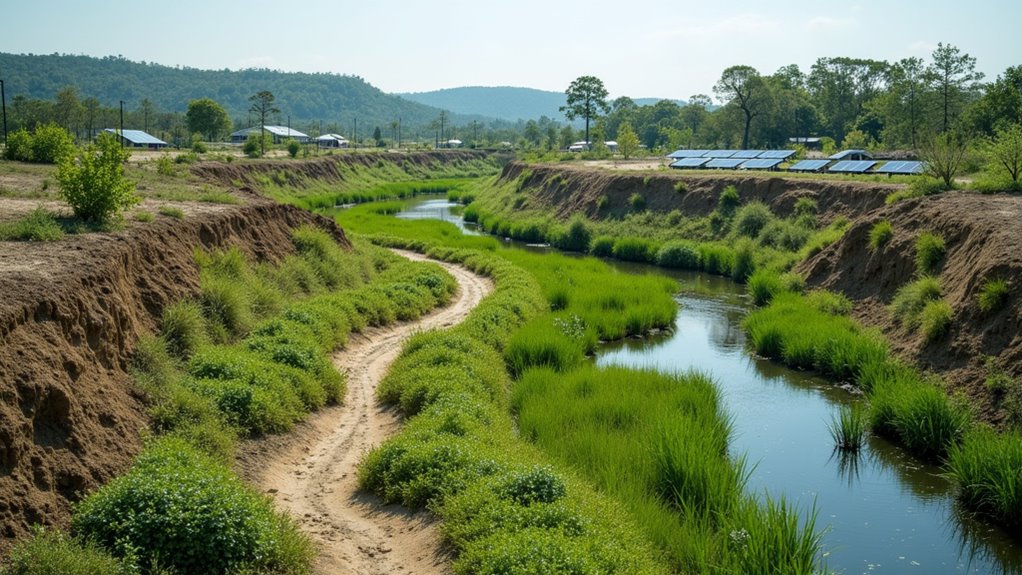
Environmental insurance plays a crucial role in building climate resilience by providing financial protection against pollution incidents and climate-related disasters. With an estimated $71 billion annual revenue potential, this industry drives sustainable business practices through innovative solutions like parametric insurance and ecosystem protection. Public-private partnerships enhance risk assessment methods and promote resilient infrastructure development. Through real-time data collection and creative risk management approaches, environmental insurance helps communities adapt and thrive in an uncertain climate future.
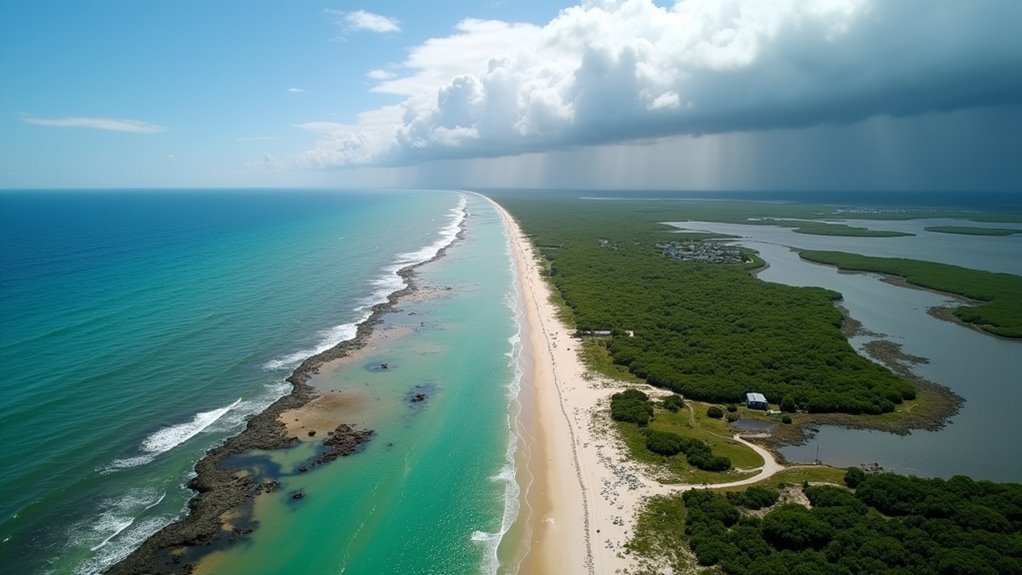
As climate-related disasters continue to intensify worldwide, environmental insurance has emerged as a significant tool in building resilience against mounting ecological threats. This specialized form of coverage goes beyond traditional policies, specifically addressing pollution incidents, clean-up costs, and other environmental challenges that businesses and communities face in an increasingly volatile climate. Natural disasters cause billions in damages each year, straining both national economies and recovery efforts.
The insurance industry finds itself at a pivotal moment as climate change reshapes risk landscapes across the globe. Innovative solutions like parametric insurance for coral reefs have proven successful, as demonstrated by the groundbreaking 2020 payout in Mexico for natural asset recovery. With rising frequencies of extreme weather events threatening lives, property, and economic stability, environmental insurance provides essential financial protection and promotes proactive risk management. Carbon capture and storage technology is becoming increasingly relevant as an additional measure for mitigating emissions and reducing the long-term impacts of climate change. The sector has responded by developing innovative solutions, including parametric insurance that enables rapid payouts after disasters and ecosystem insurance that protects natural buffers against climate impacts. Off-grid solar technology is also playing a crucial role in providing sustainable energy solutions in developing countries, bridging the energy access gap and supporting climate resilience.
The collaboration between governments and insurers has become increasingly important in addressing the widening “protection gap” – the difference between insured and actual losses from climate disasters. Public-private partnerships are working to expand coverage into previously uninsurable markets and integrate insurance into broader climate adaptation strategies. This cooperation has led to improved building codes, more resilient infrastructure, and better risk assessment methodologies. Environmental taxation policies can also influence the effectiveness of insurance strategies by providing financial incentives for businesses to adopt sustainable practices.
Environmental insurance presents a significant opportunity for both insurers and communities. With an estimated $71 billion in annual revenue potential, the sector is rapidly evolving to meet growing demand. These policies not only protect existing markets from climate risks but also improve the insurability of underserved communities. Additionally, environmental insurance serves as a powerful catalyst for sustainable practices, encouraging businesses to adopt cleaner technologies and implement stronger environmental safeguards. Innovative farming practices are also part of the broader climate adaptation strategy, helping to ensure stable food supply despite climate variability.
The industry faces several challenges as it adapts to changing climate realities. Balancing affordability with increasing risks requires innovative approaches to risk assessment and pricing. The development of real-time data collection systems and advanced modeling capabilities is helping insurers better understand and manage these evolving risks. However, the potential emergence of “insurance deserts” in high-risk areas remains a pressing concern that demands creative solutions and industry-wide collaboration.
Looking ahead, environmental insurance will play an increasingly essential role in climate adaptation and resilience building. By providing capital for disaster recovery, promoting risk reduction measures, and supporting economic growth, these policies help communities better prepare for and recover from environmental challenges.
The industry’s commitment to scaling impact through collaboration and innovation suggests a future where insurance not only protects against climate risks but actively contributes to creating a more resilient and sustainable world. As the sector continues to evolve, its ability to adapt and innovate will be significant in helping societies navigate the complexities of climate change while ensuring continued access to essential coverage.
Frequently Asked Questions
How Long Does It Take to Process an Environmental Insurance Claim?
Environmental insurance claims typically take 35-40 days to process, though timelines vary based on complexity.
Standard processing includes 15 days to acknowledge receipt, 15 days for investigation, and 5 days for payment if approved.
Complex cases involving multiple parties or extensive contamination may require additional time.
Extensions up to 10 days are possible with valid justification.
Prompt reporting and thorough documentation help guarantee faster processing.
What Role Do Insurance Brokers Play in Environmental Risk Assessment?
Insurance brokers play an essential role in environmental risk assessment by conducting thorough analyses of client operations and potential exposures.
They utilize advanced software and data analytics to identify, evaluate, and prioritize environmental risks. Brokers leverage their expertise to develop tailored insurance solutions, monitor regulatory compliance, and provide ongoing support.
Their work helps clients understand and mitigate environmental threats while ensuring appropriate coverage is in place.
Can Small Businesses Afford Environmental Insurance Coverage?
Most small businesses can afford environmental insurance, with 38% paying less than $150 monthly.
Options range from basic coverage starting at $1,000 annually to more extensive plans.
Businesses can manage costs by bundling coverage, adjusting deductibles, and exploring different policy types.
While premiums vary based on industry, location, and risk factors, affordable solutions exist through standalone policies or add-ons to existing liability coverage.
Are Natural Disasters Always Covered Under Environmental Insurance Policies?
Environmental insurance policies don’t automatically cover all natural disasters. Coverage varies considerably by policy type and insurer.
While some policies may include certain natural events that lead to pollution releases, many explicitly exclude major catastrophes like earthquakes, floods, and wildfires.
Companies typically need separate specialized coverage for specific natural disasters.
It’s essential for businesses to carefully review their environmental policies’ terms and conditions to understand exactly which perils are covered or excluded.
How Often Should Companies Update Their Environmental Insurance Coverage?
Companies should review their environmental insurance coverage annually at minimum, with additional updates triggered by considerable business changes or emerging risks.
Industry experts recommend quarterly assessments for high-risk operations. Key update drivers include regulatory shifts, operational changes, and new environmental hazards like PFAS.
While multi-year policies may have set renewal periods, companies shouldn’t wait to address coverage gaps when circumstances change considerably.