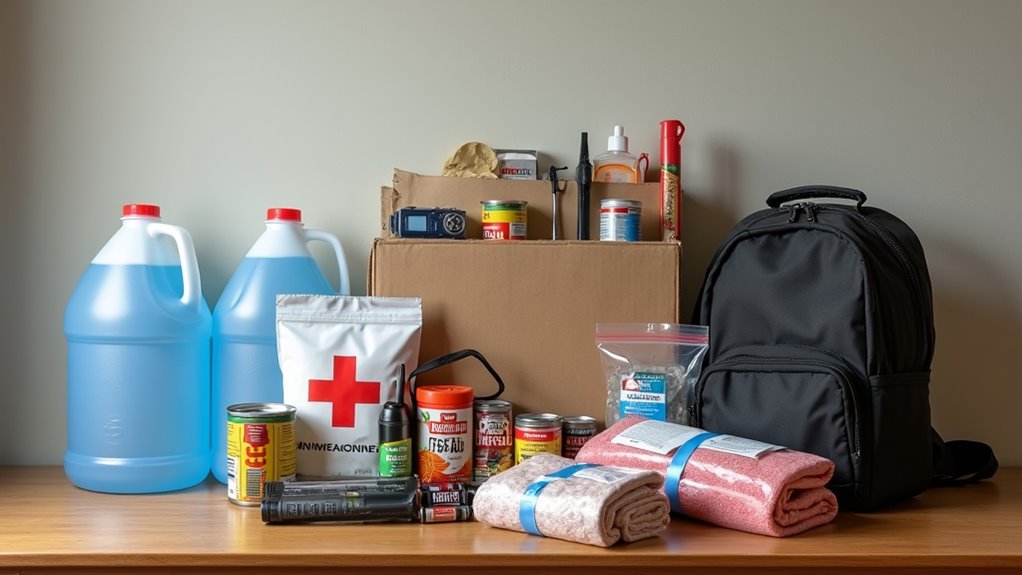

Essential earthquake preparedness steps include securing heavy furniture to walls, maintaining emergency supplies with water and non-perishable food for three days, and establishing clear family communication plans. During shaking, people should drop to hands and knees while protecting head and neck. Having tools ready to shut off damaged utilities and staying informed through earthquake alert apps increases safety. Smart preparation transforms potentially chaotic situations into manageable ones, with countless proven strategies awaiting implementation.

Every earthquake preparedness plan starts with a simple truth: being ready isn’t just smart, it’s indispensable. When the ground begins to shake, having a well-thought-out strategy can mean the difference between chaos and composed action. The key lies in addressing three important areas: securing your environment, assembling emergency supplies, and knowing exactly how to respond when an earthquake strikes. Community engagement in disaster preparedness education further enhances the resilience of vulnerable groups by raising awareness and equipping them with essential skills. Evaluating past environmental disasters can provide valuable insights into effective preparedness strategies.
Creating a safe living space serves as the foundation of earthquake preparedness. This means taking proactive steps like fastening shelves securely to walls, relocating heavy objects to lower shelves, and making sure that items that could become projectiles during shaking are properly secured. Turn off utilities immediately if you suspect damage to gas, water, or electrical lines. As climate change continues to accelerate at an alarming rate, the frequency and intensity of natural disasters, including earthquakes, may increase, underscoring the need for effective preparedness strategies. The use of drought monitoring tools can indirectly aid in understanding broader environmental patterns, which may impact disaster readiness and response.
Secure your space first: anchor shelves, lower heavy items, and fasten loose objects that could become dangerous projectiles during an earthquake.
Smart furniture placement also plays a significant role – keeping beds away from windows and using flexible connections for gas appliances can greatly reduce risk during seismic events. Storing comfort items like blankets and games can help maintain mental well-being during emergencies.
An emergency kit stands as your lifeline during the important hours and days following an earthquake. The basic rule of thumb is to store one gallon of water per person per day for at least three days, along with an ample supply of non-perishable food.
Essential items like flashlights, battery-powered radios, first aid supplies, medications, and important documents should be readily accessible. Having separate kits for home, work, and vehicles ensures you’re prepared regardless of where you find yourself when disaster strikes.
Communication becomes paramount during emergencies, which is why having a solid plan is indispensable. Families should designate an out-of-area contact person who can relay messages between separated family members, as local lines often become overwhelmed.
Identifying meeting places outside both the home and neighborhood provides clear reunion points if separation occurs. Regular practice of earthquake drills helps make sure everyone knows exactly what to do when the ground starts moving.
When an earthquake occurs, proper response can save lives. The recommended action is to drop to hands and knees, cover your head and neck with your arms, and hold onto sturdy furniture until the shaking stops.
If you’re in bed when an earthquake hits, stay there and protect your head with a pillow – trying to move during intense shaking can be dangerous.
Understanding the aftermath is equally important. Aftershocks can continue for days or even weeks following the main earthquake, so staying vigilant is indispensable.
Having tools ready for shutting off damaged utilities, knowing how to check for structural damage, and being prepared for potential evacuation scenarios can prevent secondary disasters.
Modern technology also plays a key role – earthquake alert apps provide important early warnings, while official emergency information sources help people stay informed about developing situations.
Through careful preparation and knowledge, individuals and families can greatly improve their chances of staying safe during and after an earthquake. While we can’t predict exactly when these events will occur, we can make sure we’re ready when they do.
Frequently Asked Questions
How Can I Determine if My Home’s Foundation Is Earthquake-Resistant?
Homeowners can evaluate foundation earthquake resistance through several key steps.
Start by checking the foundation type and age – concrete slabs typically perform better than raised or post-and-pier foundations.
Look for warning signs like cracks wider than 1/8 inch or uneven floors.
A structural engineer can conduct professional assessments using tools like hammer tests and soil surveys.
Local retrofit programs may offer financial assistance for necessary upgrades.
What Should I Do if Trapped in an Elevator During an Earthquake?
During an earthquake, staying in the elevator car is actually the safest option.
Passengers should immediately press all floor buttons to increase chances of stopping, then drop to the floor and take cover.
Using the emergency call button to contact help is essential, but phone usage should be minimal to conserve battery.
It’s important to remain calm, avoid attempting escape through the ceiling hatch, and wait for trained rescuers while staying away from the doors.
Are Pets Allowed in Emergency Shelters After an Earthquake?
Not all emergency shelters accept pets, though policies vary by location.
Most Red Cross shelters only permit service animals for people with disabilities.
However, many communities now offer pet-friendly options like co-located shelters, where pets stay in designated areas near their owners, or cohabitated facilities where people and pets remain together.
To bring pets, owners typically need carriers, vaccination records, and emergency supplies.
It’s essential to identify pet-friendly shelters beforehand.
How Long Can Earthquake Aftershocks Typically Continue?
Earthquake aftershocks can persist for surprisingly long periods.
While most aftershock sequences show the highest activity in the first 24 hours, they typically continue for weeks or months with decreasing frequency.
For major earthquakes (magnitude 7+), aftershocks may last years or even decades.
The duration largely depends on the mainshock’s magnitude – bigger quakes generally produce longer sequences.
Local geology and tectonic settings also influence how long aftershocks continue.
Should I Turn off Gas and Electricity Before or After an Earthquake?
Utilities should only be shut off AFTER an earthquake, and only if damage is suspected.
Do not turn off gas or electricity preemptively. Look for signs of gas leaks (smell, hissing, damaged lines) or electrical issues (sparks, frayed wires) once shaking stops.
According to data from the 1989 San Francisco earthquake, 98% of utility shutoffs were unnecessary.
Follow official instructions and avoid unneeded shutoffs that could delay service restoration.