Five major interconnected threats drive global biodiversity loss. Habitat destruction has altered half of Earth’s land, while climate change forces species to shift their ranges. Pollution, particularly plastics and chemicals, disrupts ecosystems and food chains. Overexploitation has depleted 70% of fish stocks, pushing many species toward extinction. Invasive species, costing $423 billion annually, contribute to 60% of documented extinctions. Understanding these challenges reveals promising pathways for protecting Earth’s remarkable web of life.
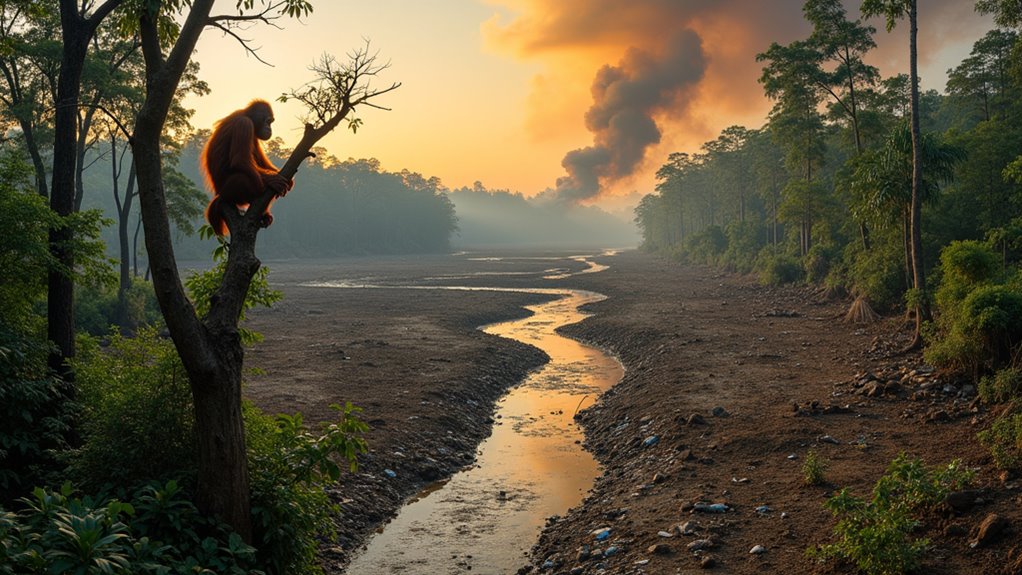
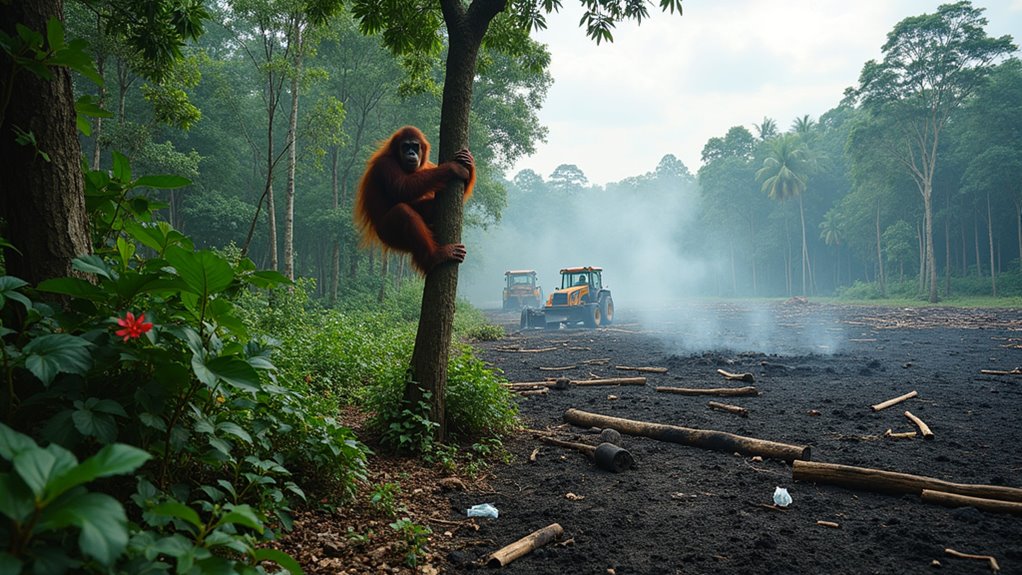
The Earth’s biodiversity faces an unprecedented array of threats that are rapidly reshaping life on our planet. At the heart of this crisis lies habitat destruction, with half of Earth’s land now altered by human activities and 50% of Sumatra’s forests cleared for timber and palm oil plantations. Scientists project that one million species could face extinction in the coming decades without immediate action. The global tree canopy continues to shrink, with nearly 10% lost between 2002 and 2019, while mountain highways slice remaining habitats into isolated fragments. The Forces Behind Extinction, such as deforestation and land conversion, are largely driven by human needs and consumption patterns.
Though wildlife corridors offer some hope by reconnecting these patches, the pace of habitat loss continues to outstrip conservation efforts. Rising sea levels, driven by climate change, threaten coastal habitats such as mangroves and salt marshes, exacerbating the challenges faced by these ecosystems. Increased evaporation rates threaten water quality, further stressing ecosystems dependent on stable water resources.
While conservation initiatives like wildlife corridors show promise, they cannot keep pace with rapid, widespread habitat destruction around the globe.
Climate change amplifies these challenges, with global temperatures potentially rising 1.5°C by 2030. Species are desperately shifting their ranges northward and to higher elevations to survive, while coral reefs struggle against warming and increasingly acidic oceans. More frequent extreme weather events – from devastating fires to prolonged droughts – further stress vulnerable ecosystems already pushed to their limits. The devastating Australian fires of 2019-2020 impacted 97,000 square kilometers of wildlife habitat.
Pollution poses another grave threat, with impacts ranging from acid rain disrupting aquatic environments to fertilizer runoff triggering deadly algal blooms. Marine environments face a particularly dire situation, as plastic pollution has increased tenfold since 1980, now affecting more than 267 species. Even at microscopic levels, pollutants prove toxic to organisms, creating ripple effects throughout food chains.
The oceans face additional pressure from overexploitation, with 70% of fish stocks now depleted. If current fishing practices continue unchecked, scientists warn that oceans could be virtually empty of fish by 2050. This pattern of overexploitation has already driven species like the dodo and Steller’s sea cow to extinction, while southern sea otters now occupy just 13% of their historical range. Protecting animal species through anti-poaching initiatives and reintroduction programs can help restore balance in marine ecosystems.
Adding to these challenges, over 37,000 invasive species have been introduced globally, contributing to 60% of documented extinctions and costing the world economy more than $423 billion annually. Climate change and habitat destruction make ecosystems more vulnerable to these invasions, as demonstrated by the expanding range of tropical lionfish along the Atlantic coast.
Behind many of these threats lies the growing human footprint. With global population exceeding 7.8 billion in 2020, the demand for resources continues to surge. Agriculture alone threatens 85% of the 28,000 species at risk of extinction, while urban development further fragments remaining habitats. The combined impact of these pressures has accelerated species extinctions to 1,000 times the natural background rate.
Despite these sobering trends, solutions exist. Wildlife corridors, sustainable fishing practices, and invasive species management show promise in protecting biodiversity. Success stories like the recovery of some whale populations demonstrate that concentrated conservation efforts can make a difference. The challenge now lies in scaling these solutions to match the magnitude of the threats facing Earth’s remarkable diversity of life.
Frequently Asked Questions
How Do Scientists Measure Biodiversity Loss in Remote or Inaccessible Areas?
Scientists leverage advanced remote sensing technologies to measure biodiversity loss in hard-to-reach areas.
Satellite imagery tracks habitat changes while drones capture detailed terrain data.
Camera traps and acoustic sensors monitor wildlife populations, while eDNA sampling detects species presence from water and soil samples.
Machine learning algorithms process this data to identify trends.
Additionally, LiDAR mapping creates 3D forest models, revealing structural changes that impact biodiversity.
What Role Do Indigenous Communities Play in Protecting Biodiversity?
Indigenous communities serve as essential guardians of Earth’s biodiversity, managing over 28% of global lands and protecting 80% of remaining biodiversity on their ancestral territories.
Their traditional ecological knowledge, passed down through generations, enables sustainable resource management and early detection of environmental changes.
Indigenous-managed areas show lower deforestation rates and higher species diversity than many protected areas, while their traditional farming practices help maintain ecosystem health and resilience.
Can Extinct Species Be Brought Back Through Genetic Engineering?
Genetic engineering offers promising methods for reviving extinct species through techniques like cloning, genome editing, and DNA reconstruction.
Scientists can potentially restore lost species by using preserved genetic material or editing genes of closely related living animals.
However, the process faces significant hurdles including degraded DNA, technical limitations, and high costs.
While complete genetic replicas aren’t yet possible, partial restoration of extinct species’ traits appears achievable through current biotechnology.
How Long Does It Take for an Ecosystem to Recover Naturally?
Ecosystem recovery times vary dramatically based on multiple factors. Most ecosystems take between 10-42 years to recover naturally, though forests may require up to 56 years.
Aquatic systems typically bounce back faster than land-based ones, and recovery from natural disasters is usually quicker than from human-caused damage.
Some severely damaged ecosystems might need centuries or even millenia to fully recover, while others may reach a completely different ecological state.
Which Countries Have the Most Successful Biodiversity Conservation Programs?
Several nations stand out for exemplary biodiversity conservation.
Bhutan leads with its constitutional mandate maintaining 60% forest cover.
Tanzania protects one-third of its territory through national parks, hosting 20% of Africa’s large mammals.
Namibia pioneered environmental protection in its constitution, while Botswana manages sustainable wilderness tourism.
Chile’s creation of 5 new national parks in Patagonia and China’s massive reforestation efforts demonstrate strong commitment to biodiversity preservation.


