

Modern biodiversity monitoring employs an arsenal of high-tech tools to track Earth’s species. Satellites map landscapes in real-time, while environmental DNA sampling detects creatures from water and soil traces. Camera traps and drones capture wildlife activity, as artificial intelligence processes massive datasets. Citizen scientists contribute observations through mobile apps, expanding our knowledge base. Bioacoustic monitoring records animal sounds, revealing behavior patterns. This technological revolution opens new frontiers in understanding life’s complexity.
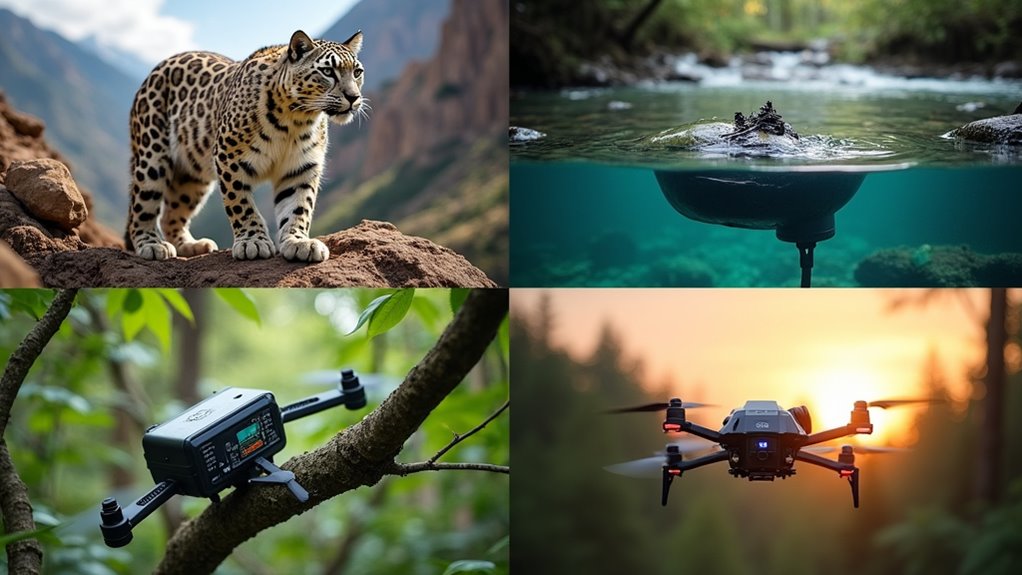
As scientists race to understand and protect Earth’s rich tapestry of life, an arsenal of cutting-edge monitoring tools is revolutionizing how we track and study biodiversity. From satellites orbiting high above to tiny DNA fragments in stream water, these technologies are providing unprecedented insights into the distribution, behavior, and health of species across the globe.
Remote sensing and satellite imagery serve as watchful eyes in the sky, mapping vast landscapes and detecting changes in habitats over time. These tools track deforestation, monitor vegetation health through spectral indices, and reveal patterns of ecosystem change that would be impossible to observe from the ground. Planet Labs provides daily satellite coverage to enable real-time monitoring of environmental changes across the globe. The integration of AI-powered analysis enhances the accuracy and speed of biodiversity tracking through satellite imagery. Increased evaporation rates threaten water quality, impacting the habitats these technologies monitor over time. Citizen scientists play a crucial role in biodiversity monitoring, contributing valuable data through backyard apps and global databases.
When combined with geographic information systems, this data helps scientists identify vital biodiversity hotspots and areas in need of conservation. Modern breeding programs, integrated with cutting-edge technologies and practices, are proving essential in the conservation of species, enhancing genetic diversity and stability.
On the ground, networks of camera traps quietly document wildlife activity day and night. These rugged devices capture remarkable images of elusive species, providing valuable data about animal populations, behavior, and movement patterns. The use of drones complements camera traps by offering aerial perspectives and access to remote areas, further enhancing data collection efforts.
Modern machine learning algorithms can automatically identify species in thousands of photos, dramatically speeding up data analysis and enabling researchers to focus on understanding ecological patterns.
The revolution in genetic technology has brought us environmental DNA sampling, which can detect species presence from mere traces left in water or soil. This powerful technique allows scientists to survey aquatic ecosystems by simply collecting water samples, revealing the presence of multiple species simultaneously without ever seeing them.
The method is now expanding to terrestrial environments, where researchers can even detect airborne DNA.
The sounds of nature also tell important stories about biodiversity. Bioacoustic monitoring uses automated recording units to capture animal vocalizations around the clock. From bird songs to bat echolocation calls, these audio recordings provide valuable data about species presence, behavior, and seasonal patterns.
Machine learning helps process vast amounts of sound data, identifying different species by their unique vocal signatures.
Drone technology has become an invaluable tool for biodiversity monitoring, offering high-resolution aerial imagery and access to remote or dangerous areas. Equipped with thermal cameras, drones can spot warm-blooded animals and assist with anti-poaching efforts.
They’re even being used to disperse seeds and sample vegetation in hard-to-reach locations.
Citizen scientists are joining the effort through mobile apps and online platforms, contributing millions of species observations that help track biodiversity at unprecedented scales.
These crowd-sourced databases, validated by artificial intelligence, provide essential information about species distributions and movement patterns while engaging the public in conservation efforts.
All these tools generate massive amounts of data, which artificial intelligence helps process and analyze. By integrating information from multiple sources, scientists can now model species distributions, predict the impacts of climate change, and identify critical areas for conservation action.
This technological revolution in biodiversity monitoring is providing hope and practical solutions for protecting Earth’s remarkable diversity of life.
Frequently Asked Questions
How Much Does Professional Biodiversity Monitoring Equipment Typically Cost?
Professional biodiversity monitoring equipment varies widely in cost.
Camera traps range from $200-1000+ per unit, with high-end models like the Reconyx Hyperfire 2 around $600.
Acoustic monitoring devices cost $200-2000+, while eDNA sampling equipment runs $50-5000 depending on complexity.
The priciest tools are remote sensing equipment – professional drones ($3000-20,000+), LiDAR sensors ($1000-100,000+), and hyperspectral cameras ($25,000+).
Bulk discounts are sometimes available for large projects.
Can Citizen Scientists Contribute Meaningful Data to Biodiversity Monitoring Efforts?
Citizen scientists make substantial contributions to biodiversity monitoring through platforms like eBird and iNaturalist. Research shows their data quality often matches professional standards, with citizens capable of collecting 51% of data needed for global biodiversity goals.
Using mobile apps and AI-assisted identification tools, volunteers help track species populations, detect invasive species, and fill essential monitoring gaps. Their efforts dramatically expand geographic coverage while reducing costs compared to traditional scientific monitoring.
What Qualifications Are Needed to Become a Biodiversity Monitoring Specialist?
Biodiversity monitoring specialists typically need a bachelor’s degree in biology, ecology, or environmental science, with advanced positions often requiring a master’s degree.
Key qualifications include 3-5 years of field experience, proficiency in GIS software, and expertise in survey methodologies.
Technical skills like using GPS devices and camera traps are essential. Strong communication abilities and project management experience are vital, as is willingness to work in challenging field conditions.
How Often Should Biodiversity Surveys Be Conducted in a Specific Area?
The frequency of biodiversity surveys varies based on ecosystem type and local conditions.
Forests require surveys every 5-10 years, while grasslands need annual monitoring. Wetlands benefit from biannual assessments, and marine ecosystems need quarterly checks. Urban areas should be surveyed every 2-3 years.
Factors like environmental change rates, endangered species presence, and human activities influence these timelines. Seasonal considerations and resource availability also play essential roles in determining ideal survey schedules.
Which Endangered Species Are the Most Challenging to Track and Monitor?
The most challenging endangered species to track are typically those living in remote or inaccessible habitats, like deep-sea organisms and high-altitude dwellers.
Species like the vaquita porpoise (only 10 remaining) and saola (not seen since 1999) prove exceptionally difficult to monitor.
Nocturnal creatures like snow leopards and pangolins, along with highly migratory species such as bluefin tuna, present unique challenges due to their elusive behaviors and vast ranges.


