

Air pollution greatly damages respiratory health by introducing harmful particles and gases that overwhelm the lungs’ natural defenses. These toxins trigger widespread breathing problems, including coughing, wheezing, and decreased lung function. Research shows that chronic exposure leads to serious conditions like asthma and COPD, with children and elderly individuals facing the greatest risks. While air pollution causes 4.2 million premature deaths annually, understanding its effects helps communities take protective action against this invisible threat.
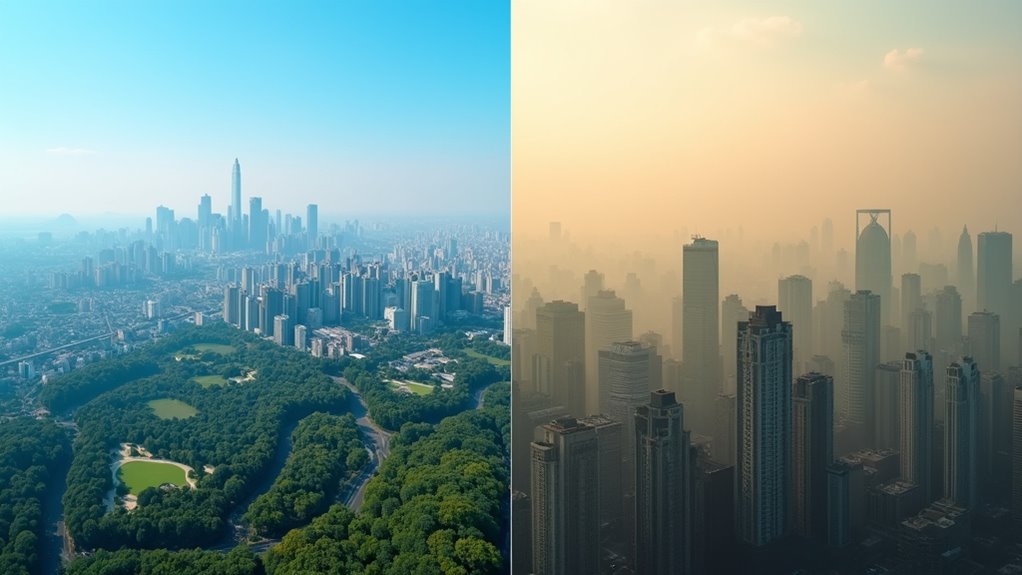
While clean air remains essential for human survival, mounting evidence reveals the devastating impact of air pollution on respiratory health worldwide. The air we breathe has become increasingly contaminated with a toxic cocktail of pollutants, including particulate matter, nitrogen oxides, ozone, sulfur dioxide, and carbon monoxide. These pollutants, primarily generated from vehicle emissions, industrial facilities, and residential energy use, have created a global health crisis that affects nearly every person on Earth. Understanding the sources of air pollution is crucial for developing effective solutions to this pervasive issue.
The immediate effects of air pollution on respiratory health are both widespread and severe. When people inhale polluted air, they often experience coughing, wheezing, and decreased lung function. These symptoms can be particularly problematic for those with existing conditions like asthma or COPD, leading to more frequent hospitalizations and emergency room visits. The human respiratory system, designed to filter and protect against harmful substances, becomes overwhelmed by the constant exposure to these airborne toxins. Additionally, breathing in toxins can have detrimental effects on the heart and brain, further exacerbating the health risks associated with air pollution. Access to clean water is also vital in protecting public health, as water contamination can compound the effects of air pollution. Environmental epidemiologists play a crucial role in studying the links between air pollution and respiratory health, helping to identify high-risk areas and populations.
Air pollution’s assault on our lungs triggers immediate health effects, from persistent coughing to reduced lung function, overwhelming our body’s natural defenses.
Perhaps most concerning is the disproportionate impact on vulnerable populations. Children, whose lungs are still developing, face potential lifelong consequences from early exposure to air pollution. The elderly and those with pre-existing respiratory conditions experience more severe symptoms and complications. Additionally, low-income communities and residents of highly polluted urban areas bear an unfair burden of exposure, creating a troubling environmental justice issue. In Illinois alone, diesel engine exhaust caused over 5,000 asthma attacks and 416 premature deaths in 2023.
The statistics paint a grim picture of air pollution’s global health burden. Each year, approximately 4.2 million people die prematurely due to air pollution exposure. Nearly half of all COPD deaths and about one-third of lung cancer deaths are attributed to poor air quality. Even more alarming is that 99% of the world’s population breathes air that exceeds WHO safety guidelines, with low- and middle-income countries suffering the most severe impacts.
The long-term consequences of chronic exposure are equally disturbing. Adults experience accelerated lung function decline, while children may never develop full lung capacity. The risk of developing chronic respiratory diseases increases considerably, and the likelihood of lung cancer rises with prolonged exposure. These effects create a cascading impact on public health systems and economic productivity worldwide.
However, there is reason for hope. Communities and governments are implementing various prevention and mitigation strategies to combat air pollution. These include stricter air quality standards, shifts to clean energy sources, improved urban planning, and enhanced indoor air filtration systems. Public education about air quality and health risks has also become a priority, empowering individuals to make informed decisions about their exposure and take protective measures when necessary.
The solution to this global challenge requires collective action at all levels of society. By understanding the serious implications of air pollution on respiratory health, we can work together to implement effective solutions and protect the air we all share.
Frequently Asked Questions
Can Wearing a Face Mask Completely Protect Against Air Pollution?
No face mask provides complete protection against air pollution.
While N95 respirators offer the highest filtration (95% of particles ≥0.3μm), they can’t block all harmful substances.
Even properly fitted masks have limitations – they don’t filter gases or protect eyes.
Different mask types vary in effectiveness: surgical masks filter 25-60% of particles, while cloth masks provide minimal protection.
Regular replacement and proper fit are essential for maximum protection.
How Long Does It Take for Lungs to Recover From Pollution Exposure?
Lung recovery from pollution exposure varies considerably based on exposure duration and individual health factors.
Short-term symptoms like coughing and wheezing typically improve within 24-48 hours after exposure ends. However, full recovery can take much longer – from weeks to years.
While acute inflammation subsides within days, cellular repair processes need 6-12 months, and some markers of oxidative stress may take 1-2 years to completely normalize.
Do Indoor Plants Effectively Reduce Indoor Air Pollution Levels?
Recent scientific evidence suggests indoor plants are not as effective at reducing air pollution as previously believed.
While NASA’s 1989 study sparked optimism about plants’ air-purifying abilities, current research indicates it would take an impractical number of plants (10-1,000 per square meter) to notably impact indoor air quality.
Traditional ventilation systems and air purifiers are far more effective.
However, plants still offer other benefits like improving mood and aesthetics in indoor spaces.
Which Cities Worldwide Have the Best Air Quality Standards?
Cities with exceptional air quality standards are largely found in Oceania and Europe.
Sydney leads globally with an impressive AQI of 10, followed by Auckland at 12.
European cities like Bratislava, Stockholm, and Oslo maintain excellent standards with AQI levels below 20.
While Oceania remains the world’s cleanest region, with 54.5% of its cities meeting WHO guidelines, global statistics show only 11.7% of cities worldwide achieve these standards.
Can Respiratory Damage From Long-Term Air Pollution Exposure Be Reversed?
While some respiratory damage from air pollution exposure can improve when exposure stops, complete reversal is generally not possible.
Lung deterioration, especially from conditions like COPD, tends to be permanent. However, early intervention and reduced exposure can slow disease progression and prevent further damage.
The body has limited capacity to heal respiratory tissues, making prevention through air quality management and personal protection measures critically important for long-term lung health.


