

Sand mining severely disrupts both aquatic and terrestrial ecosystems through extensive habitat destruction. The practice leads to river erosion, declining fish populations, and loss of critical breeding grounds for endangered species. Environmental impacts include dropping groundwater levels, increased flooding risks, and destruction of natural coastal barriers. With global demand reaching 50 billion tonnes annually, the damage extends to local communities through infrastructure deterioration and economic losses. Understanding these interconnected effects reveals the true scope of this growing challenge.
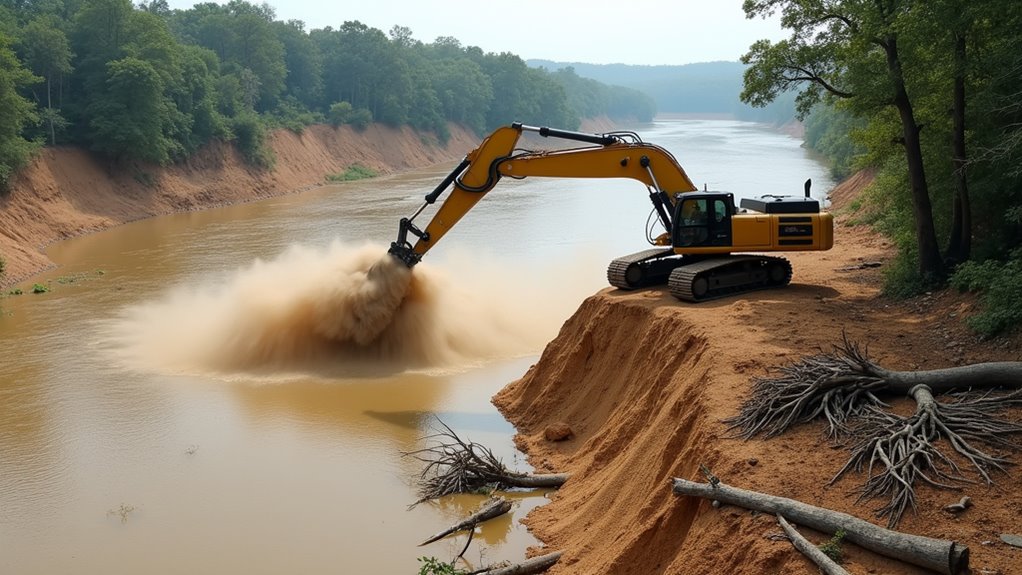
While sand may seem like an infinite resource scattered across beaches and deserts worldwide, the massive scale of sand mining is creating an ecological crisis that threatens both aquatic and terrestrial ecosystems. The extraction of sand from riverbeds, coastlines, and marine environments has triggered a cascade of environmental impacts that extend far beyond the immediate mining sites. Rivers are experiencing severe erosion and deepening, while coastal areas are losing their natural protective barriers against storms and rising seas. Ecosystems face disruption with changing precipitation patterns leading to severe droughts and flooding, exacerbated by the loss of sand-based natural buffers. Sustainable practices, similar to those in sustainable fisheries, could help balance extraction needs with environmental conservation. The global importance of water conservation is directly tied to sustainable sand management, as these activities impact water resources worldwide.
The consequences for biodiversity are particularly devastating. Fish populations are declining as their breeding grounds are destroyed, and species like the Yangtze finless porpoise face increased threats to their survival. The destruction of riverbank vegetation has led to a notable decrease in bird populations, especially among migratory species that depend on these habitats for rest and nourishment during their seasonal journeys. With a staggering demand of 50 billion tonnes annually, the pressure on these ecosystems continues to mount. Scientists in the field of environmental epidemiology are studying how these ecological disruptions can lead to increased health risks for human populations living nearby.
Sand mining decimates wildlife habitats, threatening endangered species and disrupting crucial migratory patterns for countless birds and marine life.
Water resources are being severely compromised by sand mining activities. Groundwater tables are dropping, and freshwater sources are becoming increasingly saline. The increased turbidity and sedimentation in water bodies not only affects aquatic life but also poses challenges for communities that rely on these water sources for drinking and agriculture. The salination of aquifers is becoming increasingly common in coastal regions where sand mining occurs. The altered hydrological cycles in river systems have disrupted natural flooding patterns, making areas more susceptible to both floods and droughts.
The climate implications of sand mining are considerable as well. Mining operations contribute to increased CO2 emissions, while the removal of vegetation eliminates valuable carbon sinks. These changes have created altered local microclimates and left communities more vulnerable to extreme weather events. The loss of natural coastal protection has become particularly concerning as climate change leads to more frequent and intense storms.
The economic toll of sand mining extends beyond immediate profits. Infrastructure damage to bridges and pipelines requires costly repairs, while local fishing communities suffer from depleted fish stocks. Tourism revenue has declined in many affected coastal areas, and the long-term costs of environmental restoration far exceed the short-term gains from mining operations.
Communities near mining sites face numerous challenges, including displacement and health risks from silica dust exposure. Traditional livelihoods that depend on healthy rivers and coasts are disappearing, leading to increased conflict over diminishing resources. The quality of life in these areas has deteriorated considerably, affecting both physical and mental well-being of residents.
The regulatory landscape remains inadequate to address these challenges. While some countries have implemented restrictions, the lack of global regulations and the prevalence of illegal mining activities continue to hamper conservation efforts. Environmental impact assessments are often insufficient or bypassed entirely, highlighting the urgent need for thorough sustainable sand management policies that can protect both ecosystems and communities.
Frequently Asked Questions
What Are the Legal Requirements for Obtaining a Sand Mining Permit?
Legal requirements for sand mining permits include submitting detailed applications to regulatory authorities with non-refundable fees, conducting environmental impact assessments, and developing mine plans certified by licensed professionals.
Operators must consult landowners, maintain specified distances from boundaries and water bodies, and implement dust/noise controls.
Additional requirements include regular inspections, detailed record-keeping, and obtaining separate permits for water use/discharge when applicable.
How Long Does It Take for a Mined Area to Naturally Recover?
Natural recovery times for mined areas vary considerably based on several factors.
Sand dunes and beaches typically need 15-20 years to replenish, while river systems can take decades to fully recover. The process depends heavily on the mining’s intensity, sediment characteristics, and local environmental conditions.
Lakes show particularly slow recovery – for instance, benthic life in Dongting Lake decreased by 99% at mining sites. Complete ecosystem restoration occurs only when original sediment composition returns to pre-mining levels.
What Alternative Materials Can Replace Sand in Construction Projects?
Several sustainable materials can effectively replace sand in construction.
Recycled materials like crushed glass and construction waste can substitute 25-50% of sand in concrete mixes.
Industrial byproducts such as quarry dust, fly ash, and ground granulated blast furnace slag offer viable alternatives.
Engineered solutions including ferrock and graphene aggregates provide innovative options, while natural alternatives like hemp and bamboo present eco-friendly choices for various construction applications.
How Do Local Communities Benefit Economically From Sand Mining Operations?
Local communities experience significant economic benefits from sand mining operations through multiple channels.
The industry creates direct employment opportunities in mining and processing while generating indirect jobs in transportation and support services.
Mining activities boost local government revenue through taxes and fees. Communities often receive funding for development projects like roads, community centers, and infrastructure.
Local businesses also benefit from increased economic activity and spending by mining employees.
What Technologies Are Being Developed to Make Sand Mining More Sustainable?
Several innovative technologies are transforming sand mining sustainability.
Sustainable Sand Harvesting (SSH) technology employs advanced modeling to identify ideal mining zones while protecting ecosystems.
Mobile Mining Units reduce CO2 emissions by 70% and operating costs by half through on-site processing.
Ore-sand production repurposes mining waste, potentially replacing 1 billion tons of sand demand in China.
Additionally, recycling initiatives convert waste materials like concrete and glass into viable sand alternatives.


