

Urban environments can become thriving biodiversity hotspots through strategic planning and innovative solutions. Cities worldwide are transforming concrete jungles into wildlife sanctuaries using green roofs, living walls, and urban forests that reduce temperatures by up to 5°C. Barcelona’s Trees Masterplan and Singapore’s “City in a Garden” demonstrate how metropolitan areas support diverse species while providing essential ecosystem services. These succesful initiatives offer a blueprint for nurturing nature alongside urban development – and the possibilities are just beginning to unfold.
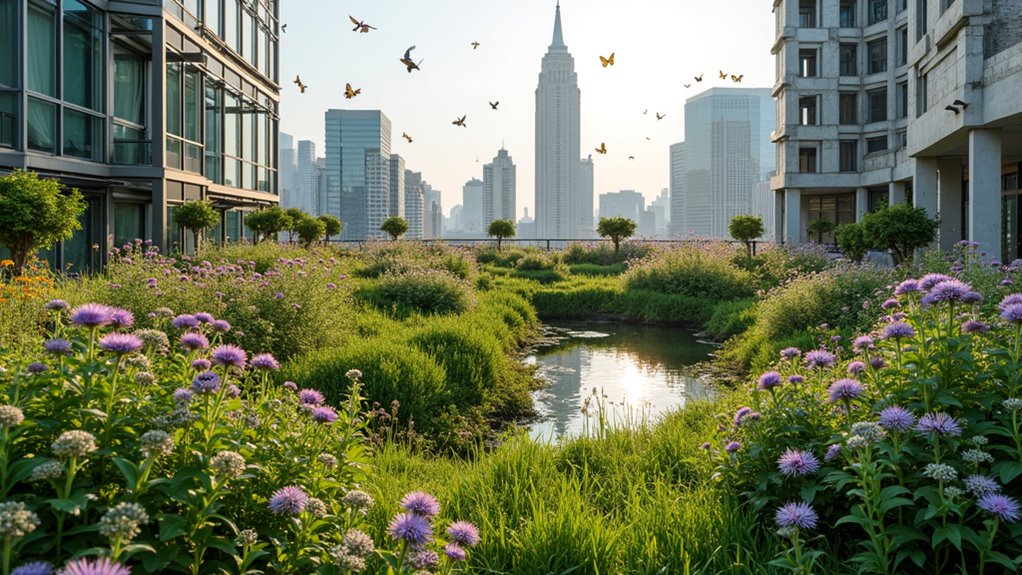
Three billion people now live in urban areas worldwide, yet these concrete jungles are far from biological deserts. Cities harbor an incredible variety of life, from native plants and animals to fungi and microorganisms that have adapted to thrive alongside humans. This urban biodiversity provides essential ecosystem services, including air purification, climate regulation, and pollination, while supporting human wellbeing through improved mental health and opportunities for physical activity. Urban green spaces can reduce temperatures by 1 to 5 degrees Celsius, offering significant relief from urban heat. By 2030, urban population is expected to double as cities continue expanding rapidly. Cities with thriving green spaces not only enhance public well-being but also serve as critical havens for local flora and fauna. These successes illustrate how well-coordinated efforts can positively impact both urban and natural environments, creating sustainable habitats for diverse species.
Cities are transforming to embrace their role as habitats for diverse species. Parks, gardens, and green spaces serve as sanctuaries for local wildlife, while innovative solutions like green roofs and living walls create vertical oases in dense urban landscapes. Urban forests and street trees not only provide shelter for birds and insects but also help mitigate the urban heat island effect and improve air quality. Even seemingly unlikely spaces like brownfields and vacant lots can become valuable wildlife habitats when managed thoughtfully. Protecting biodiversity hotspots is crucial, as these areas house extraordinary species diversity that is under threat, emphasizing the need for urban spaces to contribute to global biodiversity conservation. Sustainable practices, such as humane animal husbandry, can be integrated into urban farming to further support ecological balance.
Modern cities are evolving beyond concrete, transforming urban spaces into thriving sanctuaries for diverse wildlife through innovative green solutions.
Successful initiatives around the world demonstrate how cities can nurture biodiversity. Barcelona’s ambitious Trees Masterplan and green corridor program connects fragmented habitats, allowing wildlife to move freely through the urban landscape. Singapore’s “City in a Garden” vision has transformed the island nation into a model of urban biodiversity, while New York City’s Million Trees NYC project has notably expanded the city’s urban forest canopy.
Despite these successes, urban biodiversity faces considerable challenges. Habitat loss and fragmentation continue as cities expand, while pollution and climate change threaten existing ecosystems. However, cities are implementing innovative strategies to address these issues. Biodiversity-friendly urban planning policies, the promotion of native plant species, and reduced pesticide use are becoming standard practices in forward-thinking municipalities.
The benefits of urban biodiversity extend beyond environmental conservation. Properties in biodiverse areas often see increased values, while natural systems provide cost-effective solutions for stormwater management and flood risk reduction. Urban wildlife also creates valuable educational opportunities, connecting city dwellers with nature and fostering environmental awareness.
Measuring and monitoring urban biodiversity has become increasingly sophisticated. The City Biodiversity Index, also known as the Singapore Index, provides a standardized way to assess and track progress. Citizen science projects engage communities in data collection, while advanced technologies like remote sensing and GIS mapping help cities make informed decisions about conservation efforts.
The future of urban biodiversity lies in the hands of city planners, policy makers, and residents working together to create environments where both humans and nature can flourish. By implementing proven strategies and embracing innovative solutions, cities can transform from concrete jungles into vibrant ecosystems that support diverse forms of life while enhancing the quality of life for their human inhabitants.
Frequently Asked Questions
How Do City Noise Levels Specifically Affect Bird Mating Patterns?
City noise levels severely disrupt bird mating by masking their essential courtship songs.
Traffic and urban sounds force birds to modify their natural vocalizations – singing at higher pitches or volumes to be heard over the din.
This adaptation comes at a cost: eggs in noisy areas are 19% less likely to hatch, and breeding success drops by 40%.
Some species even abandon traditional mating grounds altogether, seeking quieter locations for reproduction.
Can Rooftop Gardens Support Endangered Insect Species Effectively?
Research shows rooftop gardens can effectively support endangered insect species when properly designed.
Studies demonstrate these gardens attract diverse insects, with some European sites hosting rare species previously thought extinct in urban areas.
Key success factors include varied substrate depths, native wildflower mixes, and habitat features like wood piles.
While colonization can be challenging for ground-dwelling species, rooftop habitats provide vital refuges for specialized pollinators and other endangered insects.
What Percentage of Urban Wildlife Adapts Successfully to Artificial Light?
Research suggests that adaptation rates to artificial light vary considerably among species.
While approximately 30-40% of urban wildlife shows some successful adaptation, the responses differ dramatically. Some species like house sparrows and certain owls thrive, with growing populations in illuminated areas.
However, many others struggle – particularly migratory birds, sea turtles, and nocturnal insects. The success rate drops even lower for specialized species that require specific light conditions for breeding or navigation.
How Do Urban Heat Islands Influence the Evolution of Local Species?
Urban heat islands drive rapid evolutionary changes in local species through intense temperature pressures.
Species adapt or perish – we see red-leaved Oxalis thriving where green variants can’t survive, urban spiders developing shorter lifespans, and city birds evolving larger brains.
The elevated temperatures (up to 20°F warmer than rural areas) create natural laboratories for studying climate adaptation, as organisms must quickly develop traits for heat tolerance or face local extinction.
Do Underground Urban Structures Provide Viable Habitats for Native Animals?
Underground urban structures provide surprisingly effective habitats for native wildlife.
From extensive tunnel networks used by badgers and foxes to modified drainage systems hosting various species, these spaces offer essential benefits: stable temperatures, protection from predators, and safe breeding areas.
Research shows urban foxes thrive in these environments, with 37% denning under garden sheds in Bristol, while urban bees demonstrate higher winter survival rates than their rural counterparts.


