

Environmental epidemiology uncovers essential links between our surroundings and disease patterns through rigorous scientific investigation. Studies track populations over time, analyzing how air pollution, water contamination, and toxic substances impact human health. This research has revealed clear connections between environmental factors and respiratory diseases, cardiovascular problems, and other health issues. Modern technology and advanced methodologies help scientists untangle complex exposure interactions, leading to better regulations and prevention strategies. The field continues to expose hidden health threats while empowering communities with life-saving knowledge.
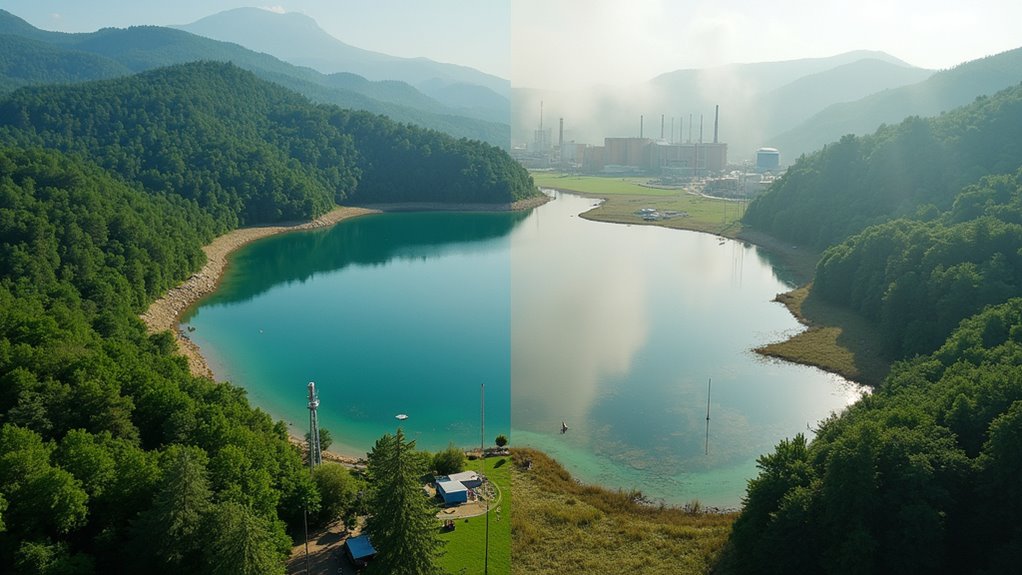
Countless environmental factors shape human health outcomes across the globe, making environmental epidemiology a vital field for understanding and preventing disease. Through rigorous scientific methods and advanced monitoring techniques, researchers track how everything from air pollution to water contamination affects human wellbeing. This growing body of knowledge has revealed significant patterns in how our environment impacts public health, leading to better policies and prevention strategies.
Environmental epidemiologists employ a diverse toolkit to uncover these relationships. They conduct large-scale studies tracking exposed and unexposed populations over time, analyze historical case-control data, and use sophisticated Geographic Information Systems to map disease patterns. Modern technology allows scientists to measure countless environmental variables – from microscopic air particles to chemical traces in drinking water – while simultaneously monitoring health outcomes through hospital records, disease registries, and biomarkers in human tissues. Environmental health is profoundly influenced by the interconnectedness of ecosystems, where pollution and habitat changes can propagate through food webs and impact human health. The increasing prevalence of heat waves poses direct and indirect health risks, further emphasizing the need for comprehensive environmental health monitoring. The importance of water conservation is also highlighted by the fact that water scarcity can exacerbate health issues by limiting access to safe drinking water and sanitation.
Advanced monitoring tools enable scientists to track environmental exposures and health outcomes across populations with unprecedented precision and detail.
The field has identified several important environmental threats to human health. Harmful algal blooms, fueled by warming waters and excess nutrients, can release dangerous toxins into water supplies. Per- and polyfluoroalkyl substances (PFAS), known as “forever chemicals,” persist in the environment and accumulate in living organisms, potentially causing serious health effects. Air pollution, particularly in urban areas, has been definitively linked to respiratory diseases, cardiovascular problems, and premature death.
Yet studying these environmental health connections presents unique challenges. Many diseases develop slowly after exposure, making it difficult to establish clear cause-and-effect relationships. People are typically exposed to multiple environmental factors simultaneously, creating complex interaction effects that are hard to untangle. Additionally, measuring individual exposure levels accurately can be tremendously difficult, especially for historical exposures.
Despite these obstacles, environmental epidemiology has driven remarkable progress in protecting public health. Research findings have led to stronger regulations on air and water quality, improved understanding of climate change‘s health impacts, and better methods for detecting and responding to environmental hazards. The field continues to advance our knowledge of how genes interact with environmental factors to influence disease risk.
The insights from environmental epidemiology extend beyond just identifying problems – they point the way toward solutions. Early warning systems for environmental hazards, more effective disease prevention strategies, and targeted interventions for at-risk populations all stem from this research.
As our planet faces increasing environmental challenges, from climate change to chemical pollution, environmental epidemiology provides the scientific foundation for protecting public health and creating a more sustainable future. This knowledge empowers communities and policymakers to make informed decisions about environmental risks and take action to prevent disease before it occurs.
With global temperatures rising by 2°F since 1850, the urgency of addressing these environmental health issues becomes more critical, emphasizing the need for continued research and intervention.
Frequently Asked Questions
How Do Urban Heat Islands Affect the Spread of Infectious Diseases?
Urban heat islands considerably amplify infectious disease transmission in cities.
The elevated temperatures, typically 3-5°C higher than surrounding areas, create ideal conditions for disease vectors like mosquitoes and ticks to breed and survive longer.
These warmer environments extend transmission seasons, boost pathogen replication rates, and increase bacterial growth in water sources.
Combined with dense populations and climate change impacts, urban heat islands accelerate the spread of vector-borne and waterborne illnesses.
Can Environmental Pollutants Trigger Genetic Mutations Across Multiple Generations?
Research shows that environmental pollutants can indeed trigger genetic and epigenetic changes that persist across multiple generations.
Studies have documented how exposure to toxicants alters DNA methylation patterns and histone modifications in ways that can be inherited.
For instance, mice exposed to industrial air pollution showed doubled mutation rates in offspring, while pesticide effects appeared in rodents’ grandchildren.
These changes can influence disease susceptibility, fertility, and other health outcomes in descendants.
What Role Do Microplastics Play in Chronic Respiratory Conditions?
Microplastics play a significant role in chronic respiratory conditions through multiple mechanisms.
These tiny particles, often less than 300 μm, penetrate deep into lung tissue, triggering asthma-like symptoms and chronic bronchitis.
Research shows humans inhale up to 130 airborne microplastics daily, which can cause inflammation, oxidative stress, and cellular damage.
The particles’ presence has been linked to reduced lung capacity, pulmonary emphysema, and interstitial lung diseases, making them a serious concern for respiratory health.
How Does Climate Change Influence the Geographical Distribution of Disease Vectors?
Climate change dramatically reshapes where disease vectors like mosquitoes and ticks can survive and thrive. Rising temperatures allow these organisms to expand into previously inhospitable regions, particularly at higher latitudes and altitudes.
Warmer winters boost vector survival rates, while altered rainfall patterns create new breeding grounds. This expansion has led to the emergence of diseases like dengue and West Nile virus in regions where they weren’t historically present, including parts of Europe and North America.
Do Electromagnetic Fields From Power Lines Impact Human Immune System Function?
Scientific evidence on EMF exposure from power lines and immune function remains inconclusive.
While laboratory studies show EMF can affect immune cell activity in mice – with low doses increasing and high doses decreasing immune responses – human research hasn’t demonstrated consistent effects.
The WHO classifies EMF as possibly carcinogenic, but exposure levels from power lines typically fall well below international safety limits.
More research is needed on long-term, low-level exposure impacts.


