

Soil pollution poses an urgent threat to global food production, with contaminated farmland showing 15-20% lower yields and containing dangerous levels of pesticides and industrial toxins. Agricultural chemicals and pollutants not only degrade soil quality but also impact human health through contaminated food and water supplies, leading to over 500,000 premature deaths annually. While the crisis is serious, sustainable farming practices and improved regulations offer promising solutions to restore and protect agricultural soils – uncovering these answers could help secure our food future.
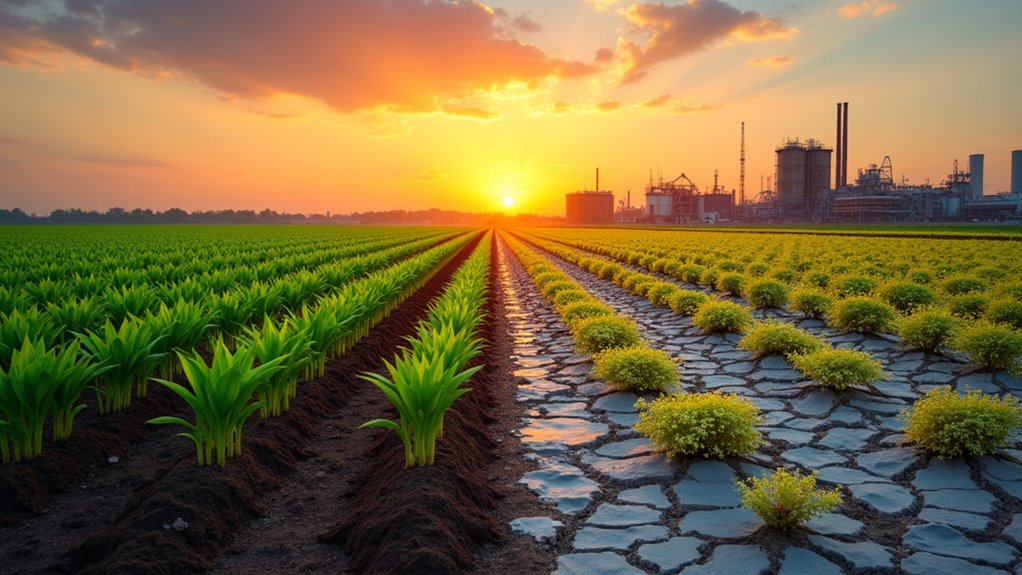
While modern agriculture has revolutionized food production worldwide, the growing crisis of soil pollution threatens to undermine decades of progress in feeding Earth’s population. The contamination of agricultural soils has become a silent epidemic, with chemical fertilizers, pesticides, and industrial pollutants steadily poisoning the very foundation of our food systems. With recovery periods taking hundreds of years, soil restoration remains one of the greatest challenges in addressing this crisis.
The numbers paint a stark picture of this creeping crisis. Agricultural productivity has dropped by 15-20% in contaminated areas, while a shocking 80% of European farmland contains pesticide residues. Heavy metals like cadmium exceed safe levels in over one-fifth of Europe’s agricultural soils, creating a toxic legacy that persists for generations. These contaminants don’t just stay in the soil – they move up through the food chain, accumulating in crops and eventually reaching our dinner plates. Mining activities have emerged as a major contributor to soil degradation, releasing dangerous levels of heavy metals into farmland. Altered precipitation patterns, a consequence of climate change, further exacerbate soil pollution by affecting the natural filtration of contaminants. Implementing water-efficient techniques such as drip irrigation and rainwater harvesting can help mitigate some of the water-related impacts of soil pollution.
The human toll is equally alarming, with soil pollution linked to more than 500,000 premature deaths globally each year. Exposure through contaminated food and water affects multiple organ systems, with children and elderly people facing the greatest risks. Poor communities often bear the heaviest burden, as they’re more likely to farm or live near polluted land with limited resources for remediation. Organic farming practices, which emphasize techniques like crop rotation, can also play a vital role in minimizing soil contamination by reducing the reliance on chemical inputs. Studies have shown that long-term effects of exposure to pesticides can lead to severe health issues, including cancer and neurological disorders.
Soil pollution’s deadly impact falls hardest on vulnerable populations, claiming hundreds of thousands of lives while disproportionately affecting the poor.
The economic impact ripples throughout society. Beyond reduced crop yields and land values, there are mounting costs for soil cleanup, healthcare for affected populations, and losses from contaminated food products that must be destroyed. The presence of persistent organic pollutants (POPs) and excess nutrients has disrupted crucial soil ecosystems, making crops more vulnerable to pests and diseases while reducing their nutritional value.
But there’s hope on the horizon. A growing movement toward sustainable agricultural practices offers practical solutions to prevent further soil degradation. Organic farming methods, improved regulation of agrochemicals, and advanced soil monitoring programs are showing promising results. Scientists are also developing pollution-resistant crop varieties, while public education campaigns are helping farmers and consumers understand the risks and prevention strategies.
The challenge now is to scale up these solutions before the damage becomes irreversible. This requires a coordinated effort from governments, farmers, and consumers to prioritize soil health. Simple changes in farming practices, like reducing chemical inputs and proper waste management, can make a significant difference.
The technology and knowledge to address soil pollution exist – what’s needed is the collective will to implement these solutions. The future of agriculture depends on healthy soil, and the time to act is now. While the current situation is serious, the growing awareness and available solutions provide reason for cautious optimism. By taking decisive action to protect our soils today, we can guarantee sustainable food production for generations to come.
Frequently Asked Questions
Can Polluted Soil Be Completely Restored to Its Original Healthy State?
Complete restoration of polluted soil to its original pristine state is extremely challenging and often impossible.
While various remediation techniques like bioremediation, phytoremediation, and chemical treatments can greatly improve soil health, the slow process of soil formation (100-1000 years) and persistent pollutants like heavy metals make full recovery rare.
However, strategic combinations of treatments, coupled with long-term management approaches, can achieve meaningful improvements in soil quality and functionality.
How Long Does It Take for Pesticides to Break Down in Soil?
Pesticide breakdown varies considerably, typically ranging from days to several years depending on multiple factors.
Modern pesticides generally decompose within weeks to months, while older chemicals like DDT can persist for decades.
Soil conditions, including temperature, moisture, and microbial activity, heavily influence breakdown rates.
For example, glyphosate has a 47-day average half-life, while carbaryl breaks down in just 1-18 days.
Environmental factors like sunlight exposure also affect decomposition speed.
What Role Do Earthworms Play in Reducing Soil Pollution?
Earthworms serve as natural soil cleanup crews, playing multiple roles in reducing pollution.
These beneficial organisms break down organic matter and toxic compounds while improving soil structure through their burrowing. They can bioaccumulate heavy metals in their tissues, removing them from soil, and boost helpful bacteria populations by up to 1000 times in their castings.
Their activity enhances soil’s natural ability to filter and neutralize pollutants, making them valuable allies in environmental restoration.
Are Organic Fertilizers Completely Safe for Soil Health?
While organic fertilizers offer many benefits, they are not completely risk-free for soil health.
Despite being generally safer than synthetic alternatives, organic fertilizers can cause problems if used incorrectly.
Potential risks include pathogen contamination from raw manure, introduction of weed seeds, elevated salt levels, and nutrient imbalances from over-application.
Their nutrient content and release rates are also less predictable, which could lead to environmental issues if not managed properly.
How Does Soil Pollution Affect the Nutritional Value of Crops?
Soil pollution considerably degrades the nutritional quality of crops through multiple mechanisms.
It reduces plants’ ability to absorb essential nutrients like zinc, iron, and phosphorus by up to 50%. Heavy metals and contaminants disrupt crucial processes like photosynthesis and protein synthesis, while damaging beneficial soil microbes that help release nutrients.
As a result, crops grown in polluted soils typically contain 10-25% fewer minerals and 5-15% lower vitamin content overall than those from healthy soils.


