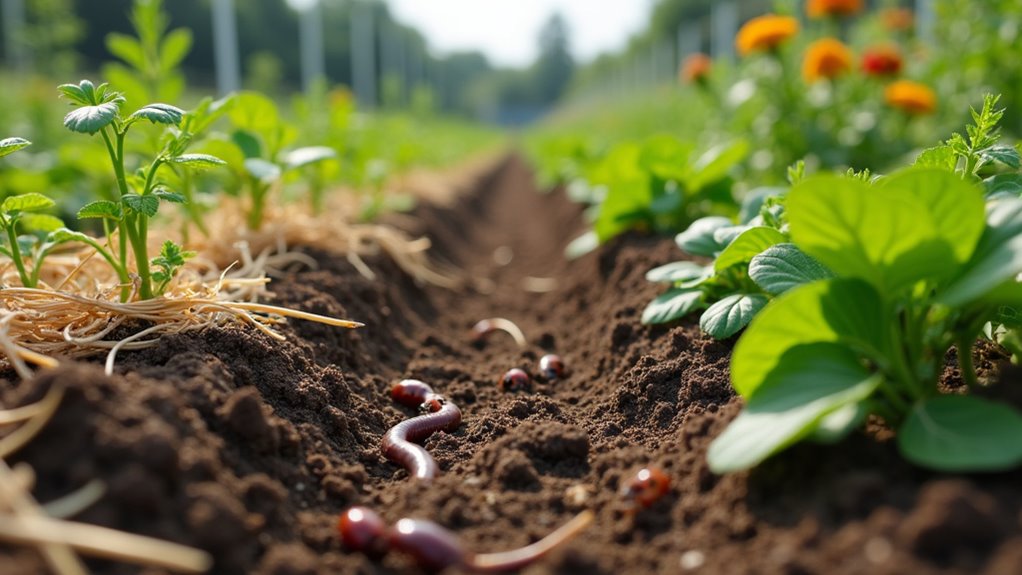

Organic farming harnesses natural methods to build healthy soil and control pests without synthetic chemicals. Key practices include crop rotation to disrupt pest cycles, cover crops for erosion control and nitrogen fixation, and compost application to boost soil fertility. Beneficial insects, trap crops, and mechanical cultivation provide chemical-free pest and weed management. Water conservation through drip irrigation and rainwater harvesting enhances sustainability. These time-tested techniques offer a glimpse into nature’s elegant solutions for agricultural challenges.

Organic farming represents a sophisticated yet natural approach to agricultural production that works in harmony with ecological systems rather than against them. By employing time-tested methods and modern innovations, organic farmers maintain soil health, control pests, and promote biodiversity without relying on synthetic chemicals or genetically modified organisms.
At the heart of organic farming lies effective soil management. Farmers implement crop rotation strategies that naturally disrupt pest cycles while improving soil structure and fertility. Cover crops serve multiple purposes – they prevent soil erosion, add essential organic matter, and fix atmospheric nitrogen into the soil. The addition of compost and natural manures further enhances soil fertility, creating a rich, living ecosystem beneath the surface that supports healthy plant growth. Microbial biomass from these practices significantly improves soil structure and nutrient cycling. The practice of using green manures enriches soil with vital nutrients and organic matter, improving overall soil health.
Effective soil management creates thriving ecosystems through crop rotation, cover crops, and natural amendments, laying the foundation for sustainable organic agriculture.
Pest control in organic systems relies on natural predator-prey relationships and preventive measures. Beneficial insects like ladybugs are introduced to control harmful pests, while trap crops draw unwanted insects away from valuable produce. When necessary, farmers may apply organic-approved pesticides derived from natural sources, but the emphasis remains on cultural controls and resistant crop varieties developed through traditional breeding methods. Incorporating no-till farming within organic practices can further enhance soil health and reduce pest outbreaks by preserving natural habitats for beneficial organisms.
Weed management presents unique challenges in organic farming, but several effective techniques exist. Mulching not only suppresses weed growth but also helps retain soil moisture. Mechanical cultivation and flame weeding provide chemical-free alternatives for weed control, while strategic cover cropping helps outcompete unwanted plants. Hand weeding, though labor-intensive, allows for precise removal of problematic weeds.
Water conservation plays an essential role in sustainable organic production. Efficient drip irrigation systems minimize waste, while rainwater harvesting helps capture and store precious precipitation. Sustainable farming practices, such as these, fight drought and ensure a more stable water supply for farmers worldwide. Drought-resistant crop selection and contour plowing further improve water management, ensuring resources are used wisely and effectively. The integration of precision irrigation systems in organic farming can enhance water efficiency and contribute to resource conservation.
The promotion of biodiversity stands as a cornerstone of organic farming practices. Hedgerows provide essential habitat for beneficial organisms, while uncultivated areas support overall farm biodiversity. The integration of livestock with crops creates beneficial relationships that enhance soil fertility and pest management. The use of heirloom and open-pollinated seeds helps preserve genetic diversity for future generations. Additionally, sustainable livestock farming practices, including pasture-based systems, align with organic principles by minimizing environmental impact and promoting ethical animal treatment.
Climate resilience has become increasingly important in organic farming systems. No-till practices and diverse crop rotations improve soil carbon sequestration and farm resilience to extreme weather events. Agroforestry techniques integrate trees into farming systems, enhancing carbon storage and providing additional benefits such as windbreaks and habitat.
These practices, combined with water-efficient irrigation systems and cover cropping, help farms adapt to changing climate conditions while contributing to climate change mitigation efforts.
Frequently Asked Questions
How Long Does It Take to Transition From Conventional to Organic Farming?
The shift from conventional to organic farming typically requires 3 years to achieve USDA organic certification, though some previously untreated land may qualify immediately.
During this period, farmers face yield reductions and higher costs without receiving organic price premiums.
The extended timeframe allows soil health to recover and new management practices to take hold.
Most experts recommend a 3-5 year shift window for best results.
What Certification Requirements Must Farmers Meet to Label Products as Organic?
Farmers seeking organic certification must meet strict USDA requirements. The process involves submitting a detailed Organic System Plan, paying annual fees ($400-$2,000), and passing initial farm inspections.
They must complete a 3-year conversion period without using prohibited substances, maintain thorough records for 5 years, and allow surprise inspections.
All farming practices must follow organic standards – no synthetic pesticides, GMOs, or chemical fertilizers.
Annual recertification is mandatory.
Are Organic Farming Yields Comparable to Conventional Farming Methods?
Research shows organic farming generally produces lower yields than conventional methods, with meta-analyses indicating organic yields average 19.2% less.
However, this gap narrows over time as soil health improves. Organic systems demonstrate superior performance during droughts, yielding 31% higher than conventional farms.
Despite lower yields, organic farming often generates better economic returns due to premium pricing – averaging $558/acre compared to $190/acre for conventional methods.
How Much More Expensive Is It to Maintain Organic Farming Practices?
Operating organic farms typically costs 10-40% more than conventional farming, with labor expenses running 7-13% higher due to mechanical pest control and diverse crop management.
While organic farmers save on synthetic fertilizers and pesticides, they face increased costs for organic seeds, certification, and specialized animal feed.
However, with retail price premiums of 20%+ and growing consumer demand, many organic operations achieve comparable or better profitability despite higher maintenance costs.
Can Organic Farming Methods Be Successfully Implemented in Urban Environments?
Urban environments can successfully support organic farming through innovative methods like rooftop gardens, vertical farming, and community plots.
Despite challenges of limited space and potential soil contamination, urban organic farming currently provides 15-20% of global food production.
Key practices like composting, raised beds, and hydroponic systems help overcome urban constraints.
When properly implemented, these methods improve local food access while reducing transportation costs and environmental impact.


