

Permaculture design creates resilient agricultural systems by mimicking natural ecosystems and minimizing external inputs. This revolutionary approach combines traditional ecological knowledge with modern science, emphasizing renewable resources, multi-layered food forests, and closed-loop waste management. Key principles include energy efficiency, self-regulation through biological controls, and strategic microclimate creation. By analyzing natural patterns and implementing diverse plantings, permaculture generates multiple yields while building soil health. The principles offer a roadmap for transforming conventional agriculture into regenerative abundance.
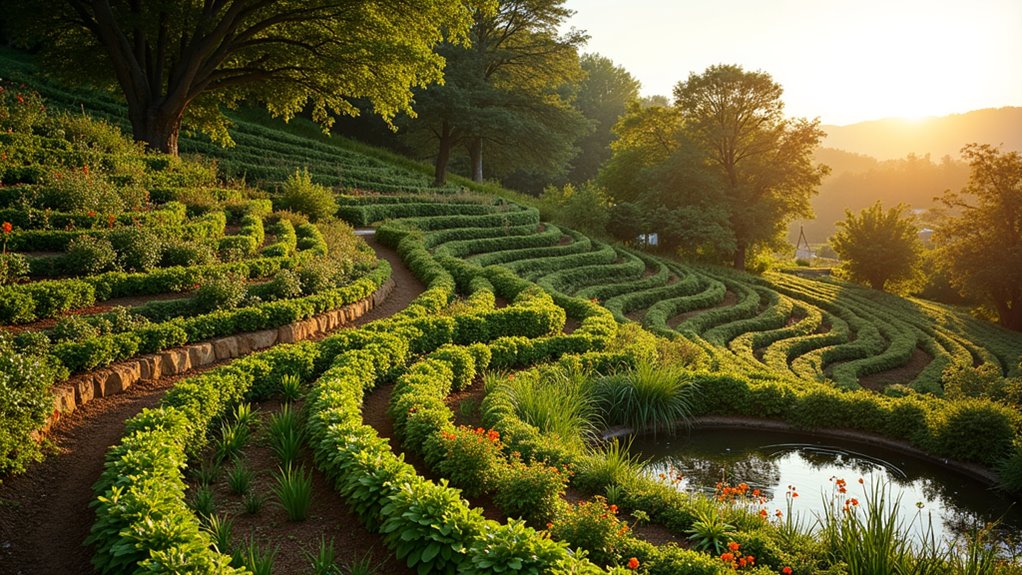
Permaculture stands as a revolutionary approach to designing sustainable living systems that work in harmony with nature rather than against it. By carefully observing and interacting with natural patterns, practitioners create resilient agricultural ecosystems that require minimal external inputs while maximizing yields. This holistic design framework draws inspiration from both traditional ecological knowledge and modern scientific understanding to develop systems that are productive, sustainable, and regenerative. Bill Mollison and Holmgren originated this innovative framework in the 1970s, forever changing how we approach sustainable agriculture.
At the heart of permaculture lies the principle of energy efficiency and conservation. Designers harness renewable resources like solar, wind, and water power while building organic matter in soil to store carbon and nutrients. Through techniques such as rainwater harvesting, passive solar design, and energy-efficient technologies, permaculture systems capture and store energy in multiple forms, creating resilient landscapes that can withstand environmental stresses. One of the practical strategies used in permaculture is drip irrigation, which helps conserve water and improve crop yields. Careful analysis of site characteristics helps determine optimal placement and use of resources. Alley cropping is another technique that complements permaculture principles by integrating trees with crops to enhance biodiversity and soil enrichment. Sustainable livestock farming also plays a crucial role in permaculture by incorporating humane animal husbandry practices that align with ecological and ethical standards.
Permaculture maximizes nature’s energy flows, transforming landscapes into resilient systems that capture, store, and efficiently utilize renewable resources.
The focus on obtaining diverse yields sets permaculture apart from conventional agriculture. Rather than pursuing single-crop harvests, permaculture designers create multi-layered systems where each element serves multiple functions. Food forests combine fruit and nut trees with understory plants, while edible landscaping transforms ordinary yards into productive gardens. These systems generate not only food and income but also improved health, biodiversity, and community wellbeing. Regenerative agriculture practices, such as no-till farming, also contribute to soil health and carbon sequestration, aligning with permaculture’s goals.
Self-regulation and feedback loops are fundamental components of successful permaculture design. Systems are created to be largely self-maintaining, utilizing biological pest control methods and water-conserving irrigation. Practitioners carefully monitor results and adapt their strategies based on changing conditions, including climate impacts. This flexible approach guarantees long-term sustainability while reducing labor requirements.
The intelligent use of renewable resources and services further enhances system efficiency. Nitrogen-fixing plants maintain soil fertility, while animals provide natural pest control and soil improvement. Beneficial microorganisms are cultivated through composting, and perennial crops minimize the need for annual replanting. This approach drastically reduces dependence on external inputs while building natural capital.
Waste elimination represents another vital permaculture principle. Through composting, greywater recycling, and material upcycling, practitioners create closed-loop systems where outputs from one process become inputs for another. This approach not only reduces environmental impact but also builds soil fertility and system resilience.
The implementation of natural patterns in design ties these principles together. By analyzing landscape contours, creating strategic microclimates, and mimicking forest structure, permaculture designers develop systems that efficiently manage water, energy, and nutrients. This pattern-based approach guarantees that designs work with rather than against natural processes, resulting in productive and sustainable agricultural ecosystems that truly mirror nature’s wisdom.
Frequently Asked Questions
What Are the Startup Costs for Implementing a Permaculture System?
Startup costs for implementing a permaculture system typically range from $10,000 to $50,000+ depending on scale and location.
Initial land preparation requires $5,000-$20,000 for earthworks and soil development.
Plant materials average $2,000-$10,000 for diverse species.
Basic infrastructure like irrigation and storage needs $3,000-$15,000.
Education and design support runs $1,500-$5,000.
Small backyard systems can start under $5,000, while larger properties require more substantial investment.
How Long Does It Take to Establish a Self-Sustaining Permaculture Garden?
Establishing a self-sustaining permaculture garden typically takes 3-10 years, depending on scale and complexity.
While herbaceous layers and ground covers show results within months, shrubs need 1-3 years, and tree systems require 6-10 years to mature.
Faster results come from using perennial plants, companion planting, and soil-building techniques like sheet mulching.
The system reaches self-sustainability when it requires minimal external inputs and shows natural regeneration through beneficial insect populations.
Can Permaculture Systems Work in Urban Environments?
Permaculture systems thrive in urban environments through creative adaptation. Cities worldwide demonstrate successful implementation – from Havana’s productive urban farms supplying 90% of local produce to Seattle’s Beacon Food Forest.
Despite space limitations, urban permaculture utilizes vertical gardening, rooftops, and small yards effectively. These systems transform unused spaces into productive ecosystems that provide fresh food, create wildlife habitats, and build community connections while reducing transport emissions and improving city aesthetics.
Which Crops Generate the Highest Profit in Permaculture Farming?
High-value perennial crops like pistachios and walnuts consistently top profit charts in sustainable farming.
Specialty items including saffron, truffles, and gourmet mushrooms command premium prices in niche markets.
Fast-growing microgreens and salad greens provide quick returns in small spaces.
Value-added strategies like organic certification and agritourism boost income further.
Herbs such as basil and mint offer steady profits, while exotic fruits like dragon fruit fetch high prices per unit.
Do Permaculture Designs Require Special Government Permits or Certifications?
Most permaculture designs don’t require special permits or certifications to implement.
However, specific elements may need local government approval depending on jurisdiction. Building codes apply to structures, water systems might need permits in drought areas, and large earthworks could require erosion control permits.
While a Permaculture Design Certificate is valuable for practitioners, it’s not legally mandated. The key is checking local regulations before starting any major installations.


