

Environmental law represents the legal framework protecting Earth’s natural systems and regulating human impact on the environment. This body of regulations emerged in response to industrialization’s effects, encompassing everything from pollution control to biodiversity protection. Through key principles like “polluter pays” and sustainable development, these laws balance economic growth with environmental preservation. International agreements and domestic legislation work together to address climate change, resource conservation, and public health – critical tools for safeguarding our planet’s future.
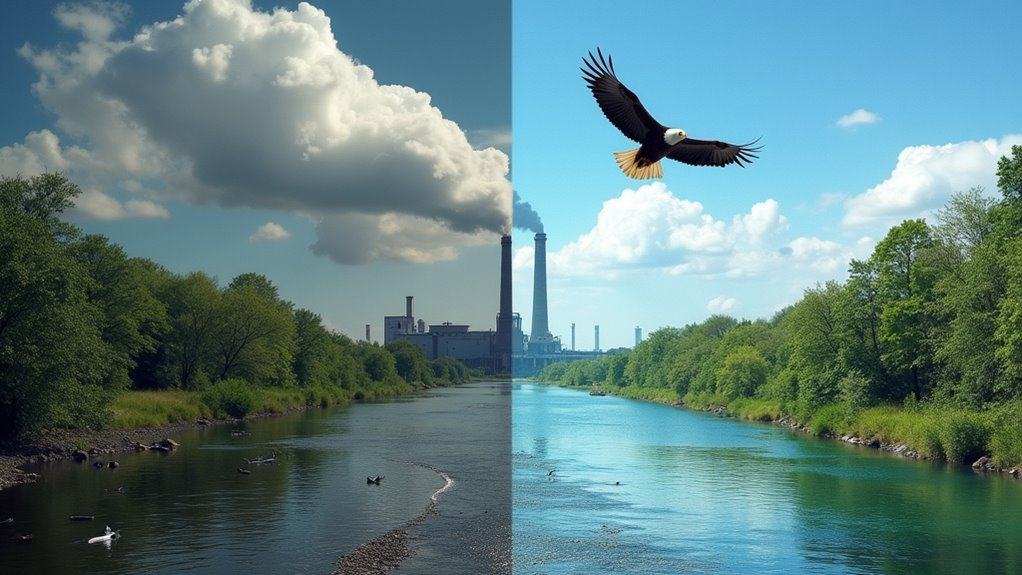
Environmental law stands as one of society’s most powerful tools for protecting the natural world and managing humanity’s impact on the planet. This complex system of regulations and legal frameworks emerged in the mid-20th century as a response to increasing industrialization and its devastating effects on our environment. Today, it encompasses everything from pollution control and resource conservation to biodiversity protection and climate change mitigation. Climate models, which predict environmental changes with high accuracy, play a critical role in informing adaptation strategies and policy decisions related to climate change.
At its core, environmental law operates on several fundamental principles that guide how we approach environmental challenges. The precautionary principle encourages action to prevent harm even when scientific certainty isn’t complete, while the polluter pays principle guarantees that those who damage the environment bear the costs of their actions. These principles, along with the concept of sustainable development, help balance the need for economic growth with environmental protection. The meaningful participation of vulnerable communities ensures environmental justice and equitable protection for all populations. Legal tools addressing environmental racism also play a crucial role in promoting equity and justice in environmental matters. Increasingly, climate accountability is being shaped by legal actions that hold governments and corporations responsible for their contributions to climate change.
Environmental law rests on key principles like precaution and accountability, creating a framework where protection and progress can coexist harmoniously.
The implementation of environmental law takes place through various mechanisms, both at national and international levels. In many countries, cornerstone legislation like the Clean Air Act, Clean Water Act, and Endangered Species Act form the backbone of environmental protection. These laws set standards for air and water quality, protect threatened species, and regulate hazardous waste management. Modern environmental laws place significant emphasis on waste management systems to minimize environmental impact. On the international front, global courts and tribunals play a crucial role in resolving environmental disputes, often involving countries or multinational corporations.
Additionally, environmental impact assessments have become essential tools for evaluating the potential consequences of development projects before they begin.
On the global stage, international agreements like the Paris Agreement and the Convention on Biological Diversity demonstrate the world’s commitment to addressing environmental challenges collectively. These treaties create frameworks for international cooperation on issues that don’t respect national boundaries, such as climate change, ozone depletion, and the protection of endangered species.
The enforcement of environmental law relies heavily on government agencies, courts, and increasingly, citizen participation. Agencies like the Environmental Protection Agency implement and enforce regulations, while courts interpret laws and resolve disputes. Significantly, many environmental laws include provisions for citizen suits, allowing the public to take legal action when environmental regulations aren’t properly enforced.
However, environmental law faces significant challenges in today’s rapidly changing world. Keeping pace with evolving environmental threats, addressing global issues that require international cooperation, and balancing economic interests with environmental protection are ongoing struggles.
Despite these challenges, environmental law continues to evolve and adapt, incorporating new scientific understanding and responding to emerging threats.
The importance of environmental law cannot be overstated. It serves as a vital framework for protecting public health, conserving natural resources for future generations, and promoting environmental justice. As we face increasingly complex environmental challenges, from climate change to biodiversity loss, environmental law provides the fundamental tools and structure needed to create meaningful change and secure a sustainable future for our planet.
Frequently Asked Questions
How Long Does It Take to Resolve an Environmental Law Case?
Environmental law cases vary greatly in duration. Based on federal court data, resolution times range from several months to multiple years, with Environmental Impact Statements (EIS) typically taking 3.6 years (median).
While simple cases may resolve quickly, complex ones involving multiple parties and technical issues can extend beyond 6 years. The appeals process can further lengthen timelines.
Factors like court backlog, settlement negotiations, and case complexity impact overall duration.
What Penalties Can Companies Face for Violating Environmental Regulations?
Companies violating environmental regulations face multiple penalties.
Civil fines can reach $100,000 per day for each violation, while criminal charges may result in hefty fines and imprisonment for responsible individuals.
Additional consequences include permit revocations, mandatory cleanup costs, and lasting reputational damage.
Major cases demonstrate the scale of potential penalties – Volkswagen paid $34.69 billion for emissions cheating, while BP faced $20.8 billion in fines for the Deepwater Horizon spill.
Can Individuals Sue Corporations for Environmental Damage to Their Property?
Yes, individuals can sue corporations for environmental damage to their property through multiple legal pathways.
Property owners can file lawsuits based on common law claims like nuisance, trespass, and negligence, or pursue statutory claims under federal and state environmental laws.
While these cases present challenges in proving causation and gathering scientific evidence, courts have established that property owners have standing when they can demonstrate concrete injury from corporate environmental violations.
Which Government Agencies Are Responsible for Enforcing Environmental Laws?
Multiple federal agencies enforce environmental laws, with the EPA taking the lead role in implementing major environmental regulations and conducting inspections.
The Department of Justice handles environmental litigation and prosecutes violators, while the Department of Interior manages public lands and wildlife protection.
State and local agencies also play essential roles through cooperative federalism, allowing them to implement federal standards while enforcing their own environmental laws.
How Often Do Environmental Laws Get Updated or Changed?
Environmental laws undergo frequent updates to address emerging challenges. Major federal environmental laws typically see revisions every 5-10 years, while state regulations change even more frequently.
Recent examples include the 2023 Supreme Court’s Sackett decision and EPA’s 2024 NEPA updates. These changes are driven by scientific discoveries, technological advances, shifting political priorities, and public pressure.
International environmental agreements also receive periodic reviews and modifications to stay current with global needs.


