

Environmental Impact Assessments (EIAs) transform projects through systematic evaluation of their environmental consequences. These assessments examine effects on air quality, water resources, biodiversity, and local communities before construction begins. Through stakeholder engagement and detailed analysis, EIAs often lead to significant project modifications – from relocating developments to protect ecosystems to implementing innovative technologies that reduce negative impacts. The mitigation hierarchy guides developers toward responsible solutions, creating more sustainable outcomes that balance progress with protection. The full scope of EIA influence extends far beyond initial planning phases.
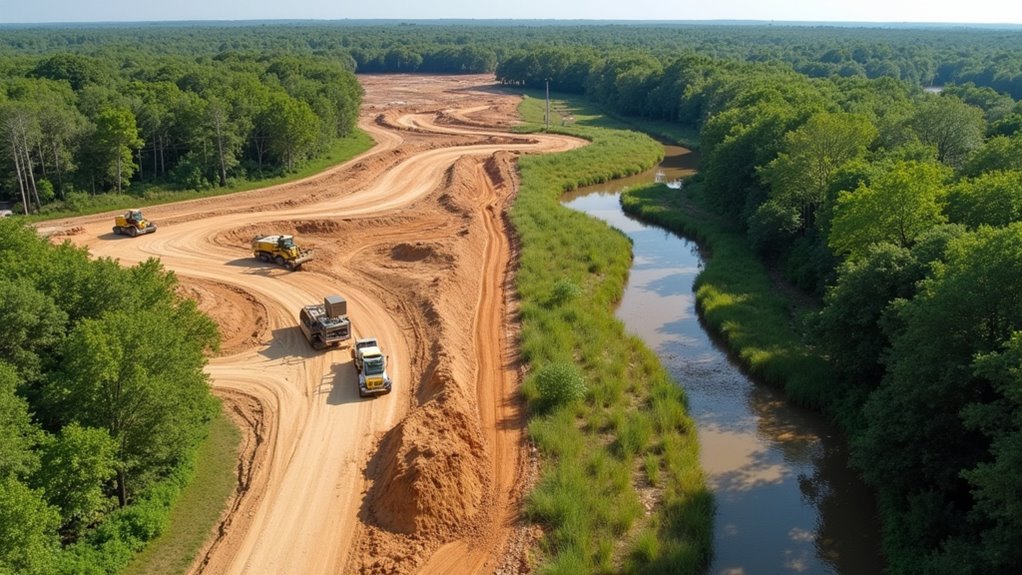
When it comes to managing the environmental footprint of major development projects, Environmental Impact Assessments (EIAs) serve as an essential safeguard for both nature and communities. This systematic process examines potential environmental consequences before projects break ground, guaranteeing that development decisions consider their full range of effects on the surrounding world. Informed decision making remains the ultimate goal of every assessment, ensuring projects align with environmental sustainability.
EIAs follow a thorough approach that starts with screening to determine whether a detailed assessment is necessary. Once initiated, the process defines clear boundaries and identifies key issues through scoping activities. Teams of experts conduct in-depth analyses of potential impacts, examining everything from air and water quality to biodiversity and local economies. They use sophisticated tools like Geographic Information Systems for spatial analysis and predictive modeling to forecast how projects might affect their surroundings. The process emerged alongside growing environmental awareness in the 1960s and has since become a cornerstone of responsible development. In addition to EIAs, global efforts such as treaties and national legislations play a crucial role in safeguarding endangered species from the impacts of development projects. These efforts often intersect with environmental justice laws, addressing the disproportionate impact of environmental decisions on marginalized communities.
The assessment process doesn’t happen in isolation – it actively involves various stakeholders throughout. Local communities, indigenous groups, government agencies, and environmental organizations all have opportunities to voice their concerns and share valuable insights. This inclusive approach helps identify potential issues that technical analysis alone might miss, while building trust and understanding between project developers and affected populations. Community action and engagement are vital in ensuring that local voices are heard and considered in the decision-making process. In the context of climate change, extreme weather events can influence the outcomes of EIAs, emphasizing the importance of adaptive strategies in project planning.
Meaningful stakeholder engagement enriches environmental assessments by incorporating diverse perspectives and fostering mutual understanding between developers and communities.
At the heart of every EIA is the mitigation hierarchy, which guides how projects should handle their environmental impacts. The first priority is always avoidance – can the negative effect be prevented through better design or alternative approaches? When impacts can’t be avoided, the focus shifts to minimization, followed by restoration of affected areas. As a last resort, offsetting measures compensate for unavoidable damages through activities that create equivalent environmental benefits elsewhere.
The influence of EIAs on project outcomes is significant and far-reaching. Projects often undergo substantial modifications based on assessment findings, incorporating better technologies and environmental safeguards. Some developments have been relocated to avoid sensitive ecosystems, while others have implemented innovative solutions to protect wildlife corridors or preserve cultural heritage sites. These changes not only benefit the environment but also frequently result in more sustainable and socially acceptable projects.
Through careful documentation and regulatory review, EIAs create a framework of accountability that helps guarantee projects meet environmental standards and social responsibilities. The process has evolved to address contemporary challenges, including climate change considerations and cumulative effects that might not be apparent when looking at single projects in isolation.
While conducting an EIA requires significant investment of time and resources, the process ultimately leads to better-designed projects that balance development needs with environmental protection. This systematic approach to environmental stewardship has become an indispensable tool in sustainable development, helping shape projects that serve human needs while preserving the natural systems we all depend on.
Frequently Asked Questions
How Much Does a Typical Environmental Impact Assessment Cost?
Environmental Impact Assessment costs typically range from $1,400 to over $100,000, depending on project scope and complexity.
A basic Phase 1 assessment averages $1,400-$4,600, while thorough Phase 2 assessments can exceed $100,000.
The World Bank estimates full EIAs cost about 1% of total project costs, with mitigation efforts adding 3-5%.
Key factors affecting price include property size, site history, required sampling, and assessment team expertise.
What Happens if a Project Fails the Environmental Impact Assessment?
If a project fails an environmental impact assessment, several outcomes are possible.
The project may face outright rejection by regulatory authorities due to unacceptable environmental risks.
Alternatively, developers might need to substantially modify designs, implement additional mitigation measures, or relocate the project.
Some projects receive conditional approval with strict requirements for monitoring and environmental safeguards.
Non-compliance can result in legal consequences, including fines, permit revocation, or lawsuits from stakeholders.
Can Local Communities Challenge the Findings of an Environmental Impact Assessment?
Yes, local communities have several established legal avenues to challenge EIA findings. They can file administrative appeals, pursue judicial review through courts, and participate in public comment periods.
Communities often form advocacy groups, partner with environmental NGOs, and conduct independent studies to strengthen their case. Common grounds for challenges include inadequate impact assessment, flawed methodology, or insufficient mitigation measures.
Successful challenges can lead to project modifications or additional environmental safeguards.
How Long Does the Average Environmental Impact Assessment Process Take?
Environmental Impact Assessment (EIA) processes typically take 22.6 months on average, though durations vary considerably.
While the median completion time is 12 months, projects can range from 5 to 77 months depending on complexity.
Final Environmental Impact Statements (EIS) average 4.5 years.
Recent regulations aim to streamline the process, with the Council on Environmental Quality setting limits of 1 year for EAs and 2 years for EISs.
Are Environmental Impact Assessment Requirements Different for Private Versus Public Projects?
Yes, EIA requirements differ considerably between private and public projects.
Public projects typically face stricter federal regulations and require more thorough assessments covering socioeconomic impacts.
Private projects often undergo simpler state/local reviews focused mainly on direct environmental effects.
Public projects must conduct extensive stakeholder consultations, while private ones have limited public engagement requirements.
Government oversight is also more rigorous for public project EIAs, with harsher penalties for non-compliance.


