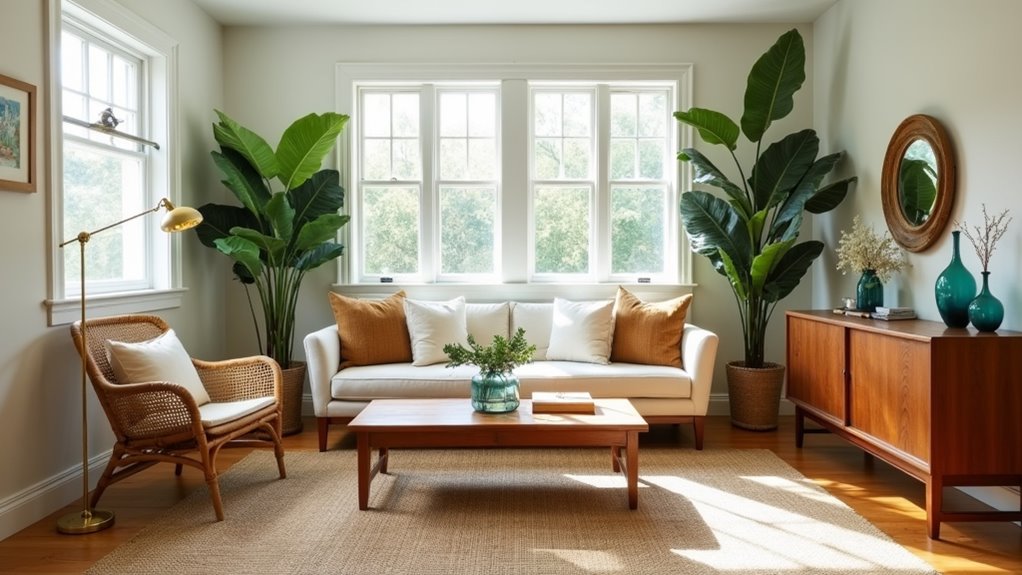

Choosing sustainable home decor starts with selecting eco-friendly materials like bamboo, reclaimed wood, and organic cotton textiles. High-quality, durable pieces reduce replacement needs while vintage and upcycled items add unique character. LED lighting and strategic mirror placement maximize energy efficiency, while certifications like FSC guide ethical purchasing. Smart design choices, from low-VOC paints to multi-functional furniture, create beautiful spaces that protect natural resources. The journey to sustainable living unfolds through thoughtful decorating decisions.
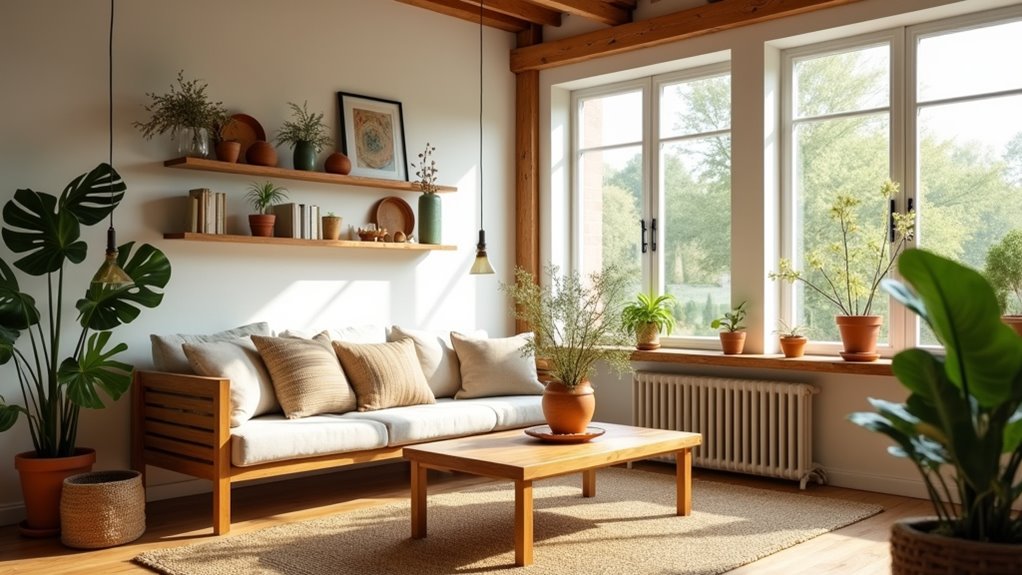
As homeowners increasingly recognize the impact of their design choices on the environment, sustainable decor has emerged as more than just a passing trend. Making conscious decisions about home furnishings and decorative elements can greatly reduce environmental impact while creating spaces that are both beautiful and responsible. Natural elements and textures promote mental wellness and create a more serene living environment. The beauty of recycled glass vases, ranging from $25 to $69, adds an eco-conscious touch while supporting sustainable manufacturing practices.
The foundation of sustainable decor starts with choosing the right materials. Bamboo stands out as a rapidly renewable resource that can replace traditional hardwoods in furniture and flooring. Reclaimed wood not only prevents further deforestation but also brings unique character and history into living spaces. For textiles, organic cotton offers a cleaner alternative to conventional cotton, requiring less water and eliminating harmful pesticides from the production process. Using eco-friendly building materials in home construction can contribute significantly to reducing carbon emissions and promoting sustainable living. Green building principles ensure that eco-friendly practices are seamlessly integrated into architectural design, promoting sustainability across all aspects of building and decor.
Sustainable materials like bamboo and reclaimed wood create beautiful spaces while protecting forests and reducing environmental impact through conscious design choices.
Energy efficiency plays a vital role in sustainable home design. LED lighting technology has revolutionized home illumination, using up to 90% less energy than traditional incandescent bulbs while lasting much longer. Smart thermostats optimize energy consumption by learning household patterns and adjusting temperatures automatically. Green building codes are driving innovation in architecture by promoting designs that maximize energy efficiency and sustainability. Solar-powered decorative elements harness clean energy, while strategic placement of windows and mirrors can maximize natural light, reducing reliance on artificial lighting. Real-world examples, such as sustainable design initiatives in green building, highlight how these principles are applied effectively in architecture.
The longevity of decor items is equally important as the materials they’re made from. Investing in high-quality, well-crafted pieces may cost more initially, but these items typically last longer and require fewer replacements over time. Choosing timeless designs over trendy pieces helps avoid the cycle of disposable decor, while selecting multi-functional furniture adapts to changing needs and reduces the need for additional pieces.
Supporting local artisans and craftspeople offers multiple benefits for sustainable decorating. Besides reducing transportation emissions, locally-made items often feature superior craftsmanship and unique designs. Fair trade certifications guarantee ethical labor practices, while traditional craftsmanship preserves cultural heritage and creates pieces with lasting value.
Creative approaches to decorating can further enhance sustainability. Thrift store finds, vintage pieces, and upcycled furniture offer opportunities to give new life to existing items while adding unique character to spaces. DIY projects and furniture restoration not only reduce waste but also create personalized decor that reflects individual style.
Indoor air quality shouldn’t be overlooked when choosing sustainable decor. Low-VOC paints, natural fiber rugs, and organic bedding help reduce exposure to harmful chemicals. Beeswax candles provide a natural alternative to paraffin-based options, while strategically placed houseplants act as natural air purifiers.
When shopping for sustainable decor, various certifications can guide purchasing decisions. FSC certification guarantees responsible forest management, while GOTS certification ensures organic textile standards. Greenguard certification verifies low chemical emissions, and Cradle to Cradle certification provides extensive sustainability assessment. These standards help consumers make informed choices while supporting companies committed to environmental stewardship.
Frequently Asked Questions
How Can I Verify if a Company’s Sustainability Claims Are Genuine?
To verify sustainability claims, consumers should examine third-party certifications like FSC or Energy Star, and scrutinize company’s transparency in environmental reporting.
Research their supply chain practices and material sourcing through sustainability reports.
Look beyond vague marketing terms like “eco-friendly” and focus on specific, measurable data.
Cross-reference claims with recognized industry standards and independent environmental organizations for validation.
Check if sustainability initiatives show consistent long-term commitment.
What’s the Average Lifespan of Sustainable Furniture Compared to Conventional Pieces?
Sustainable furniture typically lasts 2-3 times longer than conventional pieces, with an average lifespan of 10-30 years compared to just 5-10 years for standard furniture.
The difference stems from higher-quality materials, superior craftsmanship, and design focused on durability and repairability.
While conventional pieces often need replacement within a decade, sustainable furniture can become family heirlooms, passed down through generations thanks to their robust construction and timeless design.
Are Sustainable Decor Items More Difficult to Clean and Maintain?
Most sustainable decor items are actually quite simple to maintain.
Natural materials like bamboo and cork are inherently stain-resistant and need just basic wiping.
While some items may require specific care – like using natural oils on wood or avoiding harsh chemicals on organic fabrics – they’re generally durable and easy to clean with eco-friendly products.
The key is using appropriate cleaning methods, like vinegar solutions or microfiber cloths, rather than harsh chemical cleaners.
How Do I Dispose of Sustainable Materials When They’re No Longer Usable?
The disposal of sustainable materials follows similar principles to regular waste management, but with added eco-friendly options.
Natural materials like bamboo or untreated wood can be composted.
Textiles and furniture can be upcycled or donated if still usable.
For items that can’t be repurposed, checking local recycling guidelines is vital – many sustainable materials are designed for specific recycling streams.
As a last resort, proper disposal at waste management facilities guarantees minimal environmental impact.
Can Sustainable Decor Items Withstand Extreme Temperatures and Weather Conditions?
Sustainable decor items demonstrate remarkable resilience in challenging conditions.
Natural materials like wool and bamboo inherently resist temperature fluctuations and moisture. Weather-treated organic textiles maintain integrity during exposure to rain and UV rays.
Recycled metals and plastics prove particularly durable in outdoor settings, while sustainable woods like teak naturally ward off rot and insects.
Most eco-friendly materials are specifically engineered or naturally equipped to withstand environmental extremes.