

Climate change threatens to slash global GDP by 20% by 2050, with extreme weather already causing $1.5 trillion in losses over the past decade. Poor nations and communities bear the heaviest burden, losing an estimated $1.8 trillion between 1990-2014 due to emissions. While carbon pricing could initially drop equity prices by 30%, the crisis creates opportunities for economic transformation through green technology and sustainable development. Understanding these impacts reveals vital strategies for protecting our economic future.
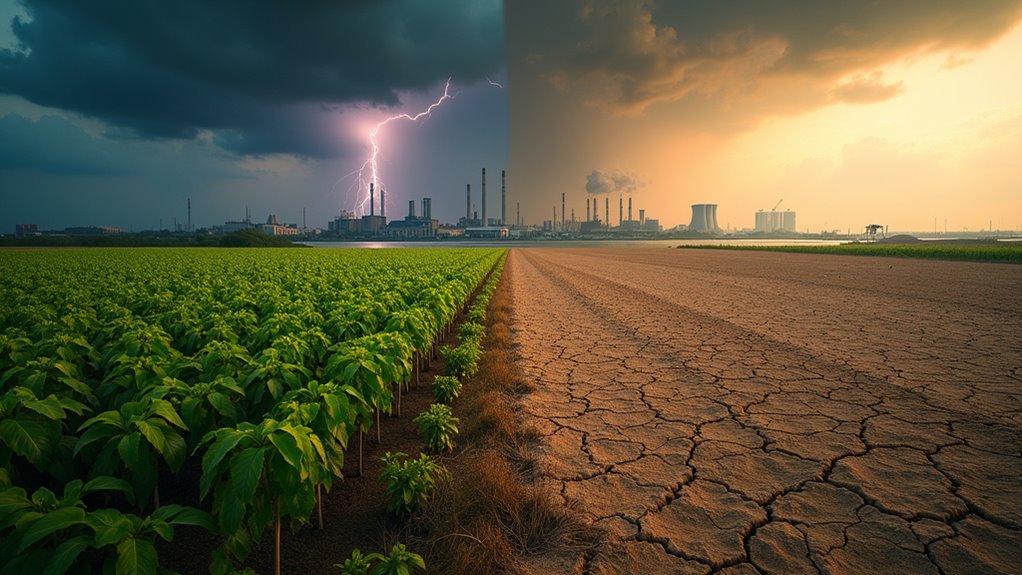
As global temperatures continue to rise, the economic toll of climate change is becoming increasingly stark and measurable across virtually every sector of the world economy. Recent studies indicate the potential for a staggering 20% reduction in global GDP by 2050 if warming reaches 2.2°C, while the past decade has already witnessed $1.5 trillion in economic losses from extreme weather events alone.
The financial ripples are spreading through every corner of the economy. Agricultural yields are declining, particularly in warmer regions, while energy demands for cooling could surge up to 20% by 2050. Tourism sectors are taking hits, with winter recreation revenue already down by $2 billion. Labor productivity is expected to plummet 3-6% in hot regions by 2100, creating a cascade of economic challenges that will affect virtually every industry. The U.S. economy could face annual losses of $520 billion if global temperatures rise by 4.5°C. Climate-related disasters caused unprecedented damage with economic losses reaching $299 billion in 2022 alone. In addition, droughts and shifting rainfall patterns are exacerbating water scarcity, leading to conflicts and further economic strain.
Climate change ripples across sectors: falling crop yields, surging cooling costs, and declining productivity paint a stark economic future.
Perhaps most concerning is the uneven distribution of these impacts. Poor countries and communities are bearing the brunt of climate-related economic damage, further widening already substantial income gaps. Developing nations have already lost an estimated $1.8 trillion between 1990 and 2014 due to emissions, while fossil fuel-dependent economies face the formidable task of major economic shifts. To mitigate these impacts, proactive planning is essential to safeguard economies and public well-being.
The human cost is equally sobering. Projections suggest 9,300 more heat-related deaths annually in U.S. cities by 2090, translating to roughly $140 billion in annual losses. These figures don’t even account for the increased spread of waterborne and foodborne diseases, rising allergy rates, and the mental health toll of climate disasters, which disproportionately affect low-income communities and minorities.
Infrastructure and property markets are already feeling the squeeze. Rising costs for disaster relief, adaptation measures, and increased damage to buildings and power grids are straining budgets. Insurance premiums are climbing in high-risk areas, while the specter of stranded assets looms over both fossil fuel and real estate sectors.
Financial markets are responding to these realities. The implementation of carbon pricing could potentially drive equity prices down by 20-30% in their first year, while creating uncertainty in resource and energy prices that complicates business planning. The financial system is scrambling to develop new tools to manage climate-related risks effectively.
The broader economic growth picture is equally concerning. Productivity growth is declining faster than previously estimated as temperatures rise, while developing countries face more frequent growth reversals. The challenge of sustaining long-term growth episodes becomes more difficult as climate impacts intensify.
However, this crisis also presents an opportunity for innovation and economic transformation through green technology and sustainable development, though it will require significant reallocation of capital and resources to achieve this shift successfully.
Frequently Asked Questions
How Does Climate Change Affect Individual Household Wealth and Savings?
Climate change hits household finances through multiple channels.
Rising sea levels and extreme weather drive up insurance costs and property maintenance expenses. Energy bills increase due to cooling needs and water scarcity. Food prices climb as crop yields fall.
Climate-related job disruptions can reduce income, while medical costs rise from heat and pollution-linked illnesses.
Investment portfolios face risks from stranded fossil fuel assets, though green tech offers new opportunities.
What Role Do Insurance Companies Play in Managing Climate Change Risks?
Insurance companies serve as critical risk managers in addressing climate change through multiple approaches.
They develop climate-specific stress tests, adjust premiums based on environmental risks, and incentivize climate-resilient behaviors through policy terms.
Insurers also invest in sustainable assets, support clean energy projects, and collaborate with governments on adaptation strategies.
Their expertise in risk assessment helps communities prepare for and respond to climate-related challenges while protecting financial stability.
Can Developing Countries Afford to Implement Climate Change Mitigation Measures?
Developing countries face significant financial challenges in implementing climate change mitigation measures.
While annual adaptation costs range from $140-300 billion by 2030, the long-term benefits outweigh these investments.
International support mechanisms, like the $100 billion climate finance pledge from developed nations and multilateral development banks, help bridge the funding gap.
Additionally, carbon markets and technology transfers provide innovative financing solutions, making climate action more feasible for developing economies despite their limited resources.
How Do Carbon Pricing Policies Impact Small Business Operations?
Carbon pricing considerably impacts small businesses through increased operational costs.
Energy-intensive SMEs face higher expenses for fuel, electricity, and raw materials, while having limited ability to pass costs to customers.
However, revenue recycling programs and tax cuts can help offset these burdens.
While transportation and manufacturing sectors are most affected, service-based firms generally see lower impacts.
Smart policy design, including gradual implementation and targeted support, helps small businesses adapt while reducing emissions.
What Are the Economic Benefits of Early Investment in Climate Adaptation?
Early investment in climate adaptation delivers substantial economic returns.
Studies show that every $1 invested saves $4-$11 in disaster losses. These investments generate 2-10x returns across sectors while creating jobs – for example, Miami’s $10.8 billion adaptation plan created 126,000 jobs.
Climate-resilient infrastructure yields a 5:1 cost-benefit ratio. Additionally, early action prevents stranded asset losses from doubling and helps limit GDP damage to 2-4% when investing 1-2% in adaptation measures.


