

Earth’s major ecosystems each have distinct characteristics that make them unique. Forests feature layered vegetation and serve as carbon storage powerhouses. Grasslands support intricate predator-prey relationships through vast open spaces. Deserts showcase life’s remarkable adaptations to extreme conditions. Aquatic systems, from coral reefs to estuaries, contain some of our planet’s richest biodiversity. The complex interactions within these varied environments reveal nature’s incredible ability to thrive in different conditions.
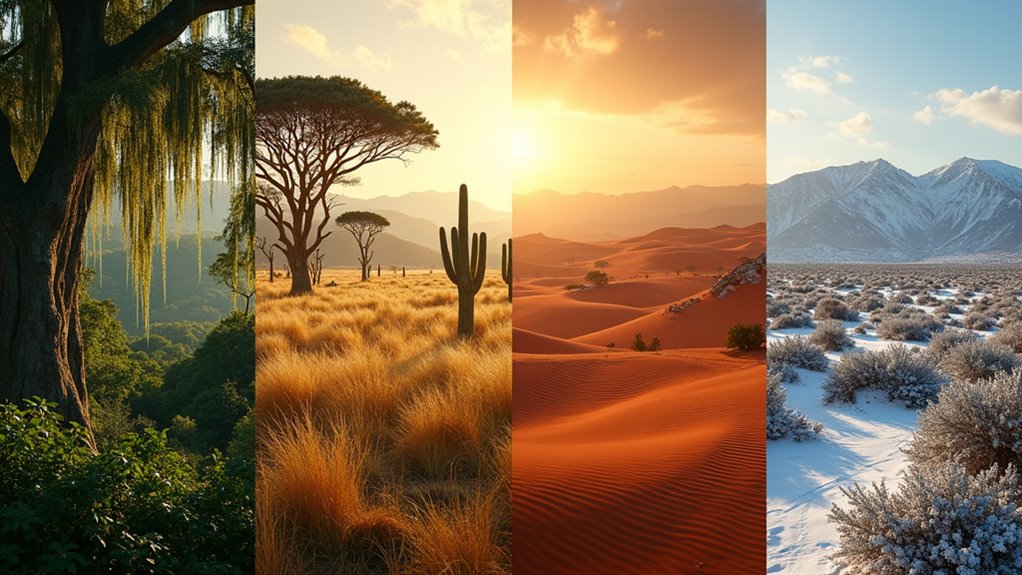
Nature’s complexity reveals itself through Earth’s diverse ecosystems, each one a carefully balanced world within our world. These distinct environments, shaped by climate, geography, and countless interactions between living organisms, create the rich tapestry of life on our planet. While terrestrial ecosystems cover roughly a quarter of Earth’s surface, they encompass an incredible range of habitats, from dense forests to sprawling grasslands, harsh deserts, and frigid tundra regions.
Forests stand as some of the most biologically diverse ecosystems, particularly in tropical regions where layers of vegetation create countless niches for species to thrive. These green giants serve as Earth’s lungs, storing massive amounts of carbon and producing oxygen while providing shelter for countless species. From the towering canopies of rainforests to the seasonal changes of temperate woodlands and the hardy conifers of boreal forests, each type tells its own unique story of adaptation and survival. Many species depend on these ecosystems as a source of food and medicine. Solar radiation drives the vital process of photosynthesis that sustains these forest ecosystems. Initiatives to remove invasive species have successfully revived several forested areas, allowing native flora and fauna to prosper. Diverse forests have been shown to be more resilient against climate change, providing a critical defense for our planet.
Grasslands paint a different picture entirely, where grasses and herbaceous plants reign supreme. These vast expanses, whether they’re called prairies, savannas, or steppes, support an intricate web of life centered around grazing animals and the predators that hunt them. These ecosystems have evolved alongside countless species that have adapted to life in the open, from burrowing creatures to swift runners and soaring birds of prey. Protecting freshwater resources is crucial for maintaining climate stability and ensuring the survival of these grasslands.
In stark contrast, desert ecosystems demonstrate life’s remarkable resilience in the face of extreme conditions. Covering about 20% of Earth’s land surface, these arid regions experience dramatic temperature swings and minimal rainfall. Yet life persists through remarkable adaptations – cacti that store water, animals that burrow to escape the heat, and creatures that have evolved to need very little water to survive. The biodiversity found in these harsh environments underscores the importance of conserving even the most unlikely habitats.
The planet’s aquatic domains tell an equally fascinating story, covering three-quarters of Earth’s surface. From the mysterious depths of oceans to freshwater lakes and rivers, these ecosystems support an astounding array of life forms. Specialized habitats like coral reefs, often called the rainforests of the sea, showcase some of the highest biodiversity on Earth, while estuaries serve as essential nurseries where fresh and salt water mix.
At the extremes, tundra ecosystems demonstrate life at its most tenacious, persisting in some of Earth’s harshest conditions. These regions, characterized by permafrost and brief growing seasons, support specially adapted species that can thrive in the cold. Meanwhile, unique shifting zones like wetlands and mangroves blur the lines between terrestrial and aquatic worlds, creating crucial habitats that serve as nature’s filters and buffers against storms.
Each of these ecosystems faces its own set of challenges in our changing world, from deforestation and habitat conversion to climate change impacts. Understanding these distinct environments and their interconnections is essential for protecting the delicate balance that makes life on Earth possible.
Frequently Asked Questions
How Do Human Activities Impact the Balance of Different Ecosystems?
Human activities greatly disrupt ecosystem balance through multiple interconnected impacts.
Deforestation and urban development fragment habitats and displace species, while industrial pollution contaminates air, water, and soil.
Climate change, driven by greenhouse gas emissions, alters temperature patterns and species distributions.
Resource exploitation, like overfishing and illegal wildlife trade, depletes populations.
Together, these activities create cascading effects that destabilize natural systems and threaten biodiversity worldwide.
Can Artificial Ecosystems Replicate the Functions of Natural Ones?
While artificial ecosystems can mimic certain natural functions, they cannot fully replicate the complexity and self-sustaining nature of natural systems.
Artificial environments typically require constant human intervention, have limited biodiversity, and struggle with incomplete nutrient cycling. Their simplified food webs and reduced genetic diversity make them less resilient to environmental changes.
Although useful for specific purposes like agriculture or research, artificial ecosystems lack the intricate balance and adaptability of their natural counterparts.
What Role Do Keystone Species Play in Maintaining Ecosystem Diversity?
Keystone species play a crucial role in maintaining ecosystem diversity through disproportionate effects relative to their abundance.
These species, like wolves, sea otters, and beavers, regulate prey populations and modify habitats in ways that benefit numerous other organisms.
Through predation, competition, and ecosystem engineering, they prevent single species dominance and create conditions that support diverse communities.
Their removal often triggers cascade effects that can dramatically alter entire ecosystems.
How Long Does It Take for a Damaged Ecosystem to Recover?
Recovery times for damaged ecosystems vary dramatically based on the type and extent of damage.
While aquatic systems may bounce back within months, forests typically need 42 years or more to fully recover.
Agricultural damage and multiple disturbances can extend recovery up to 56 years.
Soil moisture, species dispersal ability, and disturbance intensity all affect healing speeds.
Some ecosystems, like coral reefs, might require centuries for complete restoration.
Why Do Some Ecosystems Adapt Better to Climate Change Than Others?
Ecosystems with higher biodiversity, complex food webs, and less human disturbance typically show better climate change adaptation.
Large, connected landscapes offer more migration options and varied microclimates, while diverse species pools increase the chance of having climate-resilient organisms.
Protected areas near climate refugia, especially those with varied topography, adapt better than isolated or heavily disturbed systems.
Coastal ecosystems also benefit from the ocean’s natural temperature regulation.


