

Keystone species play a critical role in maintaining healthy ecosystems, despite often representing a small portion of the total biomass. Like the central stone in an arch, these species hold complex ecological relationships together through their outsized influence. Sea otters protect kelp forests by controlling sea urchins, while wolves regulate elk populations to prevent overgrazing. When keystone species decline, entire ecosystems can unravel through trophic cascades. Understanding these essential species reveals nature’s intricate balance.
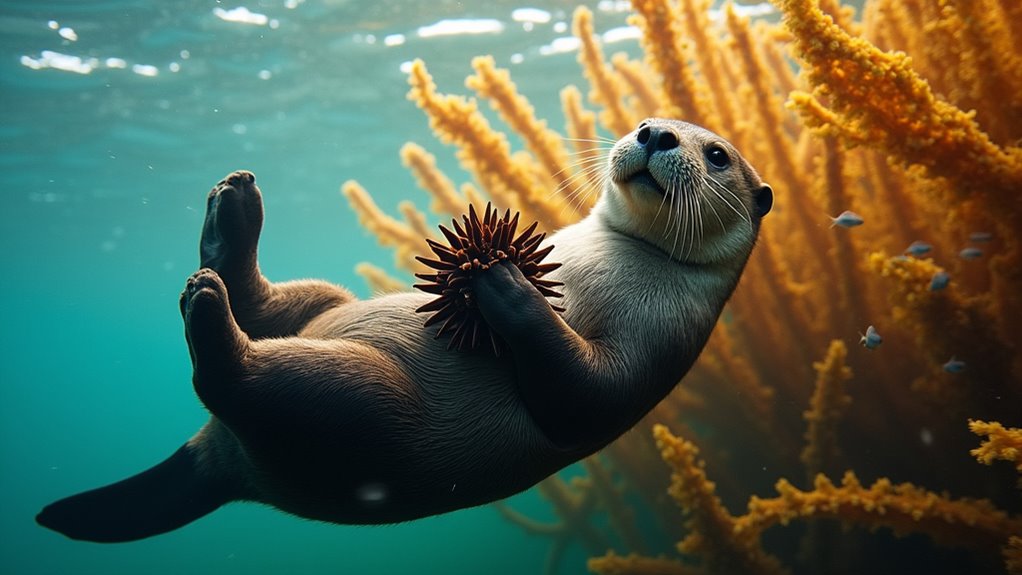
While many species play important roles in their environments, keystone species wield an extraordinary and disproportionate influence on ecosystem stability. First identified by ecologist Robert T. Paine in 1966 through his groundbreaking research on starfish and mussels, these remarkable organisms function much like the vital stone at the apex of an architectural arch – remove them, and the entire structure risks collapse. The impact of keystone species reverberates throughout ecosystems in fascinating and complex ways. Take sea otters, for instance. These charismatic marine mammals control sea urchin populations, which would otherwise devour entire kelp forests. By protecting these underwater forests, sea otters maintain essential habitat for countless marine species while also supporting carbon sequestration and shoreline protection. The removal of starfish in Paine’s study led to a dramatic decline from fifteen to eight species in biodiversity. Biodiversity hotspots are especially critical in this context, as the loss of keystone species in these regions can lead to irreversible damage to global ecological health. Safeguarding fisheries is another crucial aspect of maintaining marine balance, as it prevents overfishing and ensures sustainable fish populations.
Similarly, wolves in Yellowstone demonstrate how a single species can reshape an entire landscape. Their presence keeps elk populations in check, preventing overgrazing and allowing riverside vegetation to flourish, which in turn stabilizes riverbanks and creates habitat for birds and small mammals. Climate change and biodiversity threats, such as rising global temperatures, exacerbate the challenges faced by these species and their ecosystems. Protecting wildlife through anti-poaching initiatives can help ensure the survival of these keystone species, allowing them to continue their crucial roles in maintaining ecosystem balance.
Beavers exemplify another vital category of keystone species known as ecosystem engineers. These industrious rodents transform landscapes by building dams that create wetlands, alter water flow, and generate diverse habitats for numerous other species. Their activities not only support biodiversity but also help regulate water systems and reduce flooding. In Africa’s savannas, elephants serve as both engineers and herbivores, maintaining open grasslands by preventing bush encroachment and dispersing seeds across vast distances. These magnificent creatures demonstrate unique ecological functions that distinguish them from other species in their habitat.
The intricate relationships between keystone species and their ecosystems create what scientists call trophic cascades – ripple effects that flow through multiple levels of the food web. When sharks are removed from marine ecosystems, for example, their prey species can multiply unchecked, leading to decreased populations of smaller fish and disrupting the delicate balance of coral reefs. These cascading effects demonstrate how the loss of a single keystone species can trigger far-reaching consequences throughout an entire ecosystem.
Climate change poses an unprecedented threat to many keystone species and the ecosystems they support. Rising temperatures and ocean acidification are challenging the survival of coral reefs, while changing precipitation patterns affect the timing of plant-pollinator interactions. However, conservation efforts focused on protecting keystone species offer a powerful strategy for preserving entire ecosystems. By understanding and safeguarding these vital species, we can maintain the complex web of relationships that sustains biodiversity and guarantees ecosystem resilience.
The concept of keystone species reveals a fundamental truth about nature: ecosystems aren’t just collections of individual species, but intricate networks where certain organisms play outsized roles in maintaining stability. Protecting these ecological cornerstones isn’t just about saving individual species – it’s about preserving the foundations that support life on Earth.
Frequently Asked Questions
Can Keystone Species Recover After Becoming Extinct in an Ecosystem?
Yes, keystone species can recover through careful reintroduction programs, even after local extinction.
Success stories like wolves in Yellowstone and sea otters in Alaska demonstrate that extinct species can be restored when conditions are right.
However, recovery requires addressing original extinction causes, ensuring adequate habitat, and maintaining genetic diversity.
Modern challenges like climate change and limited resources can complicate reintroduction efforts, making long-term planning and monitoring essential.
How Do Scientists Identify and Confirm New Keystone Species?
Scientists identify keystone species through multiple complementary approaches.
They combine ecological network analysis to map species interactions, experimental manipulation to test ecosystem impacts, statistical modeling to predict relationships, and long-term monitoring to track population effects.
Field studies validate theoretical predictions by observing how removing or reducing certain species affects the broader ecosystem.
This systematic process helps confirm a species’ keystone status with scientific rigor.
Do Artificial Substitutes Exist for Keystone Species in Damaged Ecosystems?
Yes, scientists have developed various substitutes for keystone species in damaged ecosystems.
These include biological alternatives like introducing similar species to fill ecological roles, technological solutions such as robotic pollinators, and synthetic biology approaches like engineered microorganisms.
While these substitutes can’t perfectly replicate the complex functions of natural keystone species, they help maintain ecosystem stability and provide critical support during restoration efforts.
Management strategies like controlled burns also help simulate natural processes.
What Percentage of Endangered Species Are Considered Keystone Species?
Based on available research, there is no definitive percentage of endangered species that are classified as keystone species.
While the IUCN Red List tracks over 46,300 threatened species globally, the identification of keystone status requires extensive ecological study of species interactions and ecosystem impacts.
Scientists continue documenting keystone roles across different habitats, but the overlap between endangered and keystone species remains incompletely understood due to ecosystem complexity.
How Do Climate Changes Affect the Effectiveness of Keystone Species?
Climate changes greatly impact keystone species‘ effectiveness through multiple pathways.
Rising temperatures and shifting weather patterns disrupt their habitats, forcing adaptations or migrations. Phenological mismatches between these species and their food sources weaken their ecological roles.
Physiological stress from extreme weather and ocean acidification reduces their population stability.
These combined pressures diminish keystone species’ ability to maintain their essential ecosystem-regulating functions, potentially triggering cascading effects throughout food webs.


