

Proper e-waste disposal delivers major environmental and health benefits while recovering valuable materials like gold and copper. With only 17.4% of electronics currently recycled, the remaining 62 million tonnes often end up leaching toxins into soil and water. Certified recyclers and manufacturer take-back programs provide safe disposal options that cost 13 times less than mining raw materials. Understanding proper disposal methods opens up a world of sustainable solutions for managing electronic waste.
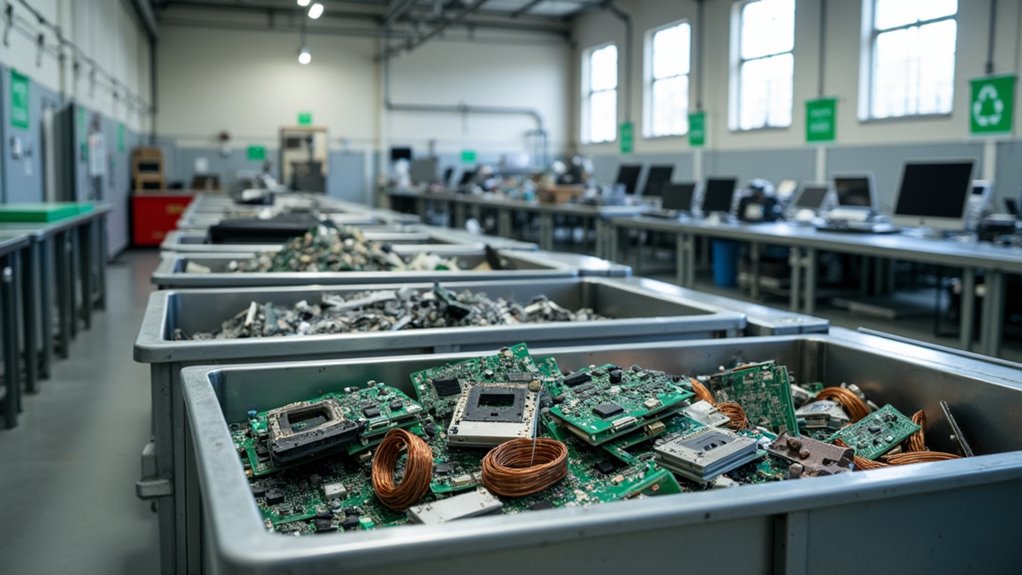
Mountains of discarded smartphones, laptops, and electronic gadgets have created an unprecedented environmental crisis that demands immediate attention. With 62 million tonnes of e-waste produced in 2022 and only 17.4% properly recycled, the world faces a mounting challenge that threatens both environmental and human health.
E-waste poses a massive environmental threat, with billions of discarded devices creating toxic mountains of unrecycled electronics worldwide.
This toxic tide of electronics contains hazardous substances like lead, mercury, and cadmium, which leach into soil and water systems, creating far-reaching consequences for ecosystems and communities. Waste-to-energy solutions could offer a way to convert some of this waste into usable power, reducing its environmental impact. Current projections indicate that global e-waste generation will reach 74 million tons by 2030. The Great Lakes Electronics Corporation specializes in eco-friendly recycling solutions to combat these hazardous effects. By implementing sustainable solutions, industries can reduce waste and improve the overall efficiency of their operations.
The impact of improper e-waste disposal extends far beyond local landfills. Toxins released from discarded electronics can travel thousands of miles, affecting populations that never owned these devices. Children and pregnant women face particular risks, with exposure leading to neurological damage, respiratory problems, and impaired cognitive function. Effective waste management policies can play a pivotal role in reducing these health hazards by setting clear guidelines for disposal and recycling.
The environmental toll is equally severe, as e-waste contamination disrupts wildlife habitats and releases greenhouse gases that accelerate climate change. Carbon capture and storage technology could mitigate one-fifth of emissions by mid-century, highlighting the importance of addressing e-waste in global efforts to reduce emissions.
However, proper e-waste management offers remarkable opportunities for resource conservation and economic benefits. Recycling electronics recovers valuable metals like gold, silver, and copper at a cost 13 times lower than mining raw materials.
This process saves enough energy to power 3,500 US homes annually while supporting the shift to a circular economy. Technological innovations are making electronics more durable, easier to repair, and increasingly recyclable, offering hope for a more sustainable future.
Legal frameworks are evolving to address this challenge, with 25 states implementing specific e-waste legislation and many countries adopting Extended Producer Responsibility programs. Certified recyclers now operate under strict environmental standards, while substantial fines discourage improper disposal practices.
These regulations, combined with manufacturer take-back programs and dedicated drop-off locations, provide consumers with accessible options for responsible disposal.
The solution to the e-waste crisis requires a coordinated global response. International cooperation, investment in recycling infrastructure, and public education campaigns are essential components of effective e-waste management.
Consumers can take immediate action by using certified recyclers, participating in take-back programs, and donating functional electronics to charities. Before disposal, it’s essential to securely erase data and properly separate batteries for recycling.
The future of e-waste management lies in innovation and collective action. Urban mining practices, improved recycling technologies, and eco-friendly materials are reshaping the electronics industry.
While the challenge is significant, the tools and knowledge needed to address it are within reach. Through proper disposal methods, strong regulations, and technological advancement, we can transform the e-waste crisis into an opportunity for environmental stewardship and resource conservation.
Frequently Asked Questions
Can I Get Paid for Recycling My Old Electronic Devices?
Yes, recycling electronics can provide some financial return through various programs.
Major retailers like Best Buy and Apple offer store credit or gift cards for trading in devices. Some e-waste recycling centers pay cash for items containing valuable metals, particularly computers and phones.
Scrap yards may also buy electronics by weight. However, payment amounts vary widely and are typically modest – the environmental benefit usually outweighs potential earnings.
How Do I Securely Erase Data From Devices Before Disposal?
Secure data erasure requires multiple steps for complete protection.
First, backup all important files to an external drive or cloud storage.
For hard drives, use specialized wiping software like DBAN that overwrites data several times following DoD standards.
SSDs need different treatment – use manufacturer secure erase tools.
For ultimate security, physical destruction methods like shredding or professional services guarantee data can’t be recovered.
Always verify erasure is complete before disposal.
Which Electronic Items Contain the Most Valuable Recyclable Materials?
Desktop computers and laptops contain the highest concentrations of valuable materials, with roughly 0.2g of gold, 2g of silver, and 200g of copper per unit.
Industrial and medical equipment also pack significant amounts of platinum-group metals and rare earth elements.
Smartphones, while containing smaller amounts per device, represent huge collective value due to their sheer numbers – each one has about 0.034g gold and 16g copper.
Are There Any Tax Benefits for Properly Disposing of E-Waste?
Several states offer significant tax benefits for e-waste recycling.
Arizona, Arkansas, Kentucky, Louisiana, and Virginia provide tax credits ranging from 10-50% on recycling equipment costs.
While no federal tax credits currently exist, businesses can realize indirect financial benefits through reduced disposal costs and potential revenue from recycled materials.
Companies may also qualify for tax deductions when donating working electronics, while staying compliant helps avoid costly regulatory fines.
How Long Do Electronic Components Take to Decompose in Landfills?
Electronic components have staggeringly long decomposition times in landfills.
Glass screens persist for 1-2 million years, while plastic parts take 450-1000 years to break down.
Aluminum components last 80-250 years, and batteries need at least 100 years to decompose.
Most concerning are circuit boards containing heavy metals, which can remain intact indefinitely.
These extended decomposition periods mean e-waste continues affecting the environment for generations to come.


