

Communities worldwide are revolutionizing waste management through innovative local programs. Cities like Kamikatsu and Minneapolis demonstrate how strategic sorting systems and zero-waste initiatives dramatically reduce landfill usage. Community composting creates jobs while transforming organic waste into resources. Local engagement through workshops, social media campaigns, and partnerships with businesses drives lasting change. Circular economy hubs like KOLO in Bratislava showcase how waste prevention and social equity work together. These growing movements reveal promising solutions to our waste challenges.
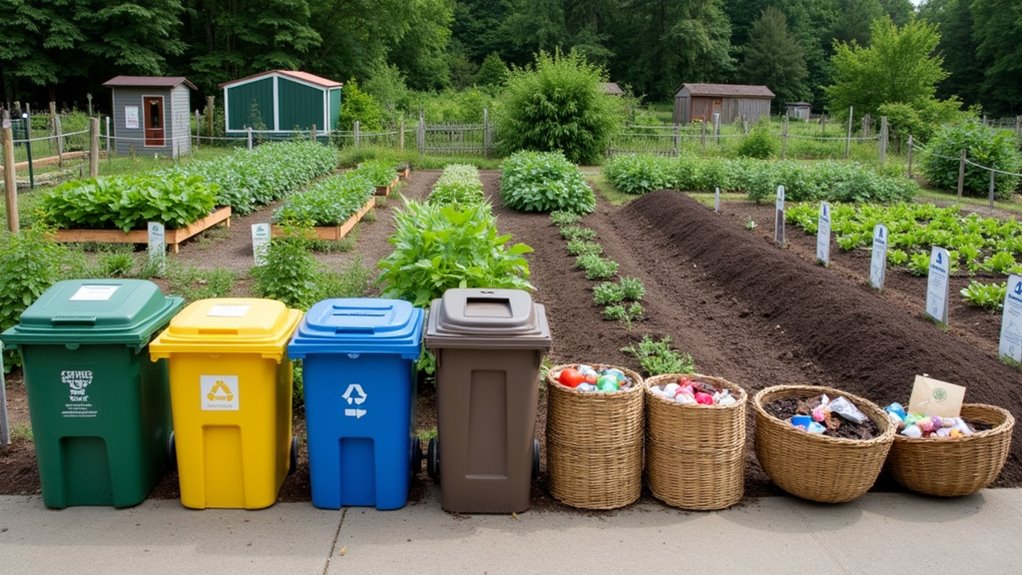
As communities worldwide grapple with mounting waste challenges, innovative local initiatives are leading the charge toward a more sustainable future. The rising popularity of community composting programs demonstrates how local action can transform organic waste into valuable resources while creating jobs and fostering environmental awareness among residents. Implementing smart strategies to reduce food waste is crucial in diverting edible food from landfills, further supporting these community efforts.
Cities and towns are increasingly moving beyond traditional recycling approaches, embracing thorough zero-waste strategies that tackle the root causes of waste generation. The take-make-dispose model that dominated past waste management practices is being phased out in favor of more sustainable approaches. The success of programs like Minneapolis’s municipal recycling system and Ocean Cleanup‘s removal of millions of kilograms of plastic from waterways shows the potential impact of coordinated community efforts. California’s ambitious goal to reduce plastic packaging by 25% in the coming decade sets a powerful precedent for other regions. Municipal waste management efforts, like curbside recycling programs, are foundational to these comprehensive waste reduction strategies.
The Japanese town of Kamikatsu offers an inspiring example of community-driven waste management, with residents separating their waste into 45 distinct categories, including nine different types of paper. This meticulous sorting system has virtually eliminated the need for landfills and incinerators, while fundamentally changing how residents think about consumption and disposal. Taiwan has demonstrated remarkable progress by achieving a 99% diversion rate from landfills through comprehensive waste management strategies. The introduction of IoT-enabled trash bins has further streamlined waste operations, allowing for more efficient tracking and management. Fast fashion has greatly contributed to overflowing landfills and microplastic pollution, underscoring the need for sustainable practices.
Kamikatsu’s 45-category waste sorting transformed a community’s relationship with consumption, proving local action can eliminate landfill dependence.
Circular economy hubs are emerging as essential community resources. In Bratislava, the KOLO facility’s 1,200-square-meter space serves as a hub for waste prevention, working with local non-profits to give household items a second life through repair and reuse. These initiatives demonstrate how waste reduction can support social equity while promoting environmental sustainability.
Food waste reduction programs are gaining traction through innovative approaches like food gleaning and pickup programs that redirect surplus food to those in need. Many communities are implementing mandatory composting regulations for businesses, while simultaneously encouraging backyard and neighborhood composting initiatives that build local resilience.
Infrastructure planning plays a significant role in successful waste reduction efforts. Communities are optimizing collection routes, implementing single-stream recycling, and exploring alternative collection schedules to maximize efficiency. These systemic improvements create the foundation for long-term waste reduction success.
Community engagement remains essential for driving lasting change. Local libraries and town halls are hosting zero-waste workshops, while businesses are adopting more sustainable practices through community partnerships. Social media campaigns and targeted outreach efforts help educate residents about proper recycling techniques and address specific local challenges.
The success of these initiatives demonstrates that effective waste management requires a combination of infrastructure, education, and community involvement. By fostering local participation and creating accessible programs, communities are building more sustainable waste management systems that benefit both the environment and their residents.
As these programs continue to evolve and expand, they provide valuable models for other communities seeking to reduce their environmental impact while strengthening social bonds and local economies.
Frequently Asked Questions
How Can I Start a Community Waste Initiative in My Neighborhood?
Starting a neighborhood waste initiative begins with conducting a basic waste audit to understand local disposal patterns.
Next, organize meetings with neighbors to discuss concerns and brainstorm solutions.
Create an action plan focusing on achievable goals like recycling education or composting programs.
Partner with local authorities and existing environmental groups for support and resources.
Finally, launch community events to build momentum and track progress through regular assessments.
What Funding Options Are Available for Local Recycling Programs?
Several funding options exist for local recycling programs.
The EPA offers SWIFR and REO grants, while state governments provide targeted funding like Georgia’s Recycling Grant.
Communities can leverage local mechanisms including service fees, franchise contracts, and pay-as-you-throw systems.
Private sector support comes from organizations like The Recycling Partnership and Glass Recycling Foundation.
Alternative approaches include material sales revenue, public-private partnerships, and regional resource pooling to maximize efficiency.
How Do We Measure the Success of Community Waste Reduction Efforts?
Success in community waste reduction can be measured through both hard data and human impact. Key metrics include recycling rates, pounds of waste per person, and greenhouse gas reductions.
Economic indicators like cost savings and job creation provide financial perspective.
Community engagement levels, stakeholder satisfaction, and improved environmental conditions offer qualitative insights.
Together, these metrics create a thorough picture of program effectiveness and areas for improvement.
Which Waste Materials Generate the Most Revenue When Recycled Locally?
Based on market values, scrap metals consistently generate the highest recycling revenue locally.
Copper leads at over $2 per pound, while aluminum cans fetch $0.40-$0.70 per pound.
Car batteries can bring up to $10 each.
Electronics containing precious metals like gold and silver also command premium prices.
Used ink cartridges offer steady returns at $2-$4 per unit.
The profitability varies with market conditions and local recycling center policies.
What Legal Permits Are Needed to Establish a Community Composting Site?
Establishing a community composting site requires multiple permits from local and state authorities.
Key requirements include zoning permits from local government, solid waste handling permits from state environmental agencies, and stormwater discharge permits.
Sites must also obtain business licenses, food safety permits if processing food waste, and proper insurance coverage.
Local ordinances may require additional approvals like conditional use permits and public hearings before the Planning Commission.


