

Environmental law is rapidly transforming to tackle the climate crisis through innovative approaches. Modern frameworks combine traditional conservation with dynamic regulatory tools like carbon pricing and mandatory climate risk disclosures. The shift from local preservation to global cooperation is evident in landmarks like the Paris Agreement and Glasgow Climate Pact. Courts increasingly hold governments and corporations accountable, while new legal mechanisms address emerging technologies and nature-based solutions. Understanding these evolving legal strategies reveals powerful tools for climate action.
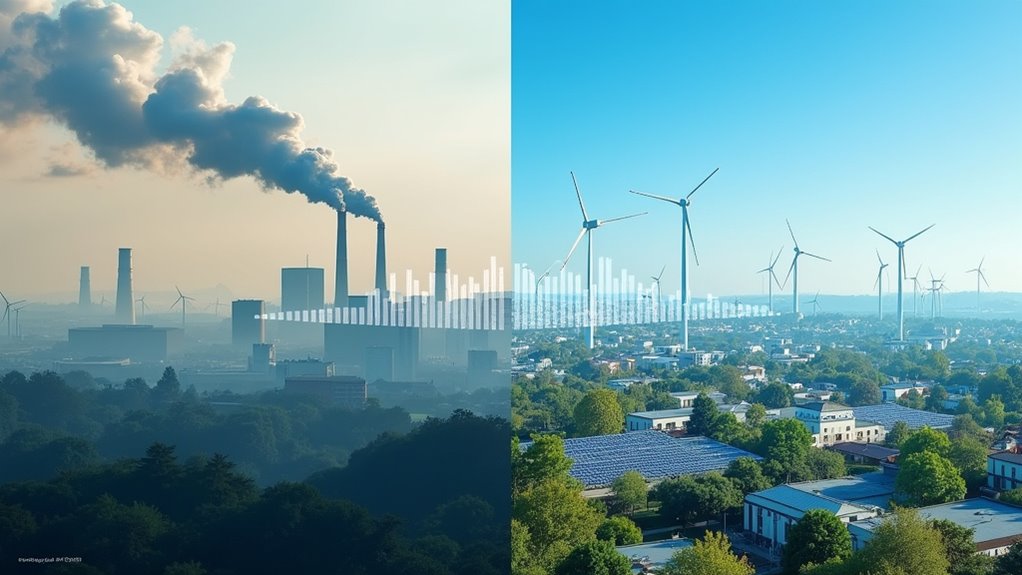
How did environmental law evolve from protecting local habitats to addressing the global climate crisis? The journey began with early conservation efforts in the 19th and 20th centuries, focused primarily on preserving local natural resources. However, the 1972 UN Conference on Human Environment marked a pivotal shift, transforming environmental law from a localized concern into a global imperative.
The legal framework for climate action gained momentum through landmark legislation like the Clean Air Act of 1963, which proved remarkably adaptable to addressing greenhouse gas emissions. International cooperation reached new heights with the Montreal Protocol in 1987 and the Kyoto Protocol in 1997, demonstrating the world’s growing recognition of climate change as a shared challenge requiring coordinated action. The cap and trade system introduced by the Kyoto Protocol represented a groundbreaking global strategy for regulating carbon emissions. Renewable energy insights reveal that the sector is projected to create over 16 million jobs, highlighting economic opportunities alongside environmental benefits.
Environmental law has embraced key principles that guide its evolution. The precautionary principle encourages preventive action before irreversible damage occurs, while the polluter pays principle guarantees accountability for environmental harm. These principles, combined with concepts like sustainable development and intergenerational equity, have shaped modern climate legislation and policy. The endangered species protection has become increasingly critical as climate change threatens biodiversity and habitats worldwide.
The field has undergone significant transformation, moving beyond traditional preservationism toward a more dynamic approach that integrates various legal domains. Water law, land use regulations, and environmental protection now intersect in ways that address the complex nature of climate change. This evolution has led to more flexible regulatory instruments and innovative governance structures that operate across multiple jurisdictional levels. Carbon pricing mechanisms, for example, have been implemented in numerous jurisdictions as a means to regulate emissions.
In the United States, the Supreme Court’s decision in Massachusetts v. EPA (2007) fundamentally altered the landscape of climate regulation by confirming the EPA’s authority to regulate greenhouse gases. Despite political fluctuations – from Obama’s ambitious Clean Power Plan to Trump-era rollbacks and Biden’s renewed climate focus – environmental law continues to adapt and evolve. Courts, laws, and regulations are playing an increasingly significant role in holding both governments and corporations accountable for their climate actions.
International cooperation has reached new heights with agreements like the Paris Agreement of 2015 and the Glasgow Climate Pact of 2021. These frameworks have established global temperature goals and national commitments while encouraging increased climate action and support among nations. Over 130 countries have set EV deployment targets, indicating a substantial shift towards sustainable transport.
Meanwhile, climate litigation has emerged as a powerful tool, with courts increasingly hearing cases that challenge government inaction and corporate responsibility.
Looking ahead, environmental law is embracing new frontiers. The focus has expanded to include adaptation strategies alongside mitigation efforts. Legal frameworks now address emerging technologies like carbon capture and storage, while also incorporating nature-based solutions.
Financial regulations increasingly require climate risk disclosures, and carbon pricing mechanisms are gaining traction globally. This evolution reflects a growing understanding that effective climate action requires a thorough legal framework that can address both immediate challenges and long-term sustainability goals.
Frequently Asked Questions
How Can Individuals Legally Challenge Companies Violating Environmental Protection Laws?
Individuals can challenge environmental violations through several legal pathways.
Citizen suit provisions enable direct lawsuits against companies breaking federal environmental laws. People must demonstrate concrete injury and causation to establish legal standing.
Class action lawsuits allow groups to seek damages for widespread harm. Documentation of specific violations, scientific evidence, and expert testimony are essential for successful cases.
Courts can order injunctions, fines, or mandatory cleanups as remedies.
What Penalties Do Governments Face for Missing Their Climate Agreement Targets?
Under the Paris Agreement, governments face no direct legal penalties for missing climate targets.
Instead, consequences are primarily reputational and economic. Countries may experience diplomatic pressure, reduced access to climate finance, negative media coverage, and potential trade impacts.
While there’s no formal punishment mechanism, nations can face domestic litigation, civil society protests, and declining environmental ratings.
The system relies on transparency and peer pressure rather than enforcement.
Do Environmental Laws Protect Indigenous Communities’ Rights During Green Energy Development?
Environmental laws provide mixed protection for Indigenous rights during green energy development.
While international frameworks like the UN Declaration on Rights of Indigenous Peoples establish important safeguards, enforcement remains inconsistent.
Some countries have strengthened legal protections through court rulings and new Indigenous ministries, but violations continue.
Over 200 human rights allegations in renewable projects between 2010-2020 highlight ongoing challenges, despite growing recognition of Indigenous peoples’ right to free, prior, and informed consent.
How Are International Waters Regulated Regarding Climate Change Mitigation Efforts?
International waters are governed through a complex web of regulations centered on UNCLOS (UN Convention on the Law of the Sea).
The IMO enforces emission standards for ships, targeting a 50% reduction by 2050.
Marine protected areas now cover 7.65% of oceans, while regional agreements address specific challenges.
Carbon pricing mechanisms and energy efficiency requirements are being implemented.
International cooperation focuses on monitoring ocean acidification and protecting biodiversity beyond national borders.
Can Environmental Laws Force Insurance Companies to Cover Climate-Related Disasters?
Environmental laws can partially compel insurers to cover climate disasters through various mechanisms.
State regulators can mandate certain coverage requirements, while federal programs like the National Flood Insurance Program provide baseline protection.
However, insurers retain significant flexibility to adjust rates or exit high-risk markets.
Recent legislation in states like California and New York aims to strengthen requirements, but complete forced coverage remains challenging due to market viability concerns and legal limitations.


