

Hydropower dams offer substantial renewable energy benefits while posing significant environmental tradeoffs. They generate nearly 20% of global electricity and provide essential services like flood control and irrigation. Modern facilities employ innovative technologies, reducing fish mortality to under 2% through improved turbines and fish passages. However, large dams disrupt river ecosystems and sometimes displace communities. With $127 billion in planned upgrades by 2030, the industry aims to balance energy needs with ecological preservation – a challenge that continues to evolve.
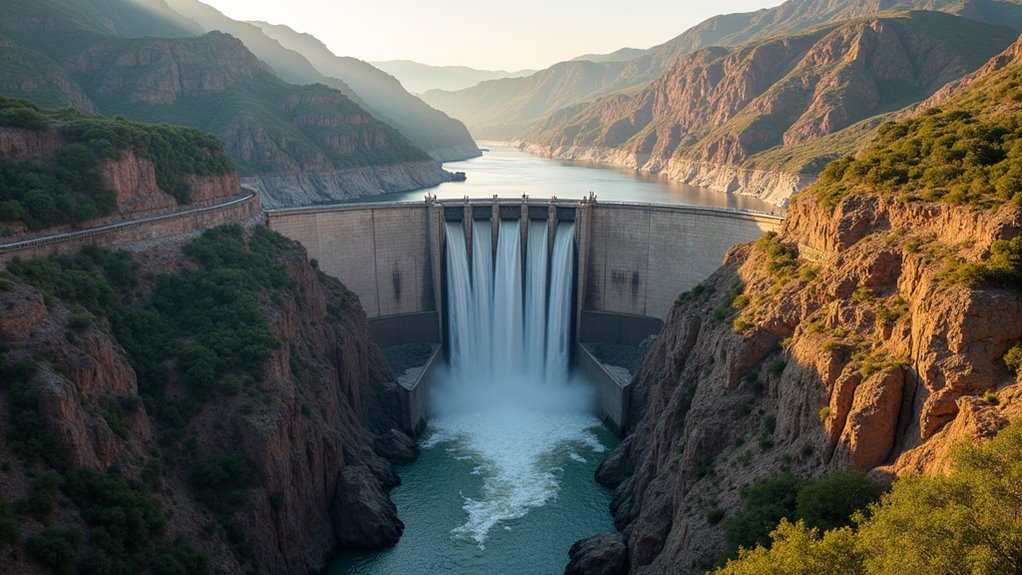
While sustainable energy solutions continue to evolve, hydropower stands as one of humanity’s oldest and most reliable sources of renewable electricity, currently providing nearly one-fifth of the world’s power generation. Over the past five decades, this technology has helped avoid an estimated 100 billion tonnes of CO2 emissions, demonstrating its essential role in combating climate change. The economic benefits are equally impressive, with hydropower facilities contributing considerable revenue to government coffers and creating thousands of jobs in rural communities. Unlike fossil fuel plants that release harmful emissions, hydropower produces no waste heat and helps reduce air pollution significantly. With 21.8 GW of energy produced in 2019, hydropower continues to dominate the renewable energy landscape.
The versatility of hydropower extends beyond mere electricity generation. These facilities serve multiple purposes, providing necessary services like flood control, irrigation, and water supply management. Recreational opportunities created by reservoirs have transformed remote communities into tourist destinations, while the ability to quickly adjust power output helps stabilize electrical grids, particularly as more variable renewable sources like wind and solar come online. As climate change continues to impact the planet, there is an urgent need to protect and restore habitats to preserve biodiversity, which could be affected by hydropower projects. An integrated approach involving policy reforms to grassroots initiatives is crucial in ensuring hydropower’s role in sustainable energy development.
However, the environmental impact of hydropower projects cannot be ignored. Large dams greatly alter natural river flows, disrupting animal migration patterns and affecting water quality. The creation of reservoirs often requires flooding vast areas, leading to the displacement of both human communities and wildlife. Some projects have submerged valuable agricultural lands and archeological sites, raising questions about the true cost of hydropower development.
The hidden costs of hydropower extend beyond electricity, displacing communities and wildlife while forever altering river ecosystems and cultural heritage sites.
Technological advances are addressing many of these challenges. Modern turbine designs have reduced fish mortality rates to under 2%, while innovative fish ladders and elevators help maintain aquatic migration routes. The industry is also investing heavily in modernizing aging infrastructure, with plans to spend $127 billion by 2030 on upgrades that will enhance both efficiency and environmental performance.
Looking ahead, hydropower’s role in the global energy shift appears essential yet complicated. To achieve net-zero emissions by 2050, global hydropower capacity needs to expand by 60% to reach 2,150 GW. This target exceeds current development plans by 45%, highlighting a considerable gap between ambition and action. Despite this challenge, hydropower’s reliability remains remarkable, maintaining 80% of average generation even during severe drought conditions.
The future of hydropower will likely depend on finding the right balance between environmental protection and energy needs. While some regions are planning considerable expansions, with Europe alone proposing 8,785 new plants, policy support remains limited, with fewer than 30 countries including hydropower in their energy targets.
As the industry evolves, the focus increasingly shifts toward modernizing existing facilities and developing smaller, more environmentally sensitive projects that can provide clean power while minimizing ecological impact. This approach, combined with advancing technology and careful planning, suggests that hydropower will continue to play a fundamental role in the world’s shift to sustainable energy.
Frequently Asked Questions
How Long Does It Take to Construct a Typical Hydroelectric Dam?
A typical hydroelectric dam takes 10-15 years from initial planning to completion, with the actual construction phase lasting 2-3 years.
The timeline includes project identification (1-2 years), feasibility studies (4-6 years), and site design (1-3 years).
Large-scale projects can stretch even longer, sometimes taking decades.
Factors like site accessibility, environmental assessments, and legal challenges significantly impact the schedule.
Smaller run-of-river projects generally require less time.
What Happens to Hydroelectric Dams During Severe Drought Conditions?
During severe droughts, hydroelectric dams face significant operational challenges.
Lower water levels reduce pressure and turbine efficiency, sometimes forcing complete shutdowns when water drops below intake pipes. Generation can decline 13-50% below average, with some facilities operating at just 80% capacity.
This leads to higher electricity costs as utilities switch to more expensive power sources. The Southwest U.S. is particularly vulnerable, with California seeing drops up to 48% during drought conditions.
Can Local Communities Generate Income From Recreational Activities Around Hydroelectric Reservoirs?
Local communities can generate substantial income through reservoir-based recreation. Activities like boat rentals, fishing tournaments, and waterfront businesses create diverse revenue streams.
Studies show significant economic benefits – a Wisconsin analysis revealed $6.5 million in annual recreational value.
Marinas, campgrounds, and guide services provide jobs, while restaurants and lodging attract tourists.
The development of recreation infrastructure often triggers broader economic growth through increased visitation and commerce.
How Often Do Hydroelectric Dams Need Major Maintenance or Structural Repairs?
Hydroelectric dams typically require major maintenance every 15-30 years, depending on their age and operating conditions.
Annual inspections and minor repairs are routine, while more substantial work occurs at 5-6 year intervals.
Critical components like turbine runners, generators, and concrete structures need periodic refurbishment.
Environmental factors, usage intensity, and original construction quality influence maintenance timing.
Modern predictive maintenance techniques are helping extend these intervals in some facilities.
What Career Opportunities Are Available in the Hydroelectric Power Industry?
The hydroelectric power industry offers diverse career paths across multiple disciplines.
Technical roles include plant operators, electricians, and mechanics who maintain facility operations.
Engineering positions span civil, electrical, and mechanical specialties for system design and optimization.
Environmental scientists and biologists monitor ecological impacts.
Business professionals handle finance, compliance, and project management.
Trade positions like welders and technicians are also essential to daily operations and maintenance.


