

The renewable energy sector is experiencing explosive growth, creating over 16.2 million jobs worldwide with an 18% surge in the past year alone. Solar leads with 7.2 million positions, followed by biofuels and hydropower. Asia dominates employment, hosting two-thirds of renewable jobs, while the U.S. and Europe show strong momentum. With projections indicating 38 million positions by 2030, career opportunities span STEM fields, vocational work, and digital technologies. This transformative industry beckons those seeking sustainable, well-paying futures.
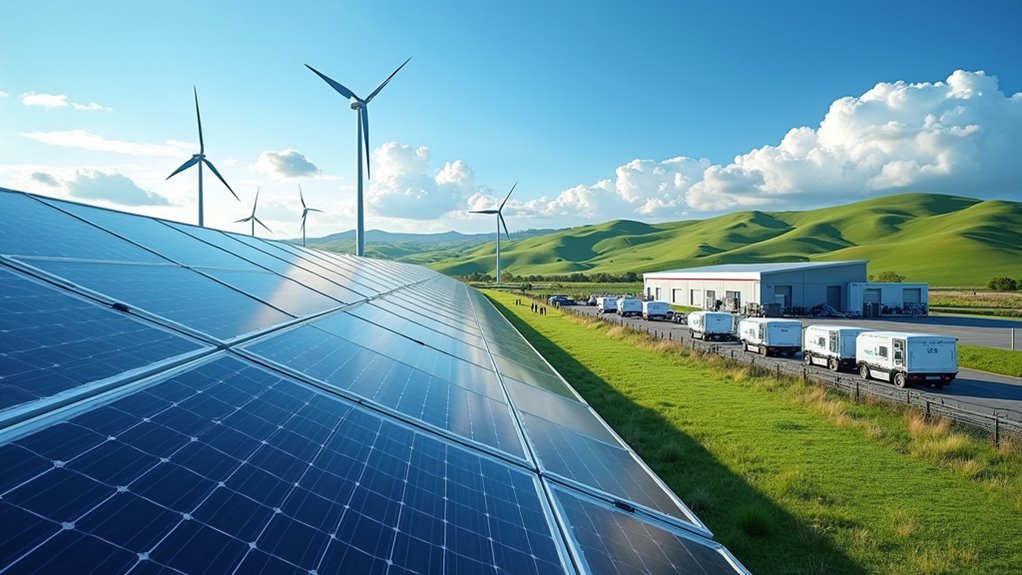
The global renewable energy sector has emerged as a powerful engine of job creation, employing more than 16.2 million people worldwide in 2023 – a dramatic 18% surge from the previous year. This remarkable growth reflects the industry’s rapid expansion and its increasing importance in the global economy, with projections suggesting a further 40% employment boost by 2030.
The solar photovoltaic sector leads this employment revolution, accounting for approximately one-third of the renewable energy workforce with 7.2 million jobs globally. Following closely behind, liquid biofuels provide 2.8 million positions, while hydropower and wind energy contribute 2.3 million and 1.4 million jobs respectively. The Inflation Reduction Act has significantly accelerated job creation in these sectors, with over 100,000 clean energy positions created within just six months of its enactment. These numbers highlight the diverse opportunities available across different renewable technologies. The sector harnesses natural renewable resources to provide sustainable alternatives to traditional energy sources.
Asia dominates the renewable energy job market, hosting two-thirds of all positions, with China alone accounting for 41% of global renewable energy employment. Europe maintains a strong presence with 1.8 million jobs, while Brazil has established itself as a regional powerhouse with 1.56 million positions. The United States and India each approach the milestone of 1 million renewable energy jobs. The transition to clean power sources is also reducing dependence on volatile fossil fuel markets, further strengthening economic resilience.
The industry’s growth is driven by multiple factors, including supportive government policies, falling technology costs, and increasing global demand for sustainable energy solutions. This expansion has created high-paying positions for engineers, technicians, and installers, while stimulating innovation and technological advancement across the sector. Programs and certifications essential for careers in this sector are becoming increasingly important as companies seek qualified professionals to meet demand.
The economic benefits extend beyond direct employment, positively impacting local economies and particularly benefiting rural areas.
As the industry evolves, there’s a growing emphasis on skills development and training. The sector demands professionals with expertise in STEM fields and vocational training, while increasingly requiring digital competencies. This has led to strengthened collaboration between industry stakeholders, educational institutions, and governments to develop extensive training programs and address potential skills gaps.
Looking ahead, the renewable energy sector faces both opportunities and challenges. While some regions experience uneven job distribution and skills shortages, optimistic scenarios project the creation of 38 million jobs by 2030. The industry must also address the need for just transition policies to support workers moving from fossil fuel sectors, while adapting to the potential impacts of automation on certain job categories.
The transformation of the global energy landscape represents more than just environmental progress – it’s creating stable, well-paying careers across multiple disciplines. As governments worldwide increase their commitment to clean energy targets and companies expand their sustainable operations, the renewable energy sector continues to offer growing employment opportunities.
This trend suggests that renewable energy won’t just power our future; it will employ it.
Frequently Asked Questions
What Certifications Are Required to Start a Career in Renewable Energy?
Entry-level positions typically require basic certifications like the NABCEP PV Associate credential or SEI Solar Professionals Certificate.
The Certified Energy Auditor (CEA) and Photovoltaic Installer Level 1 certifications are also valuable starting points.
Green-e Energy certification provides additional credibility.
While advanced credentials like PVIP or CSDP aren’t mandatory for beginners, they’re worth pursuing later for career advancement.
Community college certificates in renewable technology offer another entry pathway.
How Do Renewable Energy Salaries Compare to Traditional Energy Sector Jobs?
Renewable energy jobs offer competitive salaries comparable to traditional energy sector positions.
While oil and gas supervisors can earn up to $300,000 annually, renewable energy engineers make $80,000-$150,000, demonstrating strong earning potential.
Importantly, renewable positions pay 25% above national median wages and typically include better benefits packages.
The salary ranges overlap considerably between sectors, with both offering six-figure opportunities for experienced professionals.
The key difference lies in growth potential, with renewable jobs expanding much faster.
Which Countries Offer the Best Opportunities for Renewable Energy Careers?
China leads globally with exceptional opportunities, offering over 7 million green jobs and dominant positions in solar and wind markets.
The United States shows promising growth, particularly in California and Texas, with jobs expected to increase dramatically by 2026.
Germany’s ambitious renewable targets create steady career prospects, while India’s rapid expansion promises over 1 million positions.
Each country offers unique advantages – China for scale, US for innovation, Germany for stability, and India for growth potential.
Are Remote Work Options Available in the Renewable Energy Sector?
Remote work opportunities are increasingly available in the renewable energy sector, particularly in solar energy.
77% of remote workers report higher productivity using cloud-based platforms for installation monitoring.
While some roles require on-site presence, many positions like project management, data analysis, and system monitoring can be done remotely.
The industry’s embrace of remote work aligns with sustainability goals, potentially reducing emissions by 10% through 4-day remote workweeks.
What Are the Physical Demands of Working in Solar or Wind Installations?
Solar and wind installation work demands significant physical capabilities.
Workers must regularly lift 45-50 pounds of equipment, climb tall ladders, and maintain balance while working at extreme heights – sometimes hundreds of feet up on wind turbines.
The job requires standing and crouching for extended periods, often in challenging weather conditions.
Installers need strength, stamina, and dexterity to handle tools while working in confined spaces like attics or turbine nacelles.


