

Educational institutions are rapidly transforming their programs to meet growing demand for renewable energy professionals. Modern curricula combine hands-on technical training with theoretical coursework in solar, wind, and clean energy technologies. Industry partnerships provide apprenticeships and real-world experience, while work-based learning initiatives offer funded opportunities for career development. Students gain essential technical expertise, project management capabilities, and policy knowledge through specialized programs. The green workforce evolution continues to accelerate as sustainability becomes increasingly crucial.
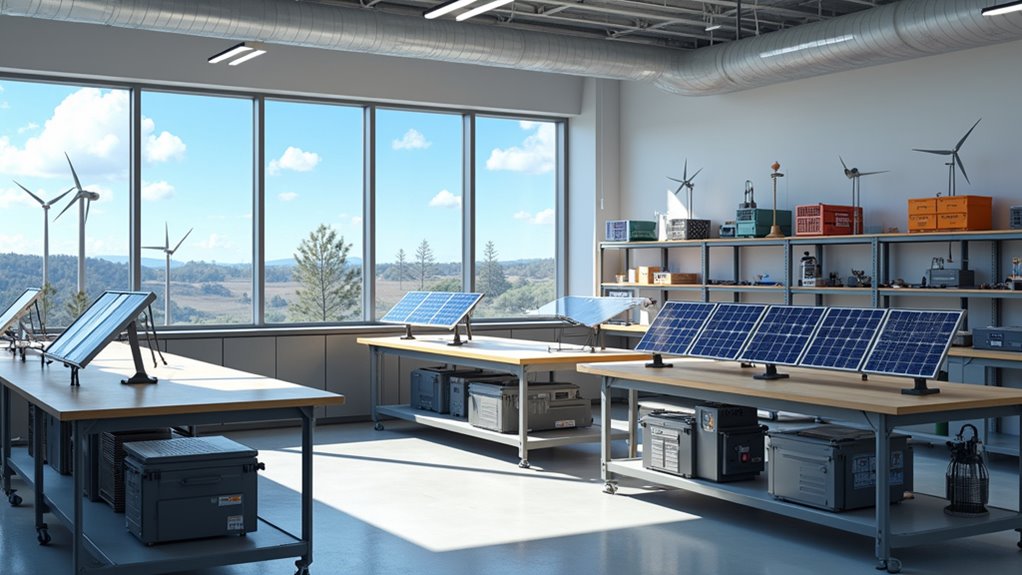
As the renewable energy sector experiences unprecedented growth worldwide, educational institutions and training programs are rapidly evolving to meet the increasing demand for skilled clean energy professionals. Universities and community colleges are transforming their curricula, shifting away from traditional fossil fuel-focused programs toward thorough renewable energy education. This transformation includes hands-on technical training, theoretical coursework, and real-world applications in solar, wind, and other clean energy technologies. The growing focus on green skills development reflects the global transition toward environmental sustainability.
The landscape of renewable energy education extends far beyond traditional classroom settings. Career pathways programs provide essential skills training, while work-based learning initiatives offer funded professional experiences. Organizations like C4EE demonstrate this through their workforce training opportunities. Students can access internships for practical experience, and Climate Justice Fellowships provide valuable full-time positions lasting one year. These opportunities help bridge the gap between academic knowledge and industry requirements, creating a more prepared workforce. Installing and maintaining new energy systems not only creates employment opportunities but also stimulates growth across various sectors by requiring a diverse range of skills.
Technical expertise remains at the core of renewable energy careers, but success in the field requires a diverse skill set. Professionals must combine specific technology knowledge with project management capabilities, understanding of energy policies, and strong data analysis skills. Equally important are soft skills like communication and problem-solving, which enable effective collaboration in this rapidly evolving industry. With the shift to clean power sources, there is a noticeable boost in local industries, reducing dependence on volatile fossil fuel markets.
Success in renewable energy demands both technical mastery and crucial soft skills for navigating this dynamic, collaborative field.
Industry partnerships play a vital role in developing tomorrow’s renewable energy workforce. Collaborations between educational institutions and clean energy companies create powerful synergies, while Registered Apprenticeship programs provide structured pathways to careers. These partnerships often result in industry-recognized credentials that carry real weight with employers, while mentorship programs connect students with seasoned professionals who can guide their career development.
Funding and resources for renewable energy education continue to expand through various channels. Government grants support workforce development, while private sector investments fuel training initiatives. Students can access scholarships specifically designed for renewable energy studies, and free online resources make basic knowledge accessible to anyone interested in the field.
Despite progress, significant challenges remain in renewable energy workforce development. The rapid pace of technological change requires continuous upskilling, and geographic mismatches between job openings and available workers create logistical hurdles. The sector also faces challenges in diversity and inclusion, highlighting the need for broader outreach and more inclusive recruitment strategies.
Looking ahead, the future of renewable energy education is increasingly sophisticated and interdisciplinary. Virtual and augmented reality tools are revolutionizing training experiences, while micro-credentials and stackable certifications provide flexible learning pathways. The integration of artificial intelligence and machine learning into energy education reflects the sector’s increasing technological complexity, preparing workers for the advanced energy systems of tomorrow.
Frequently Asked Questions
What Is the Average Salary for Entry-Level Renewable Energy Jobs?
Entry-level renewable energy jobs offer diverse salary ranges, typically between $40,000 to $80,000 annually across the United States.
Solar photovoltaic installers earn around $47,670, while wind turbine technicians make approximately $56,260 per year.
Higher-paying roles like entry-level energy consultants can reach $90,000 annually.
Location greatly impacts pay – Oklahoma’s entry-level positions start at $85,613.
How Long Does It Take to Complete Renewable Energy Certification Programs?
Renewable energy certification programs vary greatly in duration. Short-term courses like solar PV installer training can be completed in 5-10 days, while extensive university certificates typically take 1-2 years.
Industry certifications like NABCEP require 58+ training hours, and BPI Energy Auditor programs last about 5 days plus exam time.
Online programs offer flexible self-paced options, letting students complete coursework according to their schedule. Most professional certificates average 6 months to 2 years total.
Are There Age Restrictions for Pursuing Renewable Energy Training Courses?
Most renewable energy training programs require participants to be 18 or older due to safety requirements and technical complexity.
Some specialized programs target specific age groups – youth programs (16-17) focus on career exploration, while veterans’ initiatives may extend to age 35.
College-based programs follow standard admission policies.
Online courses typically have fewer age restrictions.
Mid-career professionals and seniors can access continuing education and retraining opportunities.
Which Countries Offer the Best Renewable Energy Education Opportunities?
Leading countries for renewable energy education include the United States, Germany, Denmark, the UK, and Sweden.
These nations combine strong academic programs with robust industry connections. The US offers prominent programs at Stanford and UC Berkeley, while European institutions like Technical University of Denmark and TU Berlin provide extensive renewable energy degrees.
These countries also benefit from significant government support, advanced research facilities, and growing job markets in the renewable sector.
Can I Transition From Traditional Energy Sectors Without Prior Green Experience?
Yes, shifting from traditional energy sectors is highly achievable.
Workers can leverage their existing technical expertise, safety knowledge, and project management skills – all valuable in renewable energy.
Industry data shows many successful shifts through targeted upskilling programs, certifications, and on-the-job training.
Key transferable skills like system operations, regulatory compliance, and problem-solving make professionals from conventional energy sectors attractive candidates for green jobs.


