

Ocean warming and coral bleaching are deeply connected environmental challenges. Rising ocean temperatures, which have increased 0.55°C since the 1870s, force corals to expel their symbiotic algae partners when stressed. This process, called bleaching, leaves corals vulnerable and stark white. With 14% of global coral cover lost in just nine years and 25% of marine species depending on reefs, the consequences ripple through entire ecosystems. Conservation efforts focus on developing resilient corals while reducing emissions – though there’s much more to this story.
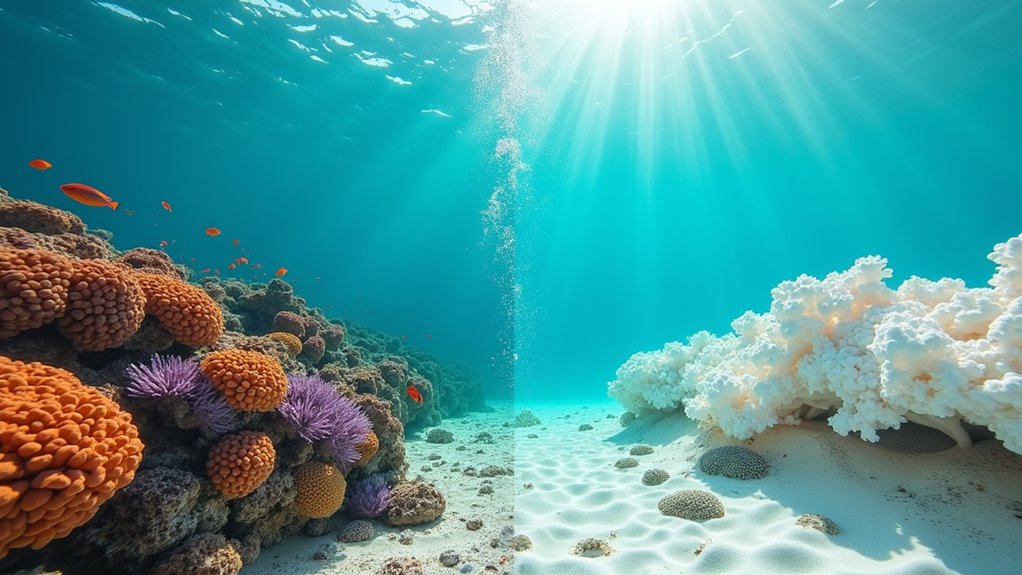
As ocean temperatures continue their steady climb, reaching levels unseen since record-keeping began in the 1870s, the world’s coral reefs face an unprecedented crisis of survival. Global ocean temperatures have risen by 0.55°C since the 1870s, with the oceans absorbing a staggering 90% of excess heat generated since the industrial revolution. This warming trend shows no signs of slowing, with the upper 75 meters of ocean waters warming at a rate of 0.11°C per decade between 1971 and 2010. The increase in CO₂ emissions not only contributes to ocean warming but also leads to ocean acidification, further stressing marine ecosystems. Healthy oceans play a vital role in regulating the Earth’s climate by absorbing carbon dioxide and heat from the atmosphere.
When corals become stressed by rising temperatures, they undergo a process called bleaching. During this process, corals expel their symbiotic algae partners, known as zooxanthellae, revealing their stark white calcium carbonate skeletons underneath. These zooxanthellae typically provide up to 90% of energy through photosynthesis to sustain coral health. While this bleaching isn’t immediately fatal, it greatly increases the risk of coral death. Even a modest temperature increase of just 1-2°C above normal can trigger this devastating response. Sustainable management of fisheries is essential to balance human needs with marine ecosystem health, which can indirectly support coral reef preservation.
The scope of coral bleaching has reached alarming proportions globally. Recent surveys indicate that 14% of the world’s coral cover vanished between 2009 and 2018, with the Caribbean region losing nearly 90% of its coral reefs. Scientists predict that by 2055, approximately 90% of coral reefs worldwide will experience severe bleaching events. The Great Barrier Reef, Earth’s largest coral reef system, has been particularly hard hit, with 60% of surveyed reefs showing moderate to severe bleaching in 2020 alone. Four global events of mass coral bleaching have been recorded since 1997, with the most recent declared in 2024. The rising sea levels due to melting polar ice caps further compound the challenges faced by these vital ecosystems.
Coral reefs face an existential crisis, with the Caribbean already losing 90% of its reefs and global bleaching accelerating at an unprecedented rate.
The consequences of this mass bleaching extend far beyond the corals themselves. Roughly 25% of marine species depend on coral reef ecosystems for survival. As reefs deteriorate, fish populations decline, coastal communities lose protection from storms and erosion, and entire ecosystems become more vulnerable to invasive species like seaweed. The ripple effects impact both marine biodiversity and human communities that rely on healthy reefs.
However, scientists and conservation groups aren’t giving up. They’re pursuing multiple strategies to protect and restore coral reefs. These include developing heat-resistant coral strains through selective breeding, implementing artificial cooling methods for localized reef protection, and enhancing water quality through improved coastal management practices.
While these efforts show promise, the most vital step remains addressing the root cause: reducing greenhouse gas emissions to limit ocean warming.
The fate of coral reefs hangs in delicate balance. While the statistics paint a sobering picture, the combination of scientific innovation, conservation efforts, and growing public awareness offers hope. Success will require sustained commitment from governments, businesses, and communities worldwide to reduce emissions, protect marine environments, and support coral conservation initiatives.
The next decade will prove essential in determining whether these magnificent ecosystems can survive for future generations.
Frequently Asked Questions
How Long Can Coral Reefs Survive After Experiencing Severe Bleaching?
Severely bleached coral reefs typically require 10-15 years for full recovery, though survival timeframes vary considerably.
Some resilient species can bounce back within months, while others need decades to rebuild their ecosystems.
Recovery depends on factors like coral type, water conditions, and presence of healthy zooxanthellae.
However, frequent bleaching events can overwhelm reefs’ natural healing abilities, making long-term survival increasingly challenging in today’s warming oceans.
Can Artificial Coral Reefs Help Protect Marine Ecosystems From Warming Effects?
Artificial reefs can provide valuable protection for marine ecosystems facing warming impacts.
While they cannot completely replace natural reefs, these engineered structures offer alternative habitats for displaced marine life and create new spaces for coral growth.
When properly designed and maintained, artificial reefs support biodiversity, enhance coastal resilience, and reduce pressure on struggling natural reef systems.
However, their success depends heavily on local water quality and proper material selection.
What Role Do Local Communities Play in Coral Reef Conservation?
Local communities serve as essential guardians of coral reef ecosystems through multiple roles.
They conduct hands-on conservation work like reef monitoring, restoration projects, and regular cleanups. Communities also enforce marine protected areas and implement sustainable fishing practices.
Through education programs and workshops, locals gain knowledge to protect reefs while developing alternative livelihoods in ecotourism and reef-friendly businesses, creating economic incentives for conservation.
How Do Marine Species Adapt to Warmer Waters Near Bleached Reefs?
Marine species demonstrate remarkable adaptability near bleached reefs. Some fish species migrate alongside coral movements, following warmer currents to new habitats.
Heat-tolerant algae symbionts are adopted by surviving corals, while generalist species adjust their feeding patterns. Phytoplankton actually thrive in warmer waters, providing food for adaptable herbivorous fish.
However, predatory species face greater challenges due to disrupted food webs and increased metabolic demands in warmer environments.
Which Coral Species Are Most Resistant to Temperature Changes and Bleaching?
Several coral species demonstrate remarkable resistance to temperature changes and bleaching. The hydrocoral Millepora intricata shows the highest heat tolerance, followed by Favites complanata.
Massive coral families like Poritidae, Favidae, and Mussidae also exhibit strong bleaching resistance.
Some Acropora species, particularly A. hyacinthus and A. retusa, display variable heat tolerance and “ecological memory” responses.
Corals with thicker tissue layers and those hosting heat-resistant zooxanthellae typically show greater resilience to temperature stress.


