

Eco product certifications fall into several key categories that verify different aspects of sustainability. Major programs like USDA Organic, Energy Star, and FSC evaluate everything from supply chains to end-of-life disposal. While over 150 different standards exist, consumers can focus on well-established certifications that match their priorities, whether it’s organic production, energy efficiency, or fair labor practices. Understanding these labels’ specific criteria helps cut through greenwashing and reveals which products truly meet environmental standards.
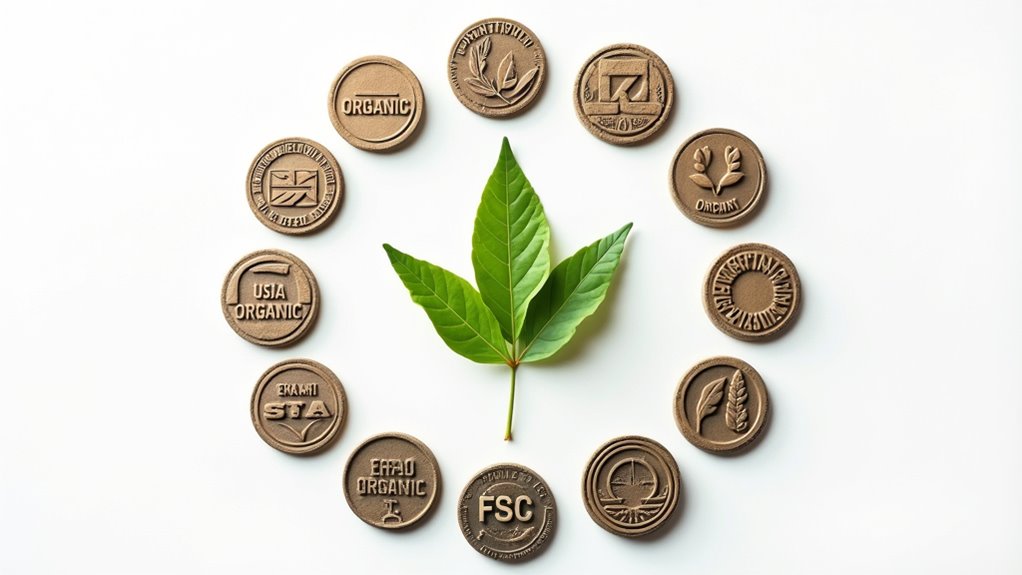
While consumers increasingly seek environmentally responsible products, managing the complex landscape of eco-certifications poses a notable challenge. The marketplace features various types of certifications, from supply chain validations to end-of-life verifications, each serving distinct purposes in authenticating environmental claims. Third-party certification programs have emerged as essential tools for building consumer trust and helping companies differentiate themselves in an increasingly competitive green marketplace. Understanding these certifications begins with recognizing their fundamental categories. Supply chain certifications track materials from source to shelf, while end-of-life certifications focus on disposal methods. With over 150 different standards available through certification bodies like Ecocert, businesses can find options tailored to their specific sector and sustainability goals. Multi-attribute certifications examine numerous sustainability criteria simultaneously, whereas single-attribute certifications zero in on specific environmental aspects. Well-established programs like USDA Organic, Energy Star, and Forest Stewardship Council (FSC) have become industry standards, each maintaining rigorous criteria for their respective sectors. Organizations like the Bio Suisse certification ensure products meet strict Swiss organic production standards. Green certifications such as BREEAM, WELL, and LEED are pivotal in guiding sustainable building practices worldwide.
The certification process itself involves several important steps. Companies must submit detailed applications, provide extensive documentation of their sustainability practices, and undergo thorough facility inspections. Many certification programs require laboratory testing and implement ongoing compliance monitoring to guarantee continued adherence to standards. This extensive approach helps maintain the integrity of eco-certifications, though it can present financial challenges for smaller businesses. Government support mechanisms in renewable energy policies can provide financial incentives similar to those needed for eco-certification processes. Certification programs typically assess multiple criteria, including raw material sourcing, energy consumption, waste management, and chemical usage. Some also evaluate social responsibility aspects, such as fair labor practices. These assessments help create a holistic picture of a product’s environmental impact, though the depth and breadth of evaluation varies considerably between certification programs. Corporate environmental responsibility is increasingly influenced by legal pressures, pushing companies to adopt credible certification standards. The proliferation of eco-labels has created some challenges in the marketplace. Consumer confusion about different certifications’ meanings and relative value is common, while varying standards between programs can make comparisons difficult. Additionally, some companies engage in greenwashing through weak or misleading certifications, undermining consumer confidence in legitimate programs. To evaluate certification credibility, consumers should look for transparency in criteria and processes, independence from industry influence, and scientific basis for standards. The most reliable certification programs regularly update their requirements to reflect advancing sustainability science and maintain widespread recognition within their industries. They also provide clear documentation of their verification processes and maintain strict independence from the companies they certify. As the importance of environmental responsibility continues to grow, eco-certifications serve as valuable tools for both consumers and businesses. While traversing the certification landscape requires some effort, understanding these programs’ fundamentals enables better-informed purchasing decisions. The evolution of certification standards and increasing market demand for verified sustainable products suggests a promising future for meaningful eco-certification programs that deliver genuine environmental benefits. Carbon capture and storage technology is one of the emerging solutions that could significantly reduce industrial emissions, aligning with the goals of many eco-certification programs.
Frequently Asked Questions
How Much Do Companies Pay to Obtain Eco-Certification for Their Products?
Eco-certification costs vary dramatically based on company size and product type. Small farms might pay around $525 for basic certification, while larger companies face fees ranging from $5,000 to over $50,000 per product line.
The average U.S. certificate costs approximately $6,500. Hidden expenses include staff time, facility upgrades, and ongoing compliance monitoring.
Climate Neutral certification typically requires about 0.4% of company revenues. Annual renewal fees and marketing rights add additional costs.
Can Products Have Multiple Eco-Certifications at the Same Time?
Yes, products can and frequently do carry multiple eco-certifications simultaneously. This practice is common because different certifications often focus on distinct environmental aspects – from sustainable materials to fair labor practices.
According to industry data, 67% of consumers actively seek eco-certified products, while companies strategically combine certifications like FSC with Rainforest Alliance or Energy Star with EPEAT to provide thorough sustainability validation.
However, managing multiple certifications can be challenging for manufacturers.
What Happens if a Certified Product Fails to Meet Standards?
When certified products fail to meet standards, several consequences follow.
The certifying body may suspend or revoke certification, requiring companies to implement corrective actions within a specific timeframe.
Companies face financial impacts from lost premium pricing and market access, along with potential reputational damage.
Legal consequences could include fines, lawsuits, and regulatory investigations.
To regain certification, companies must undergo re-certification process and demonstrate full compliance through new audits.
How Often Do Eco-Certified Products Need to Renew Their Certification?
Most eco-certifications require renewal every 3 years, though timeframes can vary by certification type. Products must undergo re-assessment to verify they still meet environmental standards.
During renewal, companies submit updated documentation, pay fees, and may face new compliance audits. Some certifications, like LEED Green Associate, follow a 2-year cycle.
Failing to renew on time typically results in certification expiration and the need to restart the entire certification process.
Are Eco-Certified Products Always More Expensive Than Non-Certified Alternatives?
While eco-certified products are typically more expensive than conventional alternatives, costing 75-85% more on average, this isn’t always the case.
The price difference varies considerably by product category. Sustainable cleaning supplies often have minimal markup, while organic clothing and furniture show larger price gaps.
As production scales up and demand grows, some eco-friendly items are becoming more competitively priced.
Long-term cost benefits can offset higher upfront prices through improved durability and concentrated formulas.