Eco-friendly cleaning products deliver powerful results while protecting both health and environment. Leading brands like Method and Seventh Generation use plant-based surfactants, essential oils, and natural disinfectants that match conventional cleaners’ effectiveness. These products reduce exposure to harmful chemicals by up to 86% and minimize water pollution through biodegradable ingredients. With improved availability and competitive pricing, sustainable cleaners offer peace of mind without sacrificing performance. The journey to a cleaner, greener home starts with smart choices.
As consumers become increasingly aware of their environmental impact, eco-friendly cleaning products have emerged as a powerful solution for maintaining both clean homes and a healthy planet. These products, made from natural and biodegradable ingredients, offer a sustainable alternative to conventional cleaners while delivering comparable cleaning effectiveness. The growing market for eco-friendly cleaners has led to increased availability and improved price competitiveness, making them more accessible to everyday consumers.
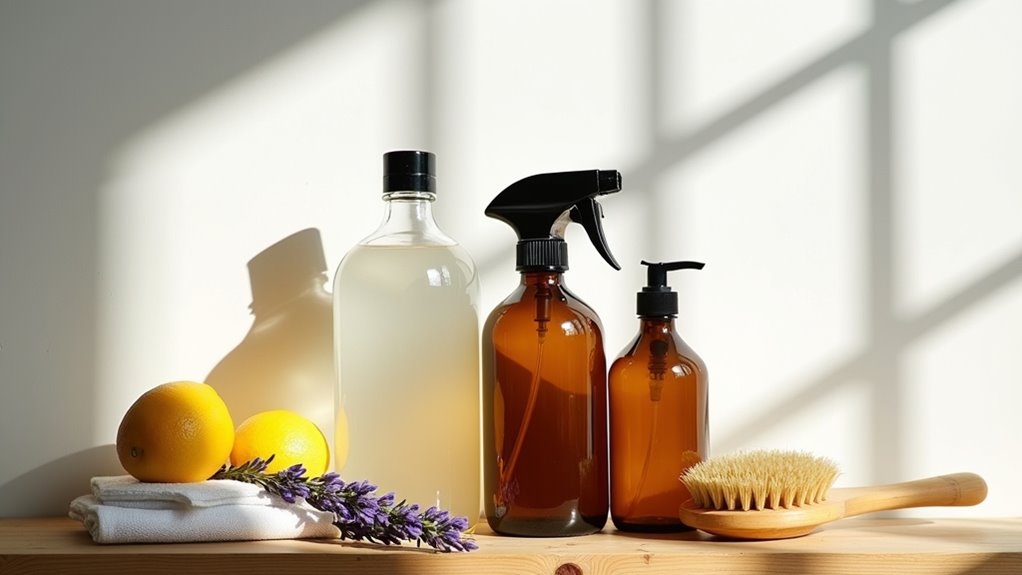
The cornerstone of eco-friendly cleaning products lies in their carefully selected ingredients. Plant-based surfactants provide effective cleaning power, while essential oils contribute both natural fragrance and antimicrobial properties. Common household items like vinegar and baking soda serve as natural disinfectants and mild abrasives, proving that effective cleaning doesn’t require harsh chemicals. Leading brands like Method and Seventh Generation have pioneered innovative plant-based formulations that rival traditional cleaning products. These products are certified by respected third-party organizations such as EcoLogo and Green Seal, ensuring they meet strict environmental standards. Additionally, adopting circular solutions in product packaging can significantly reduce waste, similar to efforts in sustainable fashion. By making small changes like switching to reusable products, consumers can further reduce their environmental footprint in their daily cleaning routines.
Natural ingredients like plant-based surfactants and essential oils prove that effective, certified eco-friendly cleaning products don’t require harsh chemical formulations.
Environmental benefits of eco-friendly cleaners extend far beyond the immediate cleaning results. These products considerably reduce water pollution and aquatic toxicity, while their production processes generate a lower carbon footprint. The use of biodegradable ingredients and sustainable sourcing practices helps preserve natural resources and decrease dependence on petrochemicals. Additionally, many manufacturers have embraced recyclable or compostable packaging, further reducing environmental impact. Reforestation efforts, such as targeting 350 million hectares, could enhance the positive environmental impact by removing additional CO2 from the atmosphere.
The health advantages of eco-friendly cleaning products are particularly remarkable. Without harsh chemicals, synthetic fragrances, and dyes, these products minimize the risk of skin irritations and allergic reactions. Research has shown that switching to green cleaning products can reduce exposure to harmful chemicals by 86% for chloroform. They contribute to better indoor air quality by reducing volatile organic compound (VOC) emissions, making them especially suitable for households with children, pets, or individuals with respiratory sensitivities. The absence of potentially harmful chemicals provides peace of mind without sacrificing cleaning power. Additionally, by using sustainable water practices, consumers can conserve water and contribute to overall environmental protection.
Today’s market offers an impressive array of eco-friendly cleaning solutions. From all-purpose cleaners to specialized products for laundry, dishes, and various surfaces, consumers can find green alternatives for virtually every cleaning need. The industry has responded to demand with innovations like concentrated formulas and refillable containers, which further reduce packaging waste and transportation emissions. Some consumers even opt to create their own cleaning solutions using simple, natural ingredients.
While some eco-friendly products may require additional effort or more frequent application compared to conventional cleaners, advances in green chemistry continue to improve their effectiveness. Natural disinfectants have been proven effective against common household germs, and proper education about product usage helps consumers achieve ideal results.
As the market continues to expand and evolve, eco-friendly cleaning products are increasingly demonstrating that environmental responsibility and cleaning efficacy can successfully coexist.
Frequently Asked Questions
How Long Do Homemade Eco-Cleaning Products Typically Last Before Expiring?
The shelf life of homemade eco-cleaners varies considerably based on their ingredients.
Water-based solutions typically last 2-4 weeks, while water-free formulas can remain effective for 3-6 months.
Products containing vinegar usually maintain potency for 3-4 months.
Essential oils extend longevity to 1-2 years when stored properly.
To maximize shelf life, store cleaners in dark glass containers, use distilled water, and watch for changes in color, smell, or consistency.
Can Eco-Friendly Cleaners Effectively Eliminate Mold and Mildew?
Research shows eco-friendly cleaners can effectively combat mold and mildew when used properly.
Natural ingredients like vinegar eliminate up to 82% of mold species, while tea tree oil provides potent antifungal properties. Baking soda and hydrogen peroxide also demonstrate strong mold-fighting capabilities.
While these green alternatives may require longer contact times than chemical cleaners, they offer safe, sustainable solutions for typical household mold problems without harsh toxins.
Are Natural Cleaning Products Safe to Use on All Types of Surfaces?
Natural cleaners aren’t universally safe for all surfaces. While they work well on most materials, certain combinations can cause damage.
Vinegar and acidic cleaners should be avoided on marble, granite, and natural stone. Baking soda’s abrasiveness requires caution on delicate surfaces. Essential oils may damage some plastics.
The key is knowing which cleaner suits each surface – always test in an inconspicuous spot first and follow manufacturer’s recommendations.
Do Eco-Cleaning Products Cost More Than Traditional Chemical-Based Cleaners?
Initially, eco-friendly cleaners do cost more upfront than traditional chemical cleaners – around $69/gallon compared to $12.50/gallon.
However, they’re typically more concentrated, requiring less product per use (1-2 oz/gallon vs 8-12 oz/gallon for traditional cleaners).
When factoring in their longer-lasting formulas and reduced health/environmental impacts, eco-cleaners often prove more cost-effective over time despite the higher initial investment.
What Certifications Should I Look for When Choosing Eco-Friendly Cleaning Products?
When choosing eco-friendly cleaners, several trusted certifications provide reliable guidance.
The EPA Safer Choice label guarantees products meet strict safety standards, while Green Seal certification evaluates both environmental impact and cleaning performance.
ECOLOGO by UL focuses on lifecycle assessment, and the USDA Biobased label indicates renewable ingredient content.
The EWG Verified mark confirms products are free from harmful chemicals.
These certifications help consumers avoid greenwashing and make informed choices.