

Modern organic waste handling transforms biodegradable materials into valuable resources through several proven methods. Cities implement sophisticated collection systems using designated bins and curbside pickup programs. Large-scale facilities employ aerobic composting, anaerobic digestion, and waste-to-energy technologies to convert organic matter into usable products like compost and biogas. These processes reduce methane emissions while creating sustainable resources and local jobs. Understanding these solutions reveals the potential of everyday organic waste.
As municipalities across the globe grapple with mounting waste challenges, organic waste handling has emerged as a critical frontier in sustainable waste management. From food scraps to yard trimmings, organic materials make up a substantial portion of our waste stream, presenting both challenges and opportunities for communities worldwide. The proper proportions of carbon, nitrogen, phosphorus, and potassium are essential for effective microbial breakdown of organic materials.
The foundation of effective organic waste management lies in proper collection methods. Cities are increasingly implementing sophisticated collection systems, including designated bins for homes and businesses, curbside pickup programs, and strategically located drop-off points. These systems guarantee that organic materials are properly segregated at the source, reducing contamination and streamlining the recycling process. The improper disposal of organic waste contributes to greenhouse gas emissions equivalent to over 50 million gas-powered vehicles annually. Urban areas are also focusing on community solutions to enhance participation and efficiency in waste management efforts.
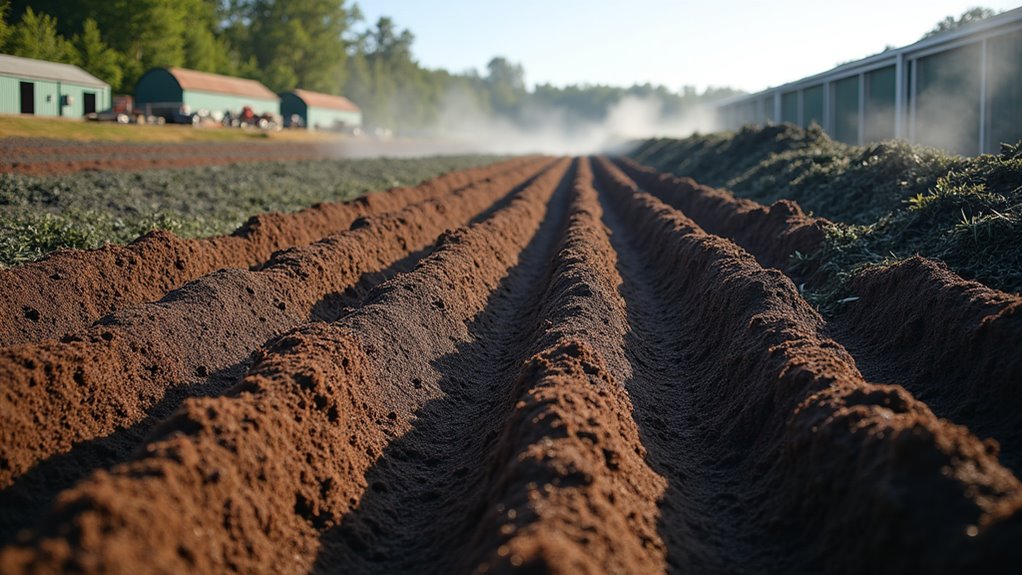
Modern composting techniques have evolved beyond traditional backyard bins. Large-scale facilities now employ various methods, from aerobic composting in massive windrows to high-tech anaerobic digestion systems that capture biogas for energy production. Waste-to-energy technologies, such as incineration and gasification, are also being explored to convert organic waste into usable power, further diversifying resource recovery methods. Vermicomposting, which utilizes worms to break down organic matter, has gained popularity in smaller-scale operations and educational settings. These diverse approaches allow for efficient processing of different types of organic waste while maximizing resource recovery. Transforming agricultural waste into resources through composting and recycling is a vital part of creating closed-loop operations on farms.
The benefits of organic waste recycling extend far beyond waste reduction. By diverting organic materials from landfills, communities greatly reduce methane emissions – a potent greenhouse gas. The process generates valuable products like compost, which enriches soil and supports sustainable agriculture. Additionally, biogas production from organic waste provides a renewable energy source, while creating local jobs in the growing waste management sector. Initiatives such as neighbors banding together for community cleanups and public awareness campaigns highlight the power of grassroots action in waste management.
However, the industry faces several obstacles. Contamination remains a persistent challenge, with non-compostable items frequently mixed into organic waste streams. Processing facilities must carefully manage odors and pests, while meeting strict regulatory requirements. The initial investment in infrastructure and technology can be substantial, though the long-term benefits often justify these costs.
Governments are responding with increasingly robust policies. Several U.S. states have implemented organic waste disposal bans, while others mandate commercial recycling programs. These regulations are complemented by incentives for businesses and quality standards for compost products, creating a thorough framework for organic waste management.
The future of organic waste handling is being shaped by technological innovation. Smart bins equipped with sensors optimize collection routes, while mobile apps help educate residents about proper waste sorting. Advanced technologies like hydrothermal carbonization and artificial intelligence-driven sorting systems are revolutionizing how we process organic waste.
These developments, combined with growing public awareness and participation, are transforming organic waste from a burden into a valuable resource for creating sustainable, circular economies. Through these thorough approaches, communities are increasingly recognizing organic waste not as garbage, but as an opportunity to generate valuable resources while addressing environmental challenges.
The success of these programs depends on continued technological innovation, policy support, and public participation in proper waste sorting and disposal practices.
Frequently Asked Questions
How Long Does It Take for Organic Waste to Fully Decompose?
Organic waste decomposition varies greatly based on material type and environmental conditions.
Fruits and vegetables break down quickest, taking 5 days to 1 month, while banana peels need over a month. Orange peels last 6 months, and eggshells persist up to 3 years.
Yard waste ranges from grass clippings (2-3 weeks) to whole trees (50+ years).
Factors like temperature, moisture, and oxygen levels dramatically affect decomposition rates. Ideal conditions include 40-60°C and 50-60% moisture content.
What Types of Containers Are Best for Storing Organic Waste?
For storing organic waste effectively, airtight containers with charcoal filters are ideal for controlling odors and preventing pests.
Kitchen countertop compost pails (1-2 gallons) work well for daily scraps, while larger bins (2-5 gallons) suit outdoor or garage storage.
Specialized containers like vermicomposting bins provide proper ventilation for worm composting.
For maximum freshness and minimal smell, stainless steel or BPA-free plastic containers with tight-fitting lids are recommended.
Can Meat and Dairy Products Be Included in Organic Waste Collection?
Yes, meat and dairy products can be included in many municipal organic waste collection programs, particularly those with industrial-scale composting facilities.
These facilities maintain high temperatures needed to properly break down animal products and kill pathogens.
However, proper handling is essential – scraps should be stored in sealed containers and frozen until collection day to minimize odors.
Some local programs may restrict meat/dairy, so residents should check their specific guidelines.
What Are the Costs Associated With Implementing an Organic Waste Program?
Implementing organic waste programs requires substantial investment. Initial costs range from $250,000 to over $500,000, covering equipment, vehicles, permits, and site development.
Ongoing expenses include facility fees ($25,000-$50,000 annually), insurance ($5,000-$10,000), and labor (25-40% of budget).
For consumers, monthly costs vary – typically $35 for food waste collection and $18.50 for green waste services.
Local agencies face significant infrastructure expansion costs, with potential non-compliance penalties reaching $10,000 per day.
How Can Businesses Reduce Odors From Organic Waste Storage Areas?
Businesses can effectively control organic waste odors through several proven methods.
Proper storage in sealed containers and enclosed areas with air control systems is crucial.
Installing biofilters and chemical scrubbers removes up to 99.9% of odors.
Daily cleaning of equipment and spilled materials prevents odor buildup.
Maintaining ideal composting conditions with proper aeration and carbon-to-nitrogen ratios helps minimize unpleasant smells.
Training staff on waste segregation and management protocols guarantees consistent odor control.


