
Green logistics is revolutionizing freight and delivery through cutting-edge technologies and sustainable practices. Companies are investing heavily in electric vehicles, AI-powered route optimization, and energy-efficient warehouses to reduce their environmental footprint. With $544 billion invested in renewable energy adoption and the potential to double recycling rates by 2030, the industry is seeing significant economic benefits alongside environmental gains. The transformation of traditional logistics promises even more innovative solutions to come.
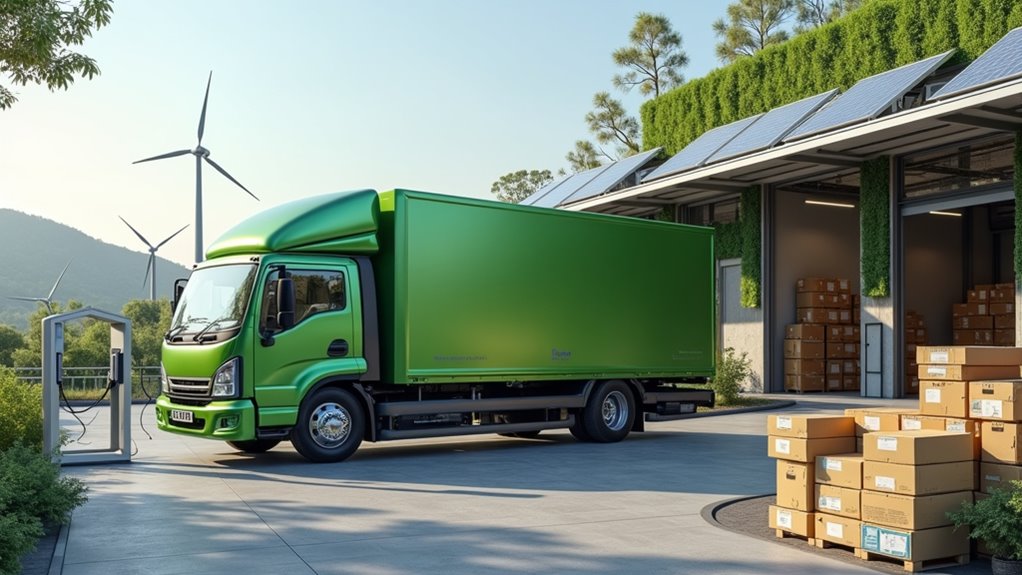
While traditional logistics operations have long prioritized speed and cost efficiency, the emergence of green logistics represents a fundamental shift in how goods move across the globe. Companies are increasingly recognizing that sustainable practices in transportation, warehousing, packaging, and waste management aren’t just good for the planet – they’re essential for long-term business success and profitability. Implementing these practices leads to enhanced brand image through demonstrated environmental stewardship.
The transformation is being driven by a perfect storm of factors. Rising environmental awareness, stricter regulations, and customer demand for eco-friendly solutions have pushed companies to rethink their entire supply chain operations. With freight movement contributing at least 16% of emissions, the urgency for sustainable solutions has never been greater. Additionally, technological advancements have made sustainable logistics more feasible and cost-effective than ever before, creating a compelling business case for going green. Many regions could achieve 100% renewable power by 2050, which would further support the shift to sustainable logistics practices. The investment of $544 billion in 2022 for renewable energy adoption underscores the growing commitment to sustainable solutions that can transform logistics. These shifts echo the broader economic, social, and environmental gains that sustainable transport brings, as businesses recognize the multifaceted benefits.
At the heart of this revolution are innovative strategies that are reshaping freight and delivery services. Companies are investing in alternative fuel vehicles, including electric and hydrogen-powered trucks, while implementing sophisticated route optimization systems that slash fuel consumption and emissions. Advanced packaging solutions are reducing waste, while energy-efficient warehouses equipped with automated systems are minimizing the environmental footprint of storage and distribution operations. The circular economy presents powerful tools for emissions reduction, with recycling rates potentially doubling to 60% by 2030, significantly impacting emissions.
The economic benefits of green logistics are proving substantial. Organizations implementing sustainable practices report significant reductions in fuel and energy costs, lower waste management expenses, and new revenue streams from recycling initiatives. Perhaps most importantly, companies with strong environmental credentials are gaining a competitive edge in a marketplace where consumers increasingly favor eco-conscious brands.
Technology is playing a pivotal role in this transformation. Artificial intelligence and machine learning are revolutionizing route planning and predictive analytics, while Internet of Things (IoT) devices enable real-time tracking and monitoring of shipments. Blockchain technology is enhancing supply chain transparency, and big data analytics are helping companies identify inefficiencies and opportunities for improvement.
However, the path to sustainable logistics isn’t without its challenges. The high initial costs of implementing green technologies, the complexity of integrating sustainable practices across global supply chains, and the constant pressure to meet customer expectations for rapid delivery pose significant hurdles. Additionally, evolving regulatory requirements and the need for industry-wide collaboration create additional layers of complexity.
Despite these obstacles, the momentum behind green logistics continues to build. The environmental benefits – including reduced greenhouse gas emissions, decreased air and noise pollution, and conservation of natural resources – are too significant to ignore. As technology advances and best practices emerge, the industry is moving toward a future where sustainability and efficiency go hand in hand.
This evolution isn’t just changing how goods are moved – it’s fundamentally reinventing the entire concept of freight and delivery for a more sustainable future.
Frequently Asked Questions
What Are the Initial Costs of Implementing Green Logistics Systems?
Initial costs for green logistics systems require substantial capital investment.
Electric semi-trucks cost around $180,000, while charging stations range from $2,500 to $35,000 each.
Facility upgrades for solar panels can reach $1M, and smart technology systems like transportation management software typically run $10,000-$250,000.
Additional expenses include employee training ($500-$5,000 per person), sustainability consultants ($100-$300 hourly), and certification costs ($10,000-$50,000).
How Do Extreme Weather Conditions Affect Eco-Friendly Transportation Methods?
Extreme weather greatly impacts eco-friendly transportation in multiple ways.
High temperatures cause road surfaces to buckle and reduce EV battery efficiency, while rail tracks can warp, disrupting electric train service. Severe storms and flooding damage charging infrastructure and create safety risks for cyclists.
Cold weather decreases battery performance, while high winds affect lightweight green vehicles.
However, resilience strategies like improved forecasting and climate-adaptive infrastructure help mitigate these challenges.
Can Small Businesses Afford to Transition to Sustainable Logistics Practices?
Small businesses can strategically shift to sustainable logistics through phased implementation.
While upfront costs for electric vehicles and eco-friendly packaging are significant, government incentives, tax breaks, and long-term operational savings of 10-20% make it feasible.
Companies can start small by implementing route optimization software or energy-efficient lighting, which require lower initial investments.
Partnerships with sustainable suppliers and gradual adoption of reusable packaging programs help distribute costs over time.
What Insurance Considerations Exist for Green Logistics and Alternative Fuel Vehicles?
Insurance for green logistics presents unique considerations.
Electric and hybrid vehicles often carry higher premiums due to expensive components and specialized repair needs. However, insurers increasingly offer specialized products like EV battery coverage and discounts for eco-friendly practices.
Key challenges include limited repair networks, battery fire risks, and cybersecurity threats.
Businesses must balance these factors while considering environmental liability insurance and coverage for alternative fuel infrastructure.
How Does Green Logistics Performance Compare in Developing Versus Developed Countries?
Developed countries generally demonstrate stronger green logistics performance with higher LPI scores, advanced infrastructure, and stricter environmental regulations.
However, some developing nations are showing remarkable progress, particularly in digital adoption and port efficiency.
While developed regions lead in customs processing and sustainable practices, emerging economies have opportunities to “leapfrog” directly to newer green technologies, bypassing older polluting systems.
The gap varies significantly by region and specific logistics components.


