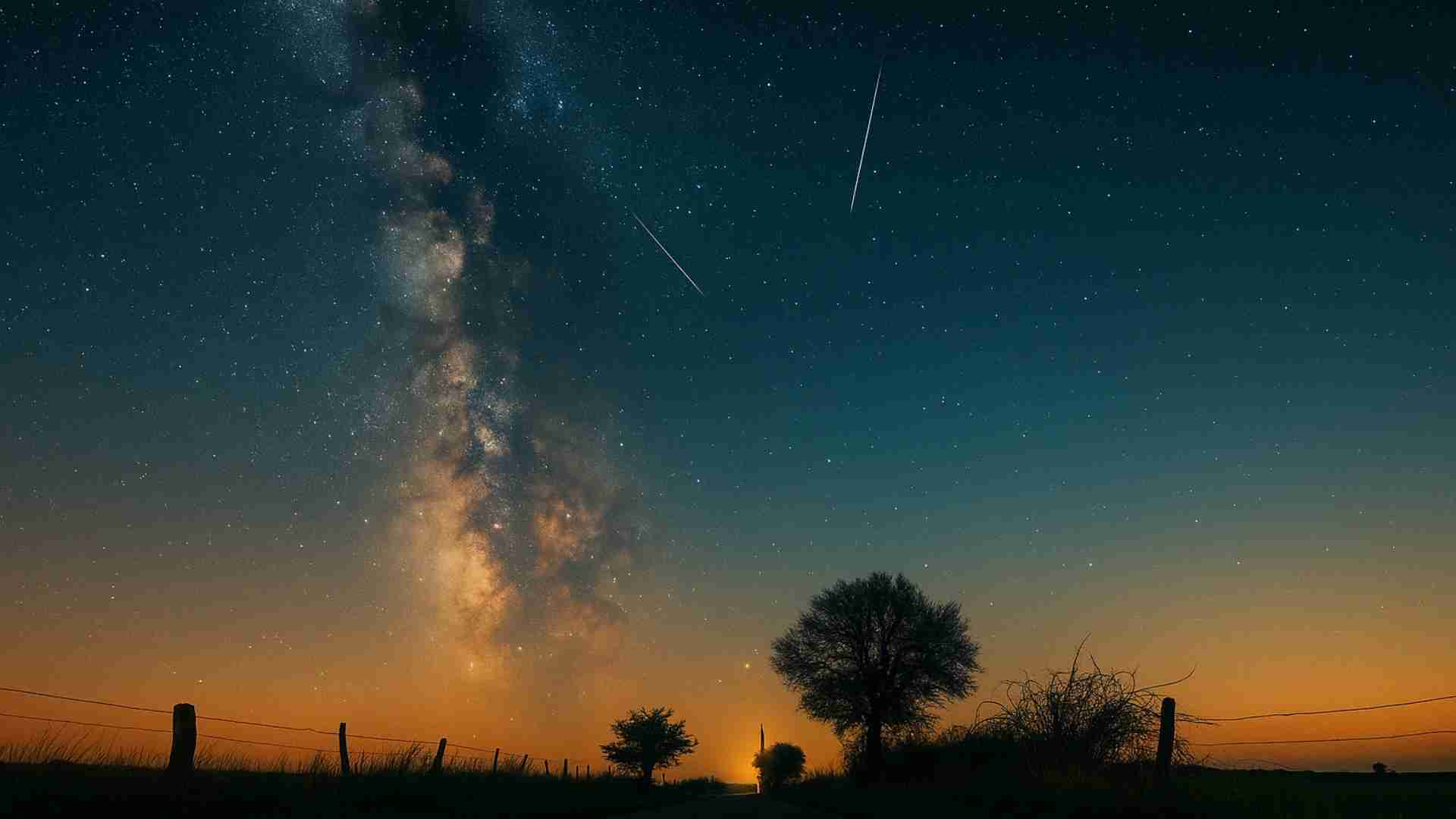

Lyrid Meteor Shower Dazzles Night Sky With Up To 18 Meteors Per Hour
The night sky is about to put on its first major light show of the year. The Lyrid meteor shower – one of the oldest known to humanity -reaches its peak tonight (April 21-22), giving stargazers a chance to witness nature’s own fireworks display after months of meteor drought.
Ready to catch some shooting stars? Here’s what you need to know.
What’s happening up there?
The Lyrids occur when Earth passes through debris left behind by Comet Thatcher (C/1861 G1), which won’t return to our inner solar system for another 400+ years. These cosmic dust particles slam into our atmosphere at mind-boggling speeds – up to 150,000 miles per hour – creating those brilliant streaks we call “shooting stars.”
During peak hours, you might spot around 18 meteors per hour under ideal conditions. Some lucky observers might even witness an occasional “fireball” – an exceptionally bright meteor that momentarily lights up the entire sky.
When and where to look
The shower peaks tonight (April 21-22), with optimal viewing between midnight and dawn. Your best bet is to:
- Find a spot away from city lights
- Look toward the constellation Lyra (where the meteors appear to radiate from)
- Give your eyes 20-30 minutes to adjust to the darkness
- Lie back and take in as much sky as possible
To best see the Lyrid meteor shower, head to the mountains or desert to get away from light pollution.
Weather might be the party pooper
Not everyone will have clear skies tonight. According to AccuWeather, cloud cover and storms could interfere with visibility in parts of the U.S. The East Coast might have better viewing conditions than the West, but check your local forecast before planning your meteor-watching adventure.
Beyond just a pretty sight
The Lyrids aren’t just beautiful – they’re ancient. Chinese astronomers documented these meteors over 2,700 years ago, making them one of the earliest recorded celestial phenomena. Each flash of light connects us to countless generations who have looked up in wonder at the same cosmic spectacle.
Missed it? Don’t worry
If clouds block your view or life gets in the way, the Lyrids remain active until April 30, though at reduced rates. And the celestial calendar is just getting started – the Eta Aquarids shower is already beginning to overlap with the Lyrids, peaking in early May.
Make it meaningful
Tonight’s meteor shower happens to coincide with Earth Day, offering a perfect reminder of our place in the cosmos. While watching for shooting stars, take a moment to appreciate our remarkable planet – the only place we know of where humans can stand barefoot on grass and look up at meteors streaking across the night sky.
No telescope required, no app needed – just your eyes and a bit of patience. So bundle up, bring a comfortable chair or blanket, and treat yourself to one of nature’s greatest shows tonite.
Will you be watching? Let us know what you see!


