

The Blue Economy framework balances ocean resource use with environmental protection through five key principles. It champions sustainable practices like responsible fishing and renewable energy while ensuring economic benefits reach coastal communities equitably. Advanced monitoring systems and blue technologies enable better ecosystem management, while climate resilience measures safeguard against environmental risks. This integrated approach combines innovation, social equity, and ecological preservation to create lasting maritime prosperity. The deeper principles reveal an even more fascinating story of ocean stewardship.
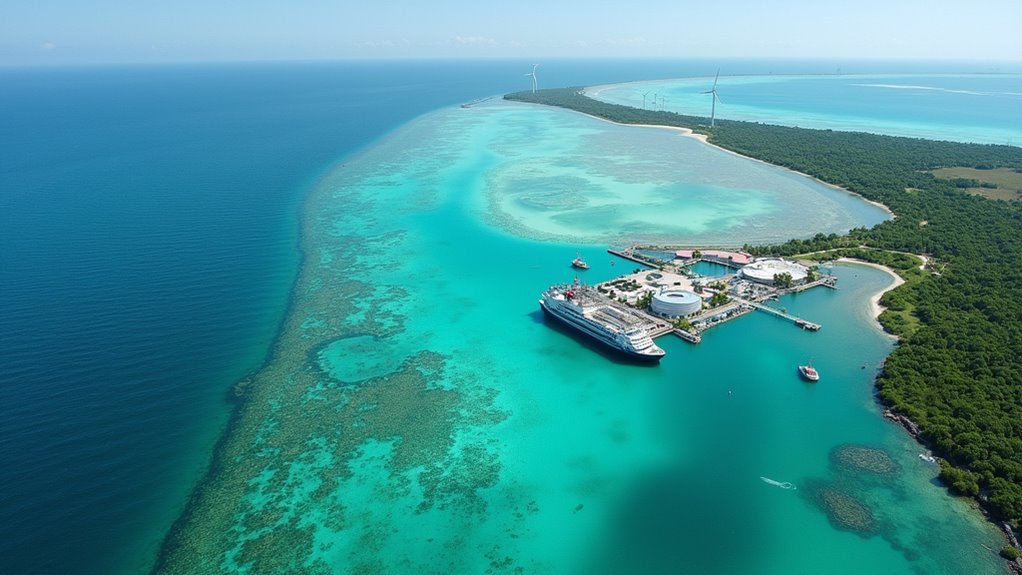
While traditional economic models have often exploited ocean resources without regard for long-term consequences, the Blue Economy represents a revolutionary paradigm shift in how humanity approaches maritime development. The concept stands on three fundamental pillars: sustainable resource utilization, ecosystem preservation, and equitable distribution of benefits. This innovative approach guarantees that economic growth aligns with environmental protection, creating a balanced framework for ocean-based activities. The integration of te mana o te moana ensures cultural and ecological values are honored in development decisions.
At its core, the Blue Economy emphasizes the implementation of clean technologies and circular material flows to minimize waste while maximizing economic potential. This includes developing sustainable fishing practices, promoting renewable energy sources, and implementing advanced monitoring systems for ocean health. The approach recognizes that long-term prosperity depends on maintaining healthy marine ecosystems, which provide essential services from food production to climate regulation. Protecting freshwater systems such as rivers, lakes, and wetlands is crucial for biodiversity and climate stability, drawing parallels with the Blue Economy’s focus on marine ecosystems. Sustainable Fisheries play a critical role in this framework, ensuring that fish stocks are managed responsibly and that marine biodiversity is preserved. Gunter Pauli pioneered this visionary economic model as a response to global environmental challenges.
Sustainable ocean management requires innovative technologies and circular systems to protect marine ecosystems while driving economic growth and prosperity.
Social equity plays a vital role in Blue Economy principles, focusing on creating sustainable livelihoods for coastal communities while guaranteeing fair distribution of economic benefits. This includes improving health and safety standards, promoting inclusive stakeholder engagement, and contributing to food security and poverty eradication. Investment in renewable energy is crucial for economic growth and is aligned with the Blue Economy’s goals. The success of these initiatives relies heavily on transparent governance processes and scientifically-informed decision making.
Innovation and technology serve as key enablers in achieving Blue Economy objectives. Investments in blue technology, marine biotechnology, and advanced monitoring systems are essential for sustainable ocean management. These technological advances help track ecosystem health, control marine pollution, and optimize maritime transport efficiency. Additionally, they support the development of nature-based solutions for climate adaptation and coastal protection. Public transportation innovations could also reduce carbon footprints associated with coastal activities.
Climate resilience has become increasingly central to Blue Economy principles, as ocean ecosystems face unprecedented challenges from global warming. Strategies include developing coastal protection measures against sea-level rise, promoting renewable ocean energy sources, and enhancing community resilience to climate-related risks. These efforts are supported by sustainable finance mechanisms, including blue bonds and innovative investment frameworks that align financial flows with environmental objectives.
The implementation of Sustainable Blue Economy Finance Principles guarantees that economic development doesn’t come at the expense of ocean health. These principles require thorough assessment and disclosure of ocean-related risks in investments, promoting transparency and accountability in blue economy initiatives. Through careful balancing of economic opportunities with environmental protection, the Blue Economy creates a framework for sustainable maritime development that benefits both current and future generations.
This extensive approach to ocean resource management demonstrates that economic growth and environmental stewardship are not mutually exclusive. By integrating sustainable practices, social equity, and innovative technologies, the Blue Economy provides a viable path forward for maritime development that preserves ocean ecosystems while supporting human prosperity.
The success of this model depends on continued commitment from governments, businesses, and communities to implement these principles effectively.
Frequently Asked Questions
How Can Small Island Nations Benefit Financially From Blue Economy Initiatives?
Small island nations can leverage blue economy initiatives through multiple revenue streams.
Marine biotechnology offers a $4.2 billion market opportunity, while sustainable tourism and aquaculture provide steady income.
Blue bonds and debt-for-nature swaps help reduce financial burdens while funding conservation.
Technical assistance from UN agencies and regional partnerships enables capacity building.
Marine renewable energy and sustainable fishing create jobs while protecting ocean resources for long-term economic benefits.
What Training Programs Exist for Careers in Sustainable Ocean Industries?
Multiple training pathways exist for sustainable ocean careers.
Universities offer specialized degrees in marine sustainability, coastal management, and blue economy MBAs.
Professional certifications include Marine Stewardship Council programs and seafood sustainability training.
Government initiatives like NOAA’s fishery management track provide career advancement.
Industry-specific programs cover aquaculture, offshore renewables, and eco-tourism.
NGOs like AltaSea focus on creating opportunities for disadvantaged youth through Ocean Career Pathways.
How Do Blue Economy Projects Affect Indigenous Coastal Communities?
Blue economy projects create mixed impacts for indigenous coastal communities.
While they generate new jobs in tourism and aquaculture, they often disrupt traditional fishing practices and restrict access to ancestral waters.
Many communities face displacement from customary fishing grounds due to marine protected areas.
Some initiatives offer opportunities through co-management arrangements and ecotourism, but success depends on meaningful inclusion of indigenous voices in decision-making and respect for traditional rights.
What Role Does Artificial Intelligence Play in Marine Resource Management?
Artificial intelligence revolutionizes marine resource management through advanced data analysis and monitoring systems.
AI-powered sensors, drones, and satellites collect vast oceanic data, while machine learning algorithms track fish populations, detect illegal fishing, and predict environmental changes.
These technologies enable real-time monitoring of marine ecosystems, optimize sustainable fishing practices, and enhance conservation efforts.
AI also helps forecast climate impacts and guide adaptation strategies for protecting vulnerable ocean resources.
How Can Private Investors Participate in Blue Economy Development Projects?
Private investors can participate in blue economy projects through multiple channels.
They can invest in dedicated blue economy funds targeting ocean sectors, purchase blue bonds issued by governments, or directly fund marine startups through venture capital.
Impact investing in sustainable fisheries, renewable ocean energy, and eco-tourism offers additional opportunities.
Public-private partnerships for coastal infrastructure development provide another avenue, while blended finance models help reduce investment risks.


