

Reusable products deliver both environmental and economic wins that make long-term adoption inevitable. They slash landfill waste by up to 86% while saving consumers money through repeated use. With businesses cutting packaging costs by 90% and a growing $10 billion market opportunity, the shift toward reusables makes financial sense. Consumer demand is rising too – 56% want reusable options from brands, and 47% already use them weekly. The benefits stretch far beyond the obvious savings.
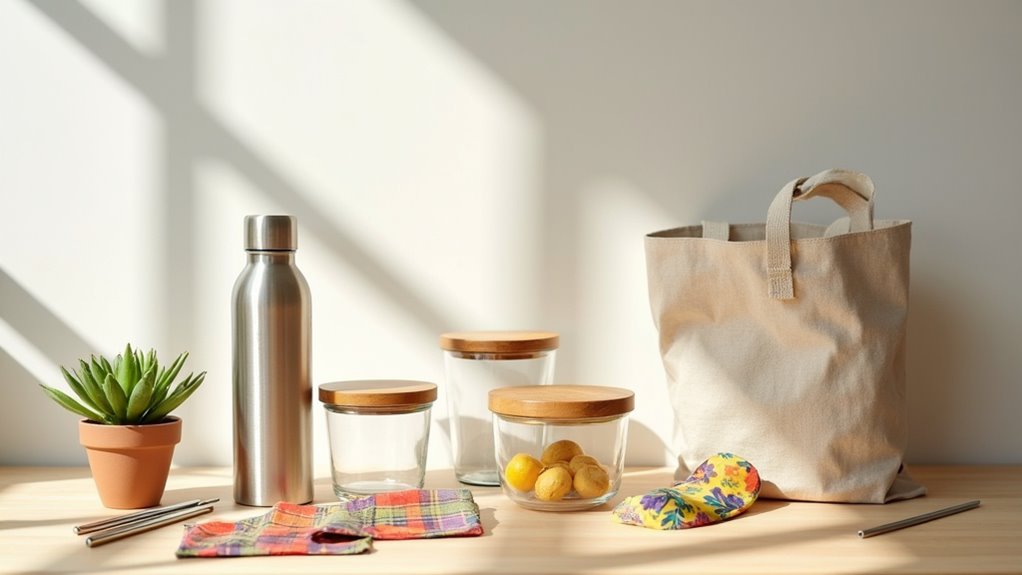
As the world grapples with mounting environmental challenges, reusable products are emerging as a powerful solution that combines economic opportunity with ecological responsibility. The staggering statistics tell a compelling story – with 583 billion plastic bottles produced in 2021 and Americans spending $5.7 billion annually on paper towels alone, the potential for positive change through reusable alternatives is immense.
The environmental benefits of reusable products extend far beyond simply reducing waste. By decreasing the demand for raw materials and minimizing greenhouse gas emissions during production and transportation, reusable items help address multiple ecological challenges simultaneously. Making the switch to reusable products can result in up to 86% less solid waste going to landfills. Americans contribute disproportionately to global waste, generating 12% of world waste despite representing only 4% of the global population. Furthermore, embracing a circular economy model can bolster economic and environmental resilience, providing a more sustainable framework for future growth. Many circular economy products, designed for reuse and remanufacture, exemplify this model by reducing waste and conserving resources.
Perhaps most notably, they play a key role in combating the growing crisis of plastic pollution in our oceans and waterways. Mindful consumption, which involves being aware of the environmental impact of our purchases and opting for sustainable alternatives, is an essential strategy for waste reduction at the source. A concerted effort to move beyond plastic by adopting reusable products can significantly mitigate the damage to our environment and oceans.
Consumer sentiment is shifting decisively in favor of reusable options, with 56% of people now considering it important for brands to offer reusable alternatives. This isn’t just environmental consciousness at work – it’s practical economics. Studies show that reusable products save consumers money over time, while businesses can reduce their shipping and packaging costs by up to 90% through reusable packaging systems.
Reusable alternatives make both environmental and economic sense, offering consumers long-term savings while drastically cutting business costs through sustainable packaging solutions.
The market opportunity is substantial, with a 20% conversion to reuse models representing a $10 billion opportunity. Forward-thinking companies are already positioning themselves to capture this value, with over 350 businesses committing to increase their reusable packaging by 2025.
These companies are discovering that reusable products don’t just benefit the bottom line – they also foster customer loyalty and enable innovative business models.
The shift to reusable products isn’t without its challenges. It requires considerable changes in consumer behavior, investment in collection and cleaning infrastructure, and collaboration across industry stakeholders.
However, technological innovations are making these hurdles easier to overcome. Smart technologies for tracking and data collection, combined with standardized designs across brands, are making reuse systems more efficient and convenient for everyone involved.
The numbers paint a clear picture of the potential impact. When you consider that the average person uses between 5,000 and 15,000 pads or tampons in their lifetime, the switch to reusable alternatives becomes not just an environmental choice, but a practical one.
With 47% of consumers already using reusable products or services weekly, and 85% planning to return reusable items when finished, the foundation for widespread adoption exists.
The future of reusable products looks promising, driven by growing consumer awareness, technological advancement, and increasing policy support. As more companies embrace circular economy principles in their product design, the options for consumers continue to expand.
The shift towards reusable products isn’t just about environmental responsibility – it’s about creating a more sustainable and economically viable future for everyone involved.
Frequently Asked Questions
How Long Does It Take to Break Even on Reusable Product Investments?
Break-even points for reusable products vary considerably based on material type and usage patterns.
Plastic dishes reach environmental parity after 10-17 uses, while glassware needs 15 uses.
Stainless steel requires 24 uses, and ceramic items need 60-118 uses to offset their impact.
Cotton bags take longest at 131 uses versus disposable alternatives.
These thresholds account for manufacturing impacts, washing requirements, and disposal methods throughout the product lifecycle.
What Are the Best Ways to Clean and Maintain Reusable Products?
Regular cleaning and maintenance greatly extends the life of reusable products. The best approach combines gentle cleaning methods with proper storage.
For most items, warm water and mild soap work well, while specialized products may need specific care. Items should be cleaned promptly after use and dried completely before storage.
Proper maintenance includes regular inspections for wear, storing with lids off for ventilation, and following manufacturer’s guidelines. Rotating usage helps distribute wear evenly.
Where Can I Find High-Quality Reusable Alternatives to Disposable Items?
High-quality reusable alternatives are widely available through multiple channels.
Online marketplaces like Amazon and specialized eco-stores such as EarthHero offer extensive selections. Local retailers, including zero-waste shops and health food stores, provide hands-on shopping experiences.
Manufacturer websites like Stasher and Klean Kanteen sell direct-to-consumer products. Additionally, eco-friendly directories such as MyPlasticFreeLife.com and ZeroWasteHome.com curate thorough lists of sustainable alternatives for conscious shoppers.
Do Reusable Products Actually Help Reduce My Environmental Impact Significantly?
The environmental impact of reusable products is significant and backed by data. By switching to reusables, greenhouse gas emissions drop 38-56%, while solid waste decreases up to 86%.
Just reusing 10% of plastic items cuts ocean waste in half.
While break-even points vary – ceramic mugs need 60 uses, steel cups 115 uses – the long-term benefits are clear: reduced CO2 emissions by 60%, lower energy use by 64%, and water savings up to 80%.
Which Reusable Products Have the Highest Return on Investment?
Based on cost-benefit analysis, cloth diapers offer the highest return on investment, saving up to $2,000 over two years.
Menstrual cups follow closely, with $575 in savings over their 10-year lifespan.
Water bottles provide moderate returns, saving around $200 annually.
While reusable straws have the quickest payback period (just 8 uses), their total financial impact is smaller compared to other options – though still meaningful for reducing plastic waste.


