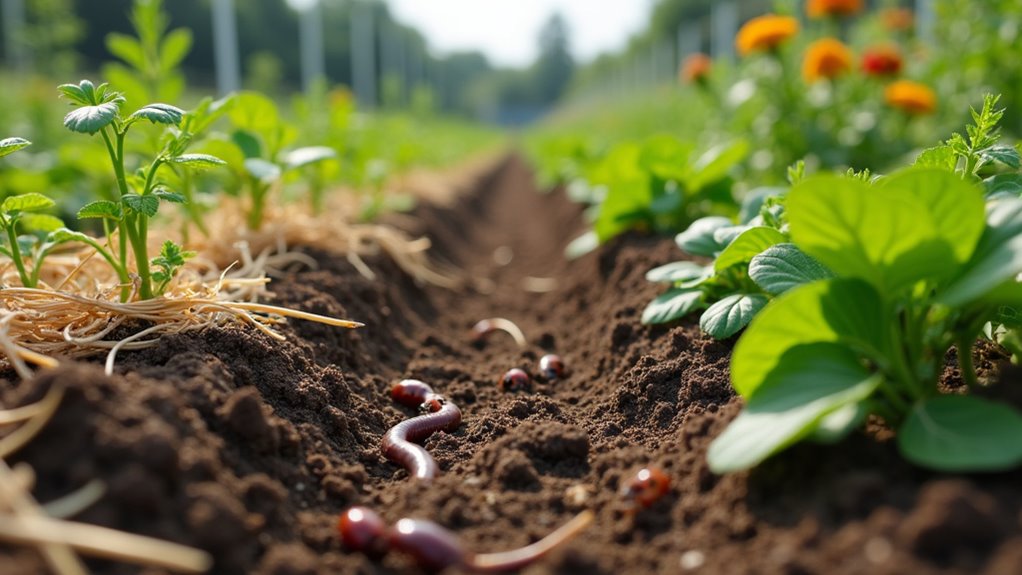
Sustainable agriculture policies combine national and international efforts to transform farming while protecting the environment and ensuring food security. Key programs include the EU’s Common Agricultural Policy linking subsidies to environmental standards, Brazil’s Low-Carbon Agriculture Plan, and the U.S. Conservation Reserve Program. These initiatives promote climate-smart practices, water conservation, and soil health through regulations, incentives, and support mechanisms. Public-private partnerships and traditional knowledge integration offer promising pathways to scale sustainable solutions.
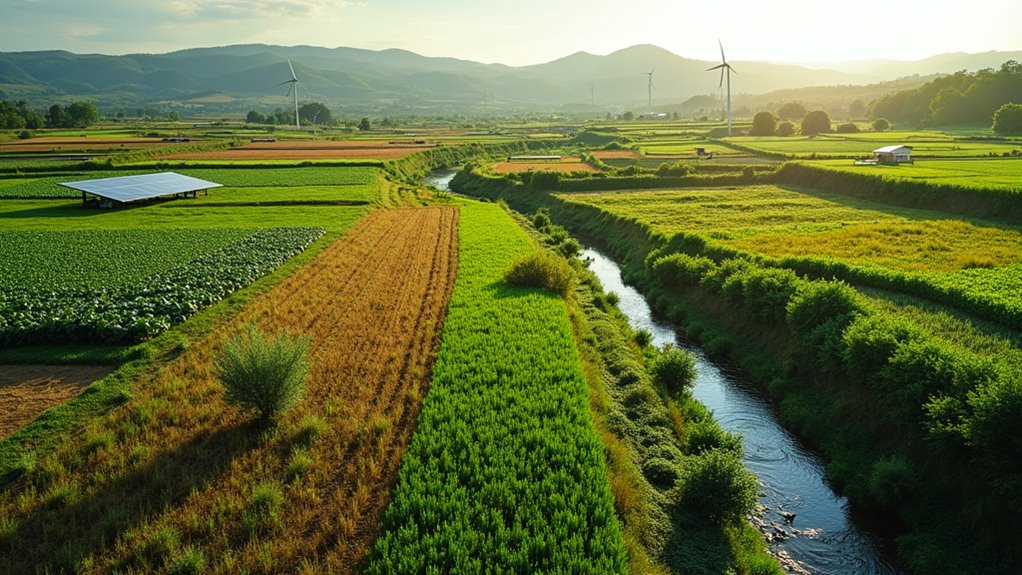
While traditional farming practices have sustained humanity for millennia, today’s agricultural policies must evolve to address unprecedented environmental and social challenges. Nations worldwide are implementing ambitious programs to transform food production systems through a combination of regulations, incentives, and support mechanisms that promote sustainability while ensuring food security and rural prosperity. Sustainable livestock farming practices, such as pasture-based systems, are being integrated into these initiatives to further reduce the environmental impact of agriculture.
At the international level, frameworks like the UN Sustainable Development Goals and the Paris Agreement provide critical guidance for agricultural policy development. These agreements establish shared objectives for reducing greenhouse gas emissions, protecting biodiversity, and improving farmer livelihoods. The FAO’s Sustainable Food and Agriculture principles further reinforce these goals by offering practical guidelines for policy makers and agricultural stakeholders. Low-income and historically underserved populations face a disproportionate burden from climate change impacts on agriculture. Current trade agreements often work against local sustainable farming initiatives by prioritizing conventional agricultural practices. Additionally, water-efficient techniques such as drip irrigation can play a crucial role in these policies by conserving water and improving crop yields.
Global frameworks and agreements serve as essential blueprints for transforming agriculture toward sustainability while protecting both farmers and ecosystems.
Leading nations have launched innovative programs that demonstrate the potential for effective sustainable agriculture policies. The European Union’s Common Agricultural Policy has introduced “greening measures” that tie farm subsidies to environmental performance. Similarly, Brazil’s Low-Carbon Agriculture Plan provides financial incentives for farmers who adopt climate-smart practices like no-till farming and integrated crop-livestock systems. In the United States, the Conservation Reserve Program has successfully protected millions of acres of environmentally sensitive land. Researchers are also exploring climate-resilient crops that can withstand harsh conditions, ensuring that food production systems remain robust against environmental changes. Adopting regenerative agriculture practices such as no-till farming can help revive soil health and sequester carbon, contributing to both improved yields and climate resilience.
However, implementing these policies faces significant challenges. Government agencies often struggle to coordinate their efforts, while limited budgets constrain program reach. Traditional agricultural lobbies sometimes resist change, and measuring sustainability outcomes can be technically challenging.
Despite these obstacles, innovative approaches are emerging. Results-based payment schemes reward farmers for verified environmental improvements, while digital agriculture technologies enable more precise monitoring and management of sustainable practices.
Public-private partnerships are increasingly essential for scaling sustainable agriculture initiatives. These collaborations help develop sustainable value chains, promote circular economy solutions for agricultural waste, and accelerate the adoption of precision farming technologies. Extension services and farmer education programs play a critical role in building capacity and sharing knowledge about sustainable practices.
The impact of these policies is becoming increasingly evident. Many regions report reductions in agricultural greenhouse gas emissions, improvements in soil health, and enhanced biodiversity. Farmers participating in sustainable agriculture programs often experience increased profitability through reduced input costs and premium prices for sustainably produced foods.
These success stories demonstrate that well-designed policies can simultaneously benefit the environment, rural economies, and food security. Looking ahead, the challenge lies in scaling these solutions while ensuring they remain accessible to farmers of all sizes. Integration of traditional knowledge with modern sustainable practices offers promising pathways forward.
As climate change intensifies and resource pressures mount, effective sustainable agriculture policies will become increasingly necessary for ensuring resilient food systems that can feed growing populations while protecting our planet’s critical ecosystems.
Frequently Asked Questions
How Can Small-Scale Farmers Access Sustainable Agriculture Funding Programs?
Small-scale farmers can access funding through multiple channels.
USDA programs like SARE and EQIP offer grants for sustainable practices, while FSA microloans provide up to $50,000 for operations.
Non-profit organizations like Farm Aid and The Carrot Project deliver targeted support.
State agriculture departments maintain loan programs, and microlenders such as Accion assist farmers with limited credit.
International programs through GAFSP and IFAD support global initiatives.
What Are the Tax Incentives for Transitioning to Sustainable Farming Practices?
Farmers shifting to sustainable practices can access multiple tax benefits.
The R&D credit supports agricultural innovation and experimentation, while Section 179 allows deductions for eco-friendly equipment purchases.
Conservation easements offer tax breaks for preserving farmland.
Additional incentives include fuel tax credits for agricultural operations and renewable energy tax credits for solar or wind installations.
Many states also provide specific tax credits for sustainable farming methods and beginning farmers.
How Long Does Certification for Sustainable Agriculture Programs Typically Take?
Sustainable agriculture certification timelines vary greatly based on the specific program.
While some certifications like GLOBALG.A.P. and SCS Sustainably Grown can be completed in 2-4 months, others require longer changes.
USDA organic takes 3-6 months, Fair Trade averages 6-9 months, and EU organic requires 2-3 years.
Academic certificates typically range from 6-12 months.
The process length depends on farm size, existing practices, documentation readiness, and required audits.
Which Countries Offer the Best Support for Sustainable Farming Initiatives?
Several nations stand out for their exceptional support of sustainable farming.
France leads globally, ranking #1 in food sustainability, while the Netherlands excels in agricultural innovation and waste reduction.
Switzerland’s three-tier support system provides extensive backing for sustainable practices.
Nordic countries like Sweden and Finland offer strong governmental support through explicit national policies and ambitious renewable energy goals.
These nations demonstrate how targeted programs can effectively advance sustainable agriculture.
Can Urban Farms Qualify for Sustainable Agriculture Support Programs?
Yes, urban farms can qualify for various sustainable agriculture support programs.
The USDA’s Office of Urban Agriculture and Innovative Production offers specific grants and technical assistance for urban farmers. Urban operations are eligible for USDA conservation programs and FSA loans.
Additionally, many municipalities have adapted zoning laws and created incentives to support urban agriculture.
European cities also provide policy support, though program availability varies by location and scale of operation.