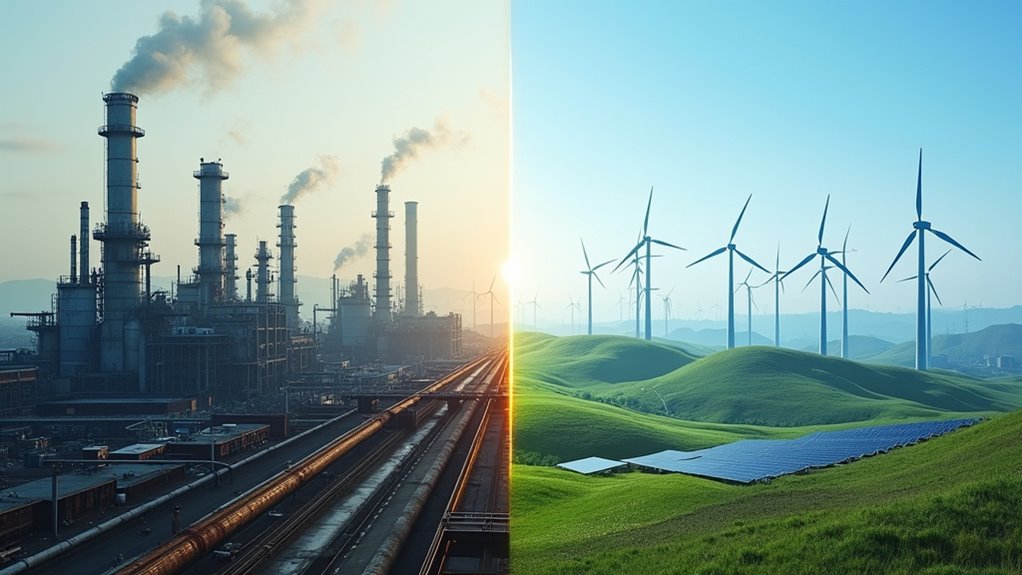
The environmental movement evolved from ancient conservation practices into a powerful global force during the Industrial Revolution. Key moments like Rachel Carson’s “Silent Spring” (1962), the first Earth Day (1970), and establishment of the EPA sparked widespread activism. Major disasters including Chernobyl and the Santa Barbara oil spill heightened public awareness, while landmark legislation like the Clean Air Act created lasting protections. Today’s movement tackles climate change, plastic pollution, and environmental justice – challenges that continue to shape humanity’s relationship with nature.
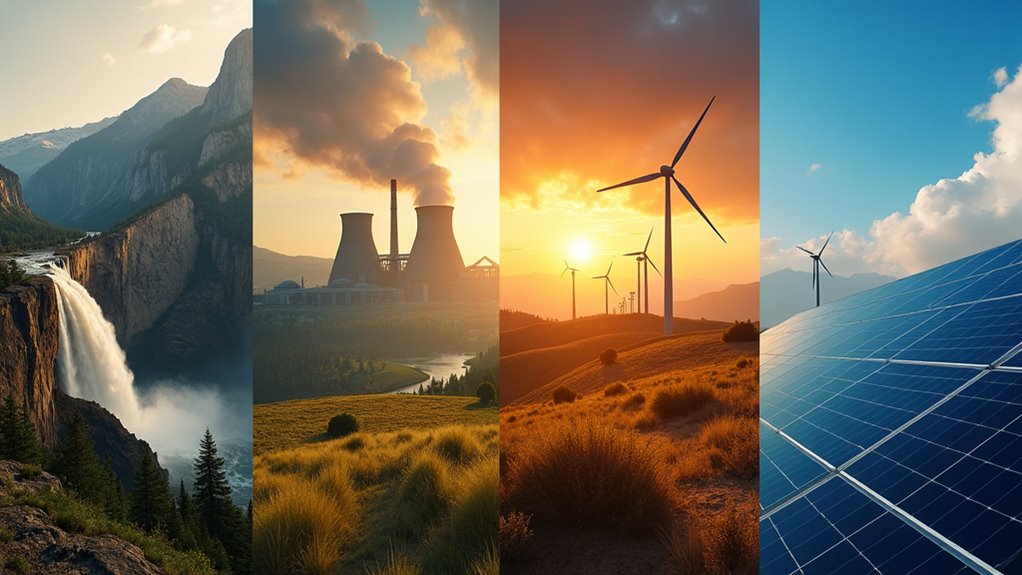
The environmental movement‘s evolution from scattered conservation efforts to a global force for planetary protection spans more than a century of human awakening. While ancient cultures long recognized the importance of protecting nature, it wasn’t until the Industrial Revolution that widespread environmental concerns began to emerge. The late 19th century marked a turning point, with conservationists like John Muir founding influential organizations such as the Sierra Club in 1892. National Trust Bill passage in 1907 provided crucial legal protection for environmental conservation. The early 20th century saw the rise of scientific ecology, but it was the post-World War II period that truly catalyzed modern environmentalism. Rachel Carson‘s groundbreaking book “Silent Spring” in 1962 exposed the dangers of pesticides, while thought leaders like Aldo Leopold revolutionized wildlife management concepts. A series of environmental disasters further galvanized public consciousness – from London’s deadly Great Smog of 1952 to the devastating Santa Barbara oil spill of 1969. The establishment of Yellowstone National Park in 1872 set a crucial precedent as America’s first national park, inspiring global conservation efforts. With the rise of emission concerns, wind energy grows at an average of 17% annually, underscoring the importance of renewable solutions. The increasing threat of climate-related health issues highlights the intersection between environmental changes and public health.
The 1970s marked a watershed moment for environmental activism. The first Earth Day celebration in 1970 mobilized millions, while the establishment of the Environmental Protection Agency the same year institutionalized environmental protection in American governance. Organizations like Greenpeace emerged, challenging nuclear testing and other environmental threats. This decade also saw landmark legislation, including the Clean Air Act, Clean Water Act, and Endangered Species Act, which continue to shape environmental policy today. Global protests uniting voices for stronger climate action have become an essential component of the environmental movement, showcasing the urgent demand for change. The concept of climate justice became increasingly prevalent, emphasizing the need for equitable solutions that recognize the disproportionate impacts on vulnerable communities.
As global population surpassed 4 billion in 1974, awareness of human impact on the planet grew. Major industrial accidents like the 1984 Bhopal gas leak and the 1986 Chernobyl disaster highlighted the catastrophic potential of environmental negligence. These events spurred international cooperation, leading to vital agreements like the 1987 Montreal Protocol to protect the ozone layer. The late 20th century brought climate change to the forefront of environmental concerns. The 1992 UN Framework Convention on Climate Change and subsequent agreements like the Kyoto Protocol attempted to address growing emissions challenges. Environmental justice movements gained momentum, highlighting the disproportionate impact of environmental problems on marginalized communities. Today’s environmental movement faces unprecedented challenges, from accelerating biodiversity loss to plastic pollution in our oceans. Yet it also demonstrates remarkable resilience and innovation. The 2015 Paris Agreement represents the most ambitious international effort yet to combat climate change, while the UN’s Sustainable Development Goals provide an extensive framework for environmental action. Despite occasional setbacks and ongoing challenges, the environmental movement continues to evolve, embracing new technologies and strategies while building on its rich history of grassroots activism and scientific understanding.
Frequently Asked Questions
How Do Environmental Movements Impact Global Economic Policies and Trade Agreements?
Environmental movements have greatly shaped global economic policies and trade agreements since the 1960s. Through international conferences, activism, and multilateral agreements, they’ve driven the integration of environmental protection into trade negotiations.
Notable impacts include the Environmental Goods Agreement, which aims to reduce tariffs on green technologies, and the inclusion of environmental chapters in modern trade deals.
While these policies can create economic winners and losers, their overall effect on trade and productivity remains relatively modest.
What Role Does Social Media Play in Modern Environmental Activism?
Social media has revolutionized environmental activism by enabling rapid information sharing and global mobilization. Platforms like Twitter and Instagram serve as powerful tools for organizing campaigns, with hashtags like #ClimateAction generating worldwide conversations.
Environmental organizations leverage these networks to amplify their message, coordinate protests, and launch successful initiatives. While challenges like misinformation exist, social media has fundamentally transformed how activists connect, organize, and drive environmental change across geographical boundaries.
Which Corporations Have Successfully Transformed Their Practices Due to Environmental Movements?
Several major corporations have successfully transformed their environmental practices.
Patagonia leads with pioneering recycling programs and 100% renewable energy usage at headquarters.
Unilever achieved zero deforestation goals while reducing plastic waste.
Interface revolutionized carpet manufacturing through innovative recycling.
IKEA demonstrates commitment through sustainable sourcing and solar installations.
These companies prove that profitable business models can align with environmental responsibility, setting industry standards for sustainable practices.
How Do Different Religions and Cultures Influence Environmental Conservation Approaches?
Different religions and cultures considerably shape environmental conservation approaches worldwide.
Religious teachings often frame nature as sacred or divinely-created, promoting stewardship and responsible resource use.
Buddhist principles emphasize harmony with nature, while Indigenous cultures view environmental protection as spiritual practice.
Faith-based initiatives like the Interfaith Rainforest Initiative demonstrate how religious values translate into practical conservation efforts.
Cultural perspectives continue influencing modern environmental policies through advocacy, education, and sustainable practices.
What Psychological Factors Drive People to Join or Resist Environmental Movements?
Several key psychological factors influence environmental movement participation. Research shows that positive environmental attitudes and high self-efficacy are strong predictors of engagement.
People with greater ecological awareness and knowledge are more likely to take action. Social identity and group dynamics also play significant roles – individuals tend to align with movements that reflect their values and social connections.
Conversely, resistance often stems from perceived threats to lifestyle, skepticism about impact, or distrust of environmental messaging.