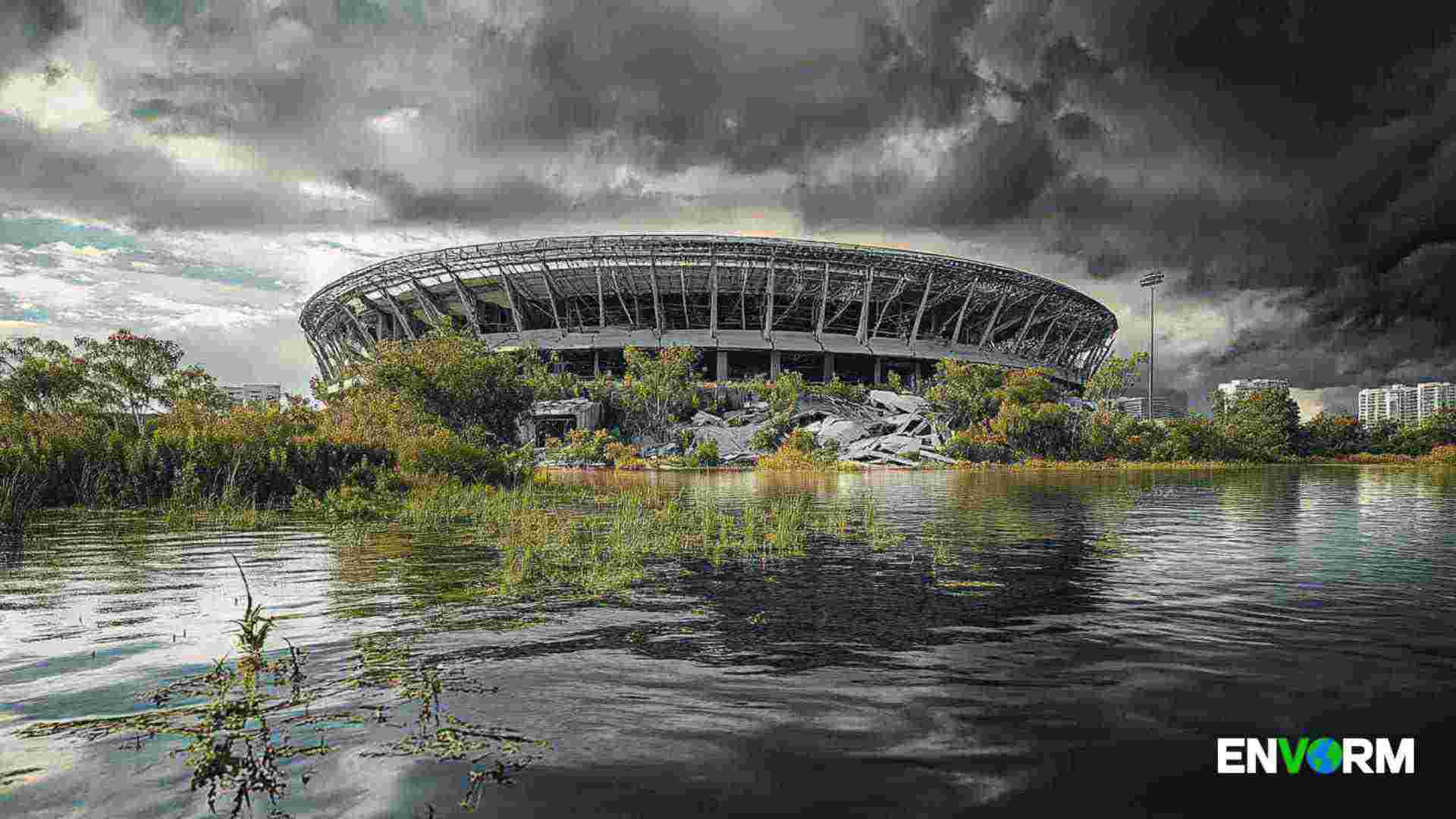

Brisbane 2032 Olympics Climate-Positive Promise | Breakthrough or Greenwashing?
Brisbane isn’t just preparing to host the 2032 Olympics – it’s making history as the first city legally bound to deliver climate-positive Games.
Not carbon-neutral. Not net-zero. Climate-positive: creating more carbon savings than emissions produced.
It’s a bold claim that puts Brisbane on the sustainability frontline. A city in coal-rich Queensland promising to rewrite the rules on green mega-events.
Revolutionary or just clever marketing?
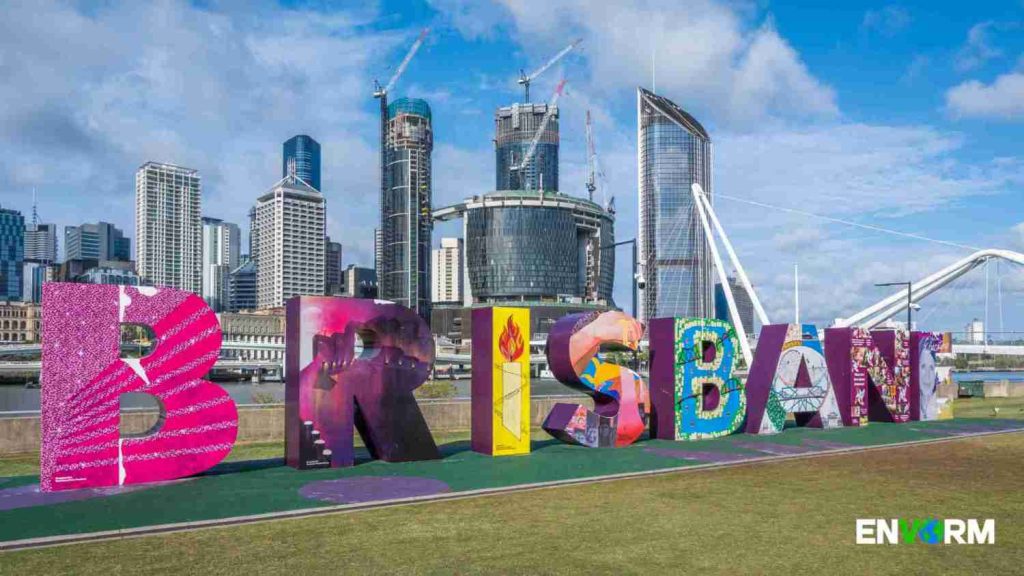
Beyond Zero: What Brisbane’s Actually Promising
The pledge looks impressive on paper.
Brisbane plans to power everything with 100% renewable energy, offset more than all remaining emissions, and reuse 84% of existing venues.
They’re targeting top-tier Green Star ratings for new buildings and promising to plant a million new plants across the city.
“Offsetting more than 100% of emissions” sounds great in a press release. But let’s get real – recent Olympics have consistently failed to meet their green goals.
Coal Plants and Climate Games
Here’s where it gets interesting. By 2032, Queensland expects most of its 8,000-megawatt coal plants to shut down. Perfect timing? Maybe. But powering an Olympic-sized event with renewables isn’t as simple as flipping a switch.
The transport plan is ambitious too – 90% of Games travel via public or active transport. New zero-emission buses. Expanded rail lines. Better bike networks. All good stuff that Brisbane desperately needs anyway.
The Victoria Park Problem
But there’s trouble in paradise. The proposed $6 billion Victoria Park Olympic stadium directly contradicts Brisbane’s original “sustainable” bid. Remember that 84% existing venues promise? This massive new development would eat up a large chunk of inner-city green space – one of Brisbane’s last urban cooling zones.
Local groups like Save Victoria Park aren’t buying it. And they’ve got a point: how can you be climate-positive while paving over parkland with cultural significance to First Nations communities?
The Right Man for the Job?
Enter Andrew Liveris, Brisbane 2032 Olympics chief. His resume is complicated – former Dow Chemical CEO, advisor to Obama on manufacturing, and a man who once proclaimed he “tingled with pride” listening to Donald Trump.
While leading Dow, Liveris authorized a $1 million donation to Trump’s inaugural committee and was rewarded with a position heading the American Manufacturing Council. A council later described as a “joke” by a former member who claimed it never actually met. When Trump’s response to Charlottesville sparked controversy, Liveris jumped ship, later claiming “Trump’s the only one that fired me.”
This political maneuvering aside, how can someone champion Olympic climate-positivity while sitting on the board of Saudi Aramco, the world’s largest oil company?
Liveris talks passionately about sustainability while having lobbied against environmental protections during his Dow days.
His critics point to a troubling pattern: big talk on climate action paired with corporate connections that suggest otherwise. When Liveris successfully pushed to overturn a ban on a pesticide manufactured by Dow, it sent a clear message about priorities.
The grassroots opposition to the Victoria Park stadium highlights another disconnect. While Liveris focuses on showcase infrastructure, local communities worry about lost green space and Indigenous heritage.
Liveris himself acknowledges capitalism’s failure as a wealth distributor and criticizes the “90-day march to financial returns” that undermines long-term sustainability. But does a corporate executive who donated millions to Trump and sits on an oil giant’s board represent the systemic change Brisbane needs to deliver on its climate-positive promise?
Beyond the Buzzwords: Paris Raises the Bar
The 2021 Swiss research didn’t mince words: recent Olympics had failed their sustainability targets. But Paris 2024 just changed the game.
As the first Games fully aligned with Olympic Agenda 2020, Paris slashed carbon emissions by 50% compared to London and Rio. They revamped the ISO 20121 standard for sustainable event management, adding new requirements for human rights, climate action, and accessibility. They partnered with the OECD to create measurable impact indicators that are now mandatory for all future host cities.
Paris didn’t just talk sustainability – they built it into governance. Their “Terrain d’égalité” label set new standards for gender equality in sports. Their Terre de Jeux program sparked 50,000 sports-related community projects across France.
Marie Sallois, IOC Sustainability Director, called Paris 2024 a “pragmatic toolbox for future sports events organisers.” Brisbane now faces a much higher bar than Sydney did in 2000.
QUT professor Marcus Foth says delivering a climate-positive Olympics “will require an entirely new approach to the economy and society.” Paris showed what’s possible. Can Brisbane reach higher? Or will it revert to the same old pattern of grand promises followed by compromise?
The $7.1 Billion Question
With most of Brisbane’s $7.1 billion Olympic budget potentially going to that controversial sports precinct, we’re left wondering: is this about climate action or just climate branding?
The Olympics have a long history of grand promises that evaporate after the closing ceremony.
Will Brisbane break the cycle?
What’s At Stake
The risk here isn’t just environmental – it’s financial and social too. Will taxpayers not only foot the billion-dollar bill but also lose precious public land to developers and investors in the process?
The Victoria Park controversy offers a troubling preview of what might come: public assets converted to private profit under the convenient banner of Olympic necessity.
Cities from Montreal to Rio have learned the hard way that Olympic “legacy” often means debt, underused facilities, and displaced communities. The climate-positive promise adds another layer of potential disappointment.
If Brisbane pulls this off, it could create a revolutionary model for sustainable mega-events worldwide. If they fail, it’s not just another example of Olympic-sized greenwashing – it’s a massive transfer of public resources with a green sticker slapped on top.
The games are still seven years away. That’s plenty of time to get this right – or plenty of time for promises to quietly disappear while developers position themselves for the gold rush.
Brisbane has a choice: deliver the climate-positive revolution they’ve promised or join the long list of Olympic hosts whose sustainability pledges melted faster than snow in the Queensland sun.
What do you think? Can Brisbane actually deliver the world’s first climate-positive Games? Or is this just another gold medal in greenwashing?


