

Crop rotation and diversification deliver remarkable agricultural benefits, boosting yields up to 25% while reducing pesticide needs by 30-40%. This systematic approach disrupts pest lifecycles, enhances soil health with 15-25% more organic matter, and improves water retention through varied root systems. Farmers report profitability increases of up to 37% alongside significant reductions in fertilizer costs. These sustainable practices also cut greenhouse gas emissions by 54%, pointing toward a transformative path in modern farming that extends far beyond basic crop management.
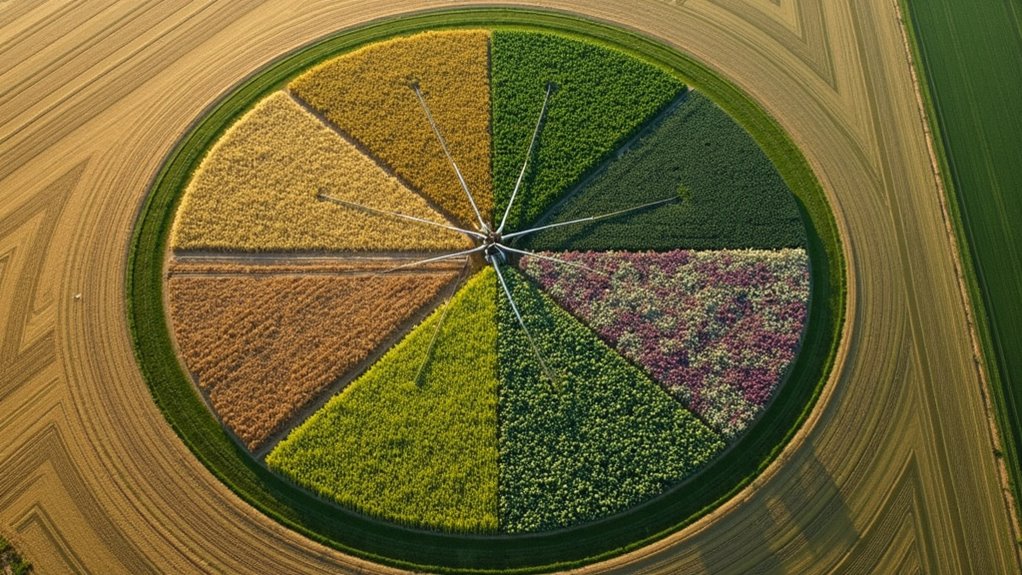
As modern agriculture faces mounting challenges from climate change and soil degradation, crop rotation and diversification have emerged as powerful tools for building resilient farming systems. The practice of rotating different crops across growing seasons delivers remarkable benefits, with studies showing yield increases of up to 25% when farmers implement well-planned rotation strategies. This time-tested approach fundamentally transforms how crops interact with soil, pests, and the broader ecosystem. Crop-specific pathogens are significantly reduced through systematic rotation practices.
The impact on soil health is particularly striking, with rotation practices increasing organic matter by 15-25% and reducing erosion by up to 40%. As different crops cycle through fields, their varied root systems improve soil structure while enhancing water retention and infiltration. The diversity of crops also promotes a rich community of beneficial soil microorganisms, which play vital roles in nutrient cycling and plant health. The implementation of satellite monitoring technology helps farmers track vegetation changes and optimize their rotation schedules. Additionally, practices such as no-till farming contribute to maintaining soil integrity and boosting long-term sustainability. Embracing agricultural biodiversity ensures that farming systems remain adaptable and resilient against environmental changes.
Crop rotation transforms soil vitality, boosting organic matter and fostering diverse microorganisms that enhance nutrient cycling and plant resilience.
Pest management sees dramatic improvements through rotation, as changing crops disrupts the life cycles of harmful insects and pathogens. This natural approach to pest control has enabled farmers to reduce pesticide use by 30-40%, leading to both environmental and economic benefits. The systems become more resilient as pest populations struggle to adapt to the changing crop environment. Pasture-based systems are another example of how sustainable practices can be integrated into agriculture to enhance ecological balance. Integrated pest management (IPM) strategies, which include natural predators, further minimize the need for chemical interventions by leveraging ecological processes.
The economic advantages are compelling, with some farmers reporting improved profitability of up to 37%. These gains come from multiple sources – reduced fertilizer costs of 15-20%, lower pesticide expenses, and markedly higher yields. Corn yields, for instance, show remarkable increases of 29-48% in rotational systems. During challenging weather conditions, rotated crops demonstrate superior resilience, with drought-related losses reduced by 14-90%.
The environmental benefits extend far beyond individual farms. Proper crop rotation reduces greenhouse gas emissions by 54% and greatly decreases nitrogen runoff into water systems. The practice enhances carbon sequestration in soil, contributing to climate change mitigation while building more sustainable agricultural systems.
Success in crop rotation requires careful planning and implementation. Farmers must consider crop families, nutrient requirements, and timing when designing their rotation schedules. Including legumes in the rotation provides natural nitrogen fixation, while cover crops during fallow periods protect and enrich the soil.
While the change requires initial adjustments to equipment and practices, the long-term benefits far outweigh the challenges. This approach to farming represents a vital shift toward more sustainable agriculture. As global food security concerns grow, crop rotation offers a proven strategy for increasing productivity while reducing environmental impact. The practice demonstrates that ecological farming methods can deliver both economic and environmental benefits, providing a path forward for agriculture in an increasingly challenging climate.
Frequently Asked Questions
How Long Does It Take to See Benefits From Crop Rotation?
Benefits from crop rotation emerge across different timeframes.
Initial advantages appear within 1-2 years, including 10-15% higher corn yields and reduced pest problems.
Medium-term gains show up in 3-5 years with 10-25% increased soil organic matter and 20-30% better nutrient availability.
Long-term benefits take 6-10 years, delivering enhanced soil structure, improved climate resilience, and sustained farm productivity.
However, results vary based on existing soil conditions and management practices.
Can Crop Rotation Completely Eliminate the Need for Chemical Pesticides?
While crop rotation notably reduces pesticide dependence, complete elimination of chemical pesticides isn’t typically achievable through rotation alone.
Some persistent pests and pathogens can survive despite rotation practices.
However, when combined with other sustainable methods like cover cropping, beneficial insect promotion, and IPM strategies, farmers can dramatically reduce chemical inputs by up to 70%.
The most effective approach integrates rotation within a thorough pest management system.
Which Crops Should Never Be Planted Together in Rotation?
Several crop combinations should be strictly avoided in rotation sequences.
Nightshade family plants (tomatoes, potatoes, eggplants) shouldn’t follow each other due to shared diseases.
Brassicas (cabbage, broccoli, kale) need 3+ years between plantings to prevent club root.
Allium crops (onions, garlic, leeks) shouldn’t rotate directly due to pink root rot.
Legumes (beans, peas, soybeans) need 2-year gaps to avoid pest buildup and soil depletion.
Does Crop Diversification Affect Crop Insurance Rates for Farmers?
Crop diversification has a significant impact on insurance rates for farmers. Research shows diversified crop rotations can reduce loss risk by 14-90%, potentially leading to lower premiums.
While the current insurance system tends to favor monoculture farming, programs like Whole-Farm Revenue Protection offer premium discounts for diversification.
Additionally, improved soil health practices from diversification can result in long-term premium reductions, though bureaucratic barriers still exist for smaller, diversified operations.
What Financial Assistance Programs Support Farmers Transitioning to Crop Rotation Systems?
Several federal programs provide financial support for farmers implementing crop rotation systems.
The Environmental Quality Incentives Program (EQIP) offers cost-share assistance up to $450,000 for conservation practices including crop rotation.
The Conservation Stewardship Program provides 5-year contracts with minimum $4,000 annual payments plus $7.50 per acre for cropland practices.
The Farmers for Soil Health Program offers additional support of $50 per new acre over three years in eligible states.


