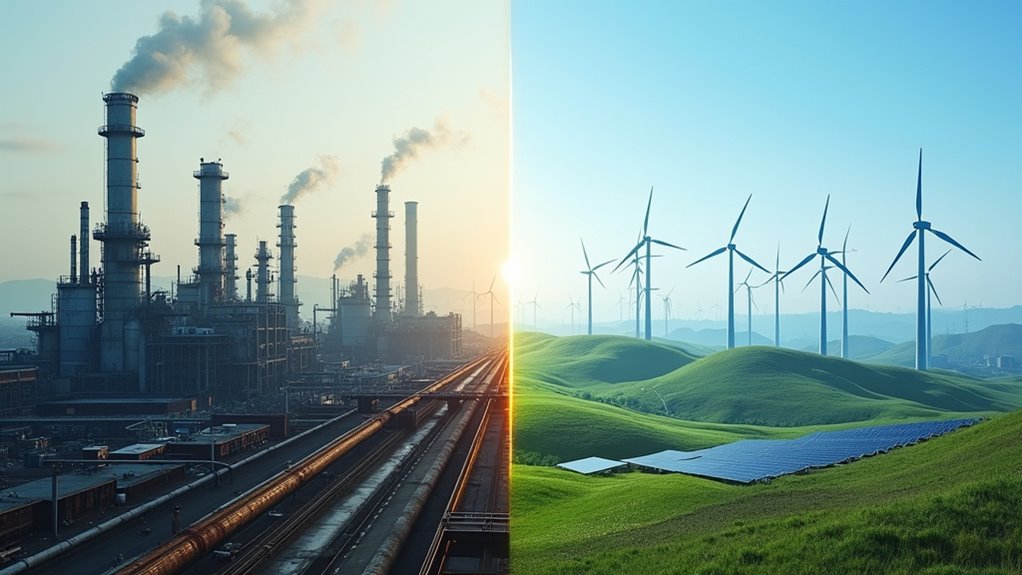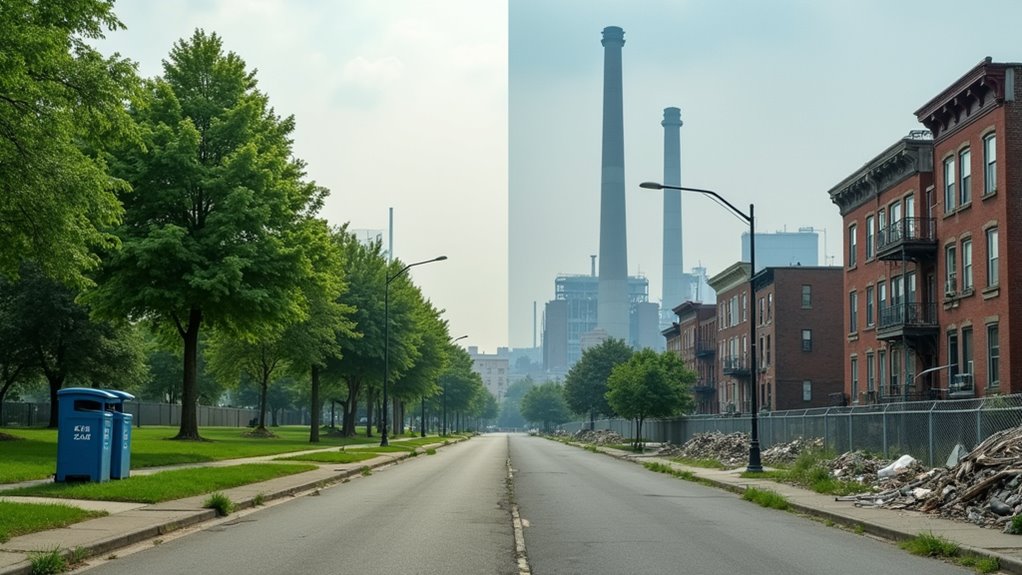

The Environmental Justice Movement, born in the 1980s, revolutionized how society views environmental protection by exposing its deep connection to civil rights. Starting with the Warren County protests against toxic dumping in Black communities, activists revealed how pollution and hazardous facilities disproportionately affect minority neighborhoods. The movement gained federal recognition through Executive Order 12898 and continues shaping policy today, while grassroots organizing drives systemic change. Understanding this movement’s evolution offers essential insights for achieving environmental equity.
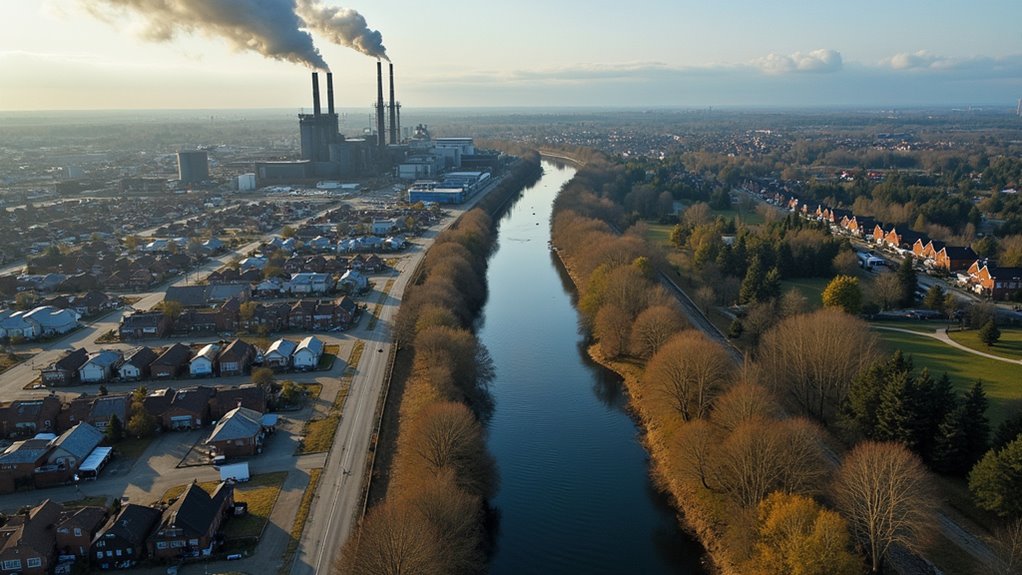
The Environmental Justice Movement emerged as a powerful force in the 1980s, marking a crucial intersection between civil rights activism and environmental advocacy. Born from communities fighting against toxic dumping and hazardous facility placement in minority neighborhoods, the movement gained momentum following the 1982 Warren County, North Carolina protests, where residents staged sit-ins to oppose PCB landfill construction in mainly Black areas.
Dr. Benjamin Chavis’s introduction of the term “environmental racism” crystallized the movement’s core message, while the groundbreaking 1987 United Church of Christ study “Toxic Waste and Race” provided concrete evidence that race was the strongest predictor of hazardous waste site locations. The concept of slow violence emerged to describe the gradual, often invisible environmental degradation affecting these vulnerable communities. These disproportionate impacts were rooted in four interlocking Cs of conquest, colonization, commerce, and Christian implantation. This scientific validation helped transform grassroots activism into a broader social movement with academic legitimacy, further strengthened by works like Dr. Robert Bullard’s “Dumping in Dixie.” The movement also embraces corrective justice, seeking recovery and compensation for historical environmental injustices. Advocacy for ecosystems has been reinforced by legal tools for environmental advocacy that support the protection of natural habitats.
Environmental racism persists when scientific data reveals race as the primary factor determining toxic waste site placement in minority communities.
The movement achieved significant milestones in the early 1990s. The First National People of Color Environmental Leadership Summit in 1991 established the 17 Principles of Environmental Justice, expanding the movement’s scope beyond pollution to encompass public health, resource allocation, and sustainable development. These principles reimagined “environment” to include workplaces, homes, and recreational spaces, framing environmental challenges as fundamental social justice issues. Courts and regulations are increasingly influencing climate accountability, holding governments and corporations responsible for their environmental impact.
Federal recognition came in 1994 when President Clinton signed Executive Order 12898, requiring federal agencies to contemplate environmental justice in their policies. The EPA’s creation of the Office of Environmental Justice in 1992 further institutionalized these concerns within government frameworks. Global courts and tribunals have played a role in resolving environmental disputes involving multinational corporations, underscoring the international dimension of the movement.
More recently, states like New Jersey have implemented enforceable environmental justice regulations, demonstrating the movement’s growing influence on policy.
The movement’s impact extends beyond policy changes, fostering connections between local activism and global environmental advocacy. Indigenous land rights movements, labor rights campaigns like the 1968 Memphis Sanitation Strike, and community-based initiatives in places like Camden and Newark, New Jersey, demonstrate how environmental justice intersects with broader social struggles. These efforts highlight the cumulative burden of multiple environmental hazards on vulnerable communities.
Today’s environmental justice movement continues to evolve, maintaining its roots in civil rights while addressing emerging challenges. Its emphasis on community self-determination, equitable resource distribution, and systemic change has created a framework for addressing environmental inequities.
Through persistent grassroots organizing, scientific research, and policy advocacy, the movement has transformed from isolated local protests into a powerful force for environmental and social change, demonstrating that environmental protection and social justice are inextricably linked.
Frequently Asked Questions
How Can Individuals Support Environmental Justice Movements in Their Local Communities?
Individuals can support environmental justice through strategic local action.
By joining community organizations, attending city council meetings, and participating in grassroots campaigns, residents amplify their collective voice. Supporting local nonprofits through volunteering and donations strengthens advocacy efforts.
Personal choices like reducing waste and supporting sustainable businesses matter too.
Social media activism and organizing informational meetings help spread awareness and mobilize others to join the cause.
What Role Does Socioeconomic Status Play in Environmental Discrimination?
Socioeconomic status plays an essential role in environmental discrimination through multiple interconnected pathways.
Lower-income communities face disproportionate exposure to toxic facilities, air pollution, and contaminated water due to affordable housing limitations and reduced political influence. Limited financial resources restrict their ability to relocate or advocate effectively.
Additionally, poverty often correlates with decreased environmental awareness and access to information, creating a cycle where economic disadvantage perpetuates environmental inequities.
How Are Environmental Justice Violations Legally Prosecuted and Enforced?
Environmental justice violations are prosecuted through coordinated efforts between the EPA, DOJ, and other federal agencies.
The EPA handles civil enforcement actions, while the DOJ pursues criminal cases through its Environmental Crimes Section.
Legal tools include the Clean Air Act, Clean Water Act, and civil rights laws.
Penalties range from civil fines and injunctive relief to criminal prosecution.
Supplemental Environmental Projects may be required to benefit affected communities through cleanup and restoration efforts.
What Metrics Measure the Success of Environmental Justice Initiatives?
Success metrics for environmental justice initiatives focus on four key areas: community engagement, environmental health, socioeconomic outcomes, and policy changes.
Specific measurements include tracking community participation rates, improvements in air and water quality, reduction in health disparities, increased access to green spaces, decreased income gaps, and the number of environmental justice laws enacted.
Regular monitoring of these metrics helps guarantee initiatives create meaningful, lasting impact in affected communities.
How Do Environmental Justice Movements Collaborate Across Different Geographic Regions?
Environmental justice movements collaborate across regions through interconnected networks and strategic partnerships. Organizations share resources, strategies, and data through platforms like EJAtlas, enabling coordinated advocacy efforts.
Regular forums and conferences facilitate knowledge exchange between communities facing similar challenges. International coalitions link local struggles to global campaigns, while partnerships with policymakers help create consistent frameworks for addressing environmental issues.
Cultural initiatives and educational programs further strengthen these cross-regional connections.